
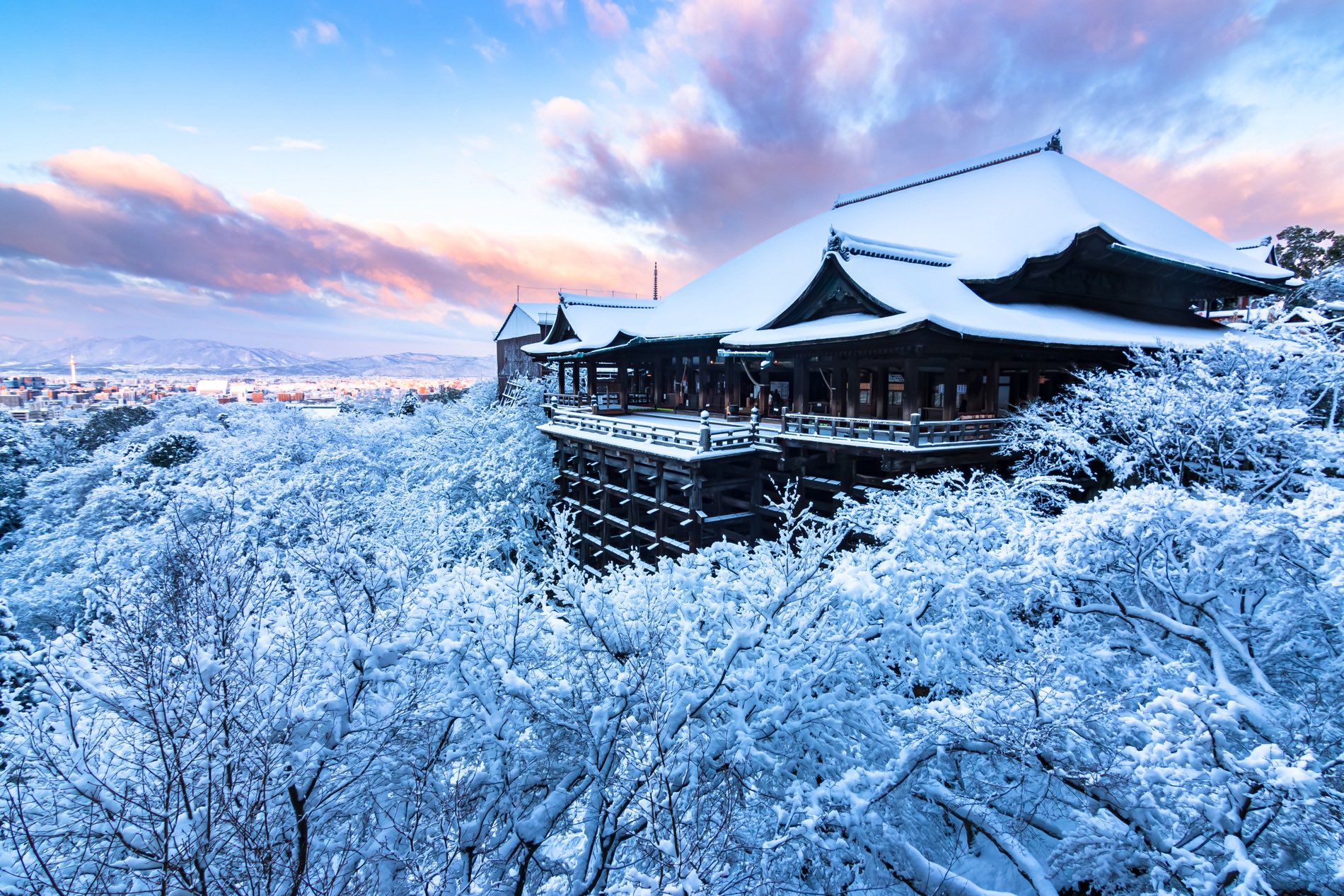
Snowy days in Kyoto may make you hesitate to go outside — but staying in would be a mistake.
Kyoto’s winter snow scenery is rare, fleeting, and unforgettable. Many of these breathtaking views can only be seen when snow has fallen, making them a true reward for winter travelers.
Below are seven of Kyoto’s most beautiful snowy scenery spots, along with practical tips to help you enjoy them safely and comfortably.
How Often Does It Snow in Kyoto?
Kyoto does not receive heavy snowfall like northern Japan.
- Average snowy days: about 10–15 days per year
- Snow is most likely from late January to early February
- Accumulated snow often melts quickly, sometimes within hours
Because of this, seeing Kyoto covered in snow is considered very lucky, even by locals.
Transportation Tips on Snowy Days
While Kyoto’s public transportation usually runs as scheduled, snow can cause:
- Bus delays, especially in mountainous areas (e.g. Kibune)
- Slippery sidewalks and temple paths
- Fewer available taxis
Tips for travelers:
- Use trains instead of buses when possible
- Allow extra travel time
- Check weather and transit updates in the morning
- Walk carefully and avoid rushing
What to Wear in Snowy Kyoto
Kyoto winters are cold and humid, and snow intensifies the chill.
Recommended clothing:
- Waterproof shoes with good grip
- Thick socks and thermal layers
- Long coat or down jacket
- Gloves, scarf, and hat
- Heat packs (kairo), available at convenience stores
Stone paths and wooden temple floors can become slippery after snowfall.
1. Kinkaku-ji (Golden Pavilion) — A Brilliance Enhanced by Snow
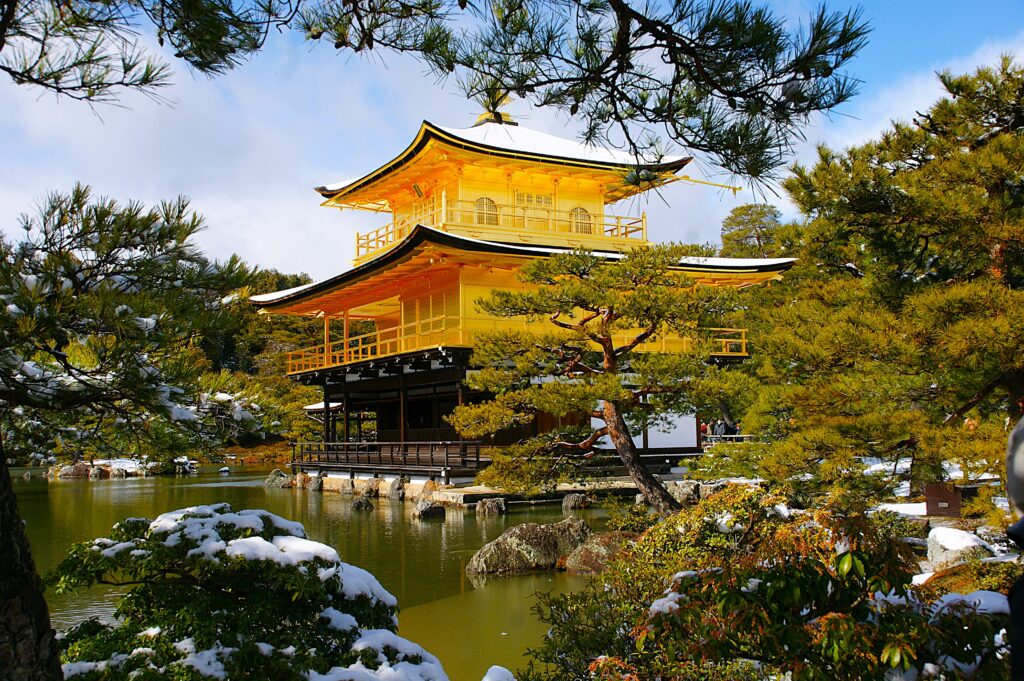
Kinkaku-ji, officially known as Rokuon-ji, originated as the retirement villa of Ashikaga Yoshimitsu, the third shogun of the Muromachi Shogunate.
When snow blankets the surrounding trees and the Golden Pavilion, the contrast between pure white snow and radiant gold leaf becomes breathtaking.
It is one of Kyoto’s most iconic winter scenes.
2. Kifune Shrine — Mystical and Sacred in the Snow
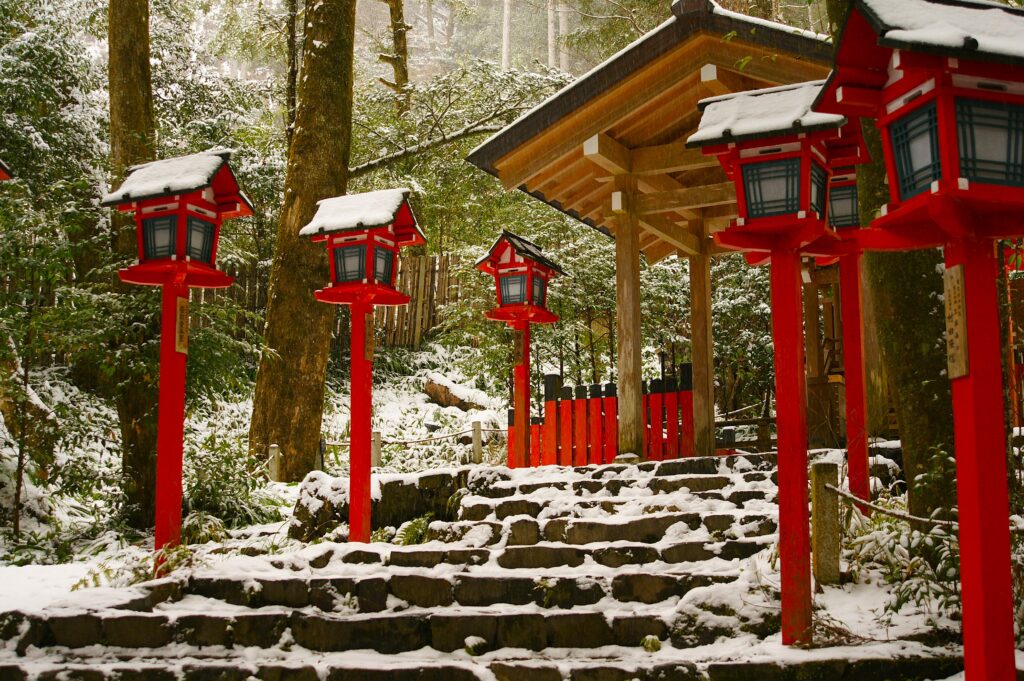
Located along the Kibune River, Kibune Shrine is the head shrine of water deities in Japan and has a history of over 1,300 years.
In winter, the area transforms into a silent white world.
Snow-covered lanterns and shrine buildings create a mystical yet solemn atmosphere, especially during nighttime illuminations.
3. Sagano Bamboo Grove — A Snowy Path to Another World
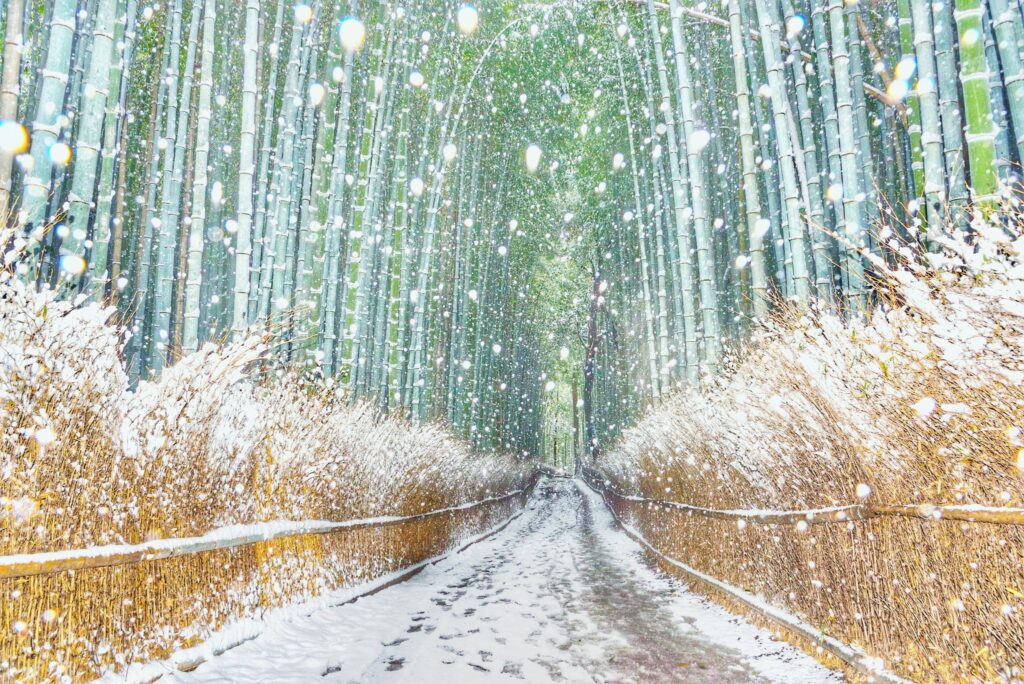
The Sagano Bamboo Grove stretches about 400 meters between Nonomiya Shrine and Okochi Sanso Villa.
When snow falls, light reflects off the snow-covered bamboo, creating dramatic shadows and a quiet, dreamlike atmosphere — as if you’ve stepped into another world.
4. Togetsukyo Bridge — A Living Ink Painting
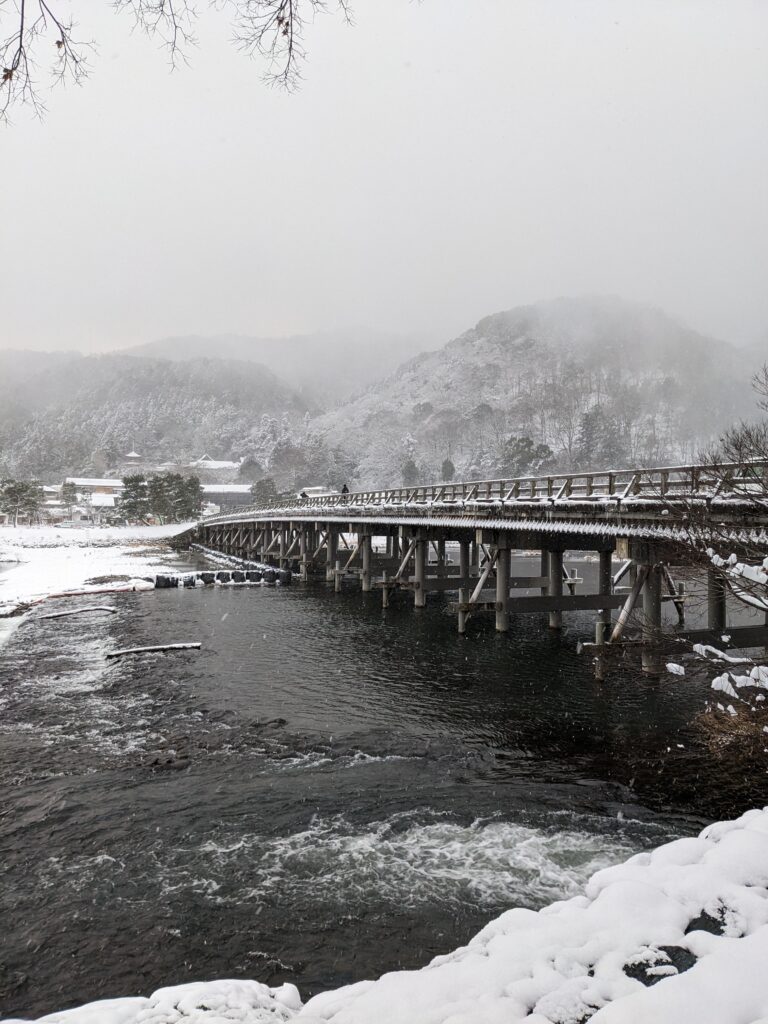
Togetsukyo Bridge in Arashiyama dates back to the early 9th century.
With snow covering the surrounding mountains and riverbanks, the scenery becomes almost monochrome, resembling a traditional Japanese ink painting.
It’s a peaceful and deeply atmospheric winter view.
5. Fushimi Inari Taisha — Vermilion Gates in a Silver World
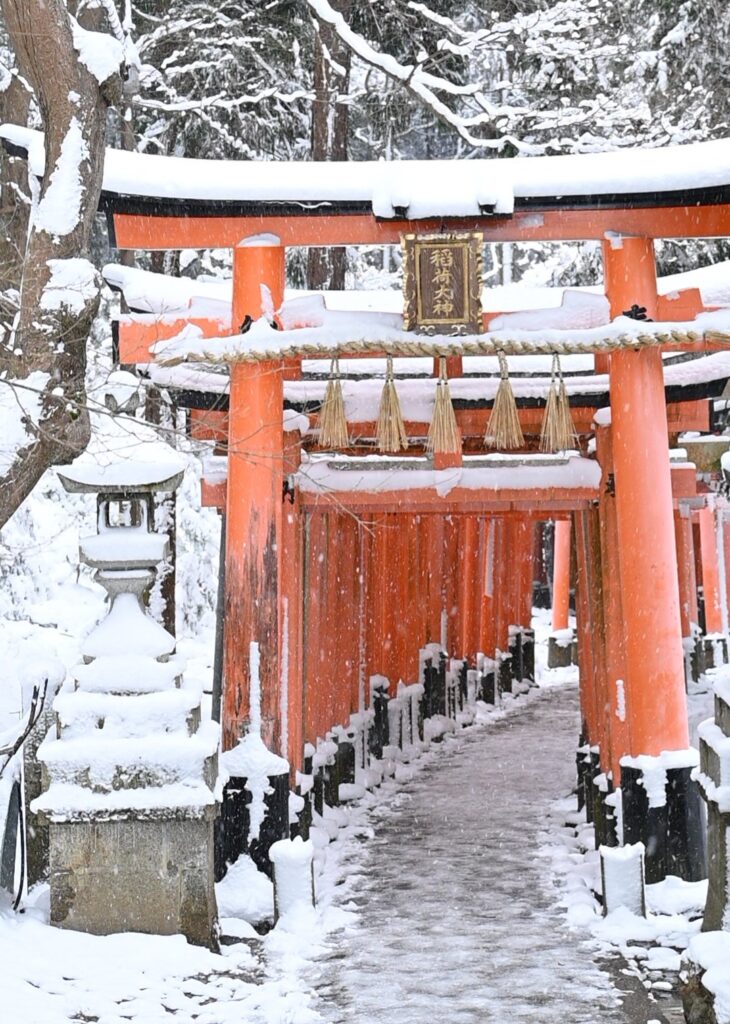
Founded in 711, Fushimi Inari Taisha is famous for its Senbon Torii, thousands of vermilion torii gates lining Mount Inari.
After snowfall, the bright red gates stand out vividly against the white surroundings, creating a fantastical and rarely seen winter scene.
6. Kiyomizu-dera — A Winter Symbol Floating in White
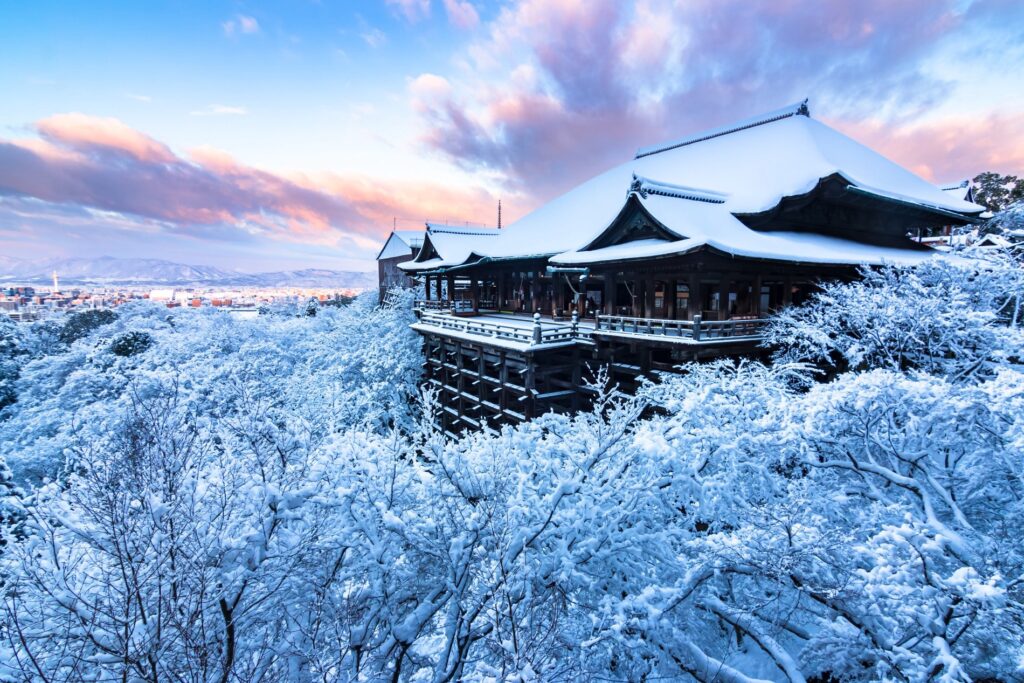
Founded in 778 and designated a UNESCO World Heritage Site, Kiyomizu-dera offers stunning views year-round.
In winter, snow covers the surrounding forest and sky, making the famous wooden main hall appear as if it’s floating in white mist — a powerful and unforgettable sight.
7. Yasaka Pagoda (Hokan-ji) — A Timeless Kyoto Icon in the Snow
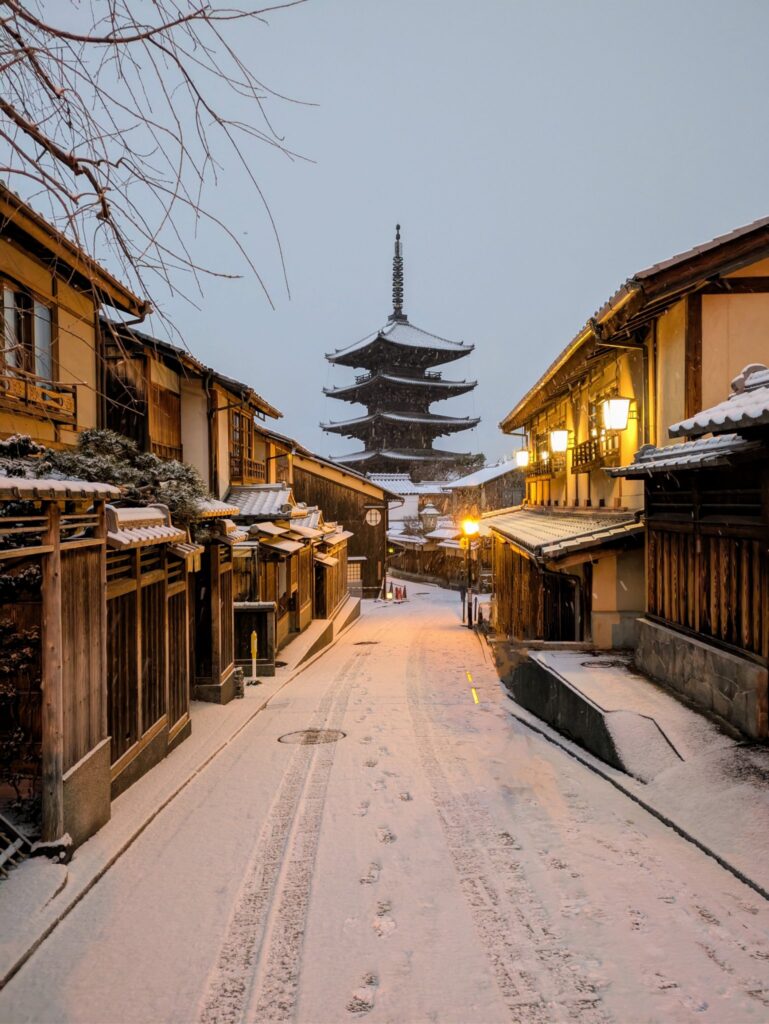
Standing quietly in the historic Higashiyama district, Yasaka Pagoda (Hokan-ji Temple) is one of Kyoto’s most photogenic landmarks.
Surrounded by traditional townhouses and narrow stone streets, the pagoda becomes even more striking when snow falls.
The soft white snow highlights the pagoda’s elegant silhouette, creating a classic Kyoto winter scene that feels frozen in time.
Early mornings after snowfall are especially beautiful and peaceful, making this spot a favorite among photographers.
Final Thoughts: Don’t Miss Snowy Kyoto
Snowy days in Kyoto may be rare and inconvenient — but that’s exactly what makes them special.
These winter scenes:
- Appear only a few days each year
- Change familiar landmarks completely
- Offer a side of Kyoto few travelers ever experience
If you’re lucky enough to witness Kyoto under snow, dress warmly, slow down, and enjoy one of Japan’s most beautiful seasonal moments.
Aichi Alcoholic beverage Anime Anime pilgrimage April Architecture August Autumn Building Capital Area Cherry blossom Convenience store February Flower History January Japanese food kanto Kinki Kyoto March May Nagoya Nature Nightlife Night view Osaka Photogenic Pink Sakura Shopping Shrine Souvenir Spring Station Summer Superb view Temple Tips Tokai Tokyo Traffic train White Winter

More from my site
 Explore Kyoto at Night: A Guide to Beautiful Temples, Streets & Views
 Autumn Leaves in Kyoto: Best Spots to See Stunning Fall Colors
 Romantic Things to Do in Kyoto: Visit the Beautiful Kifune Shrine
 5 Best Alternatives to Kyoto Without the Crowds
 The Ultimate June Day Trip to Uji: Hydrangeas at Mimuroto-ji
 Ine Funaya Guide: How to Visit Kyoto’s Scenic Boat Village