
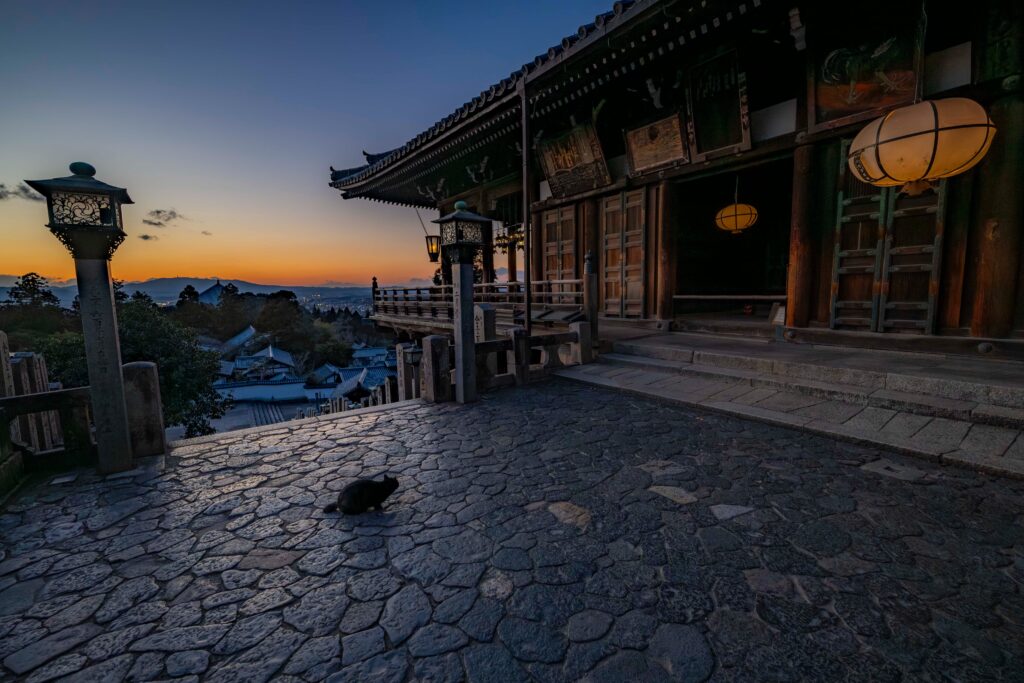
A Timeless Stage of Prayer and Sunset in Nara
When visiting Todai-ji Temple, most travelers focus on the famous Great Buddha Hall.
Few continue deeper into the temple grounds.
That is a mistake.
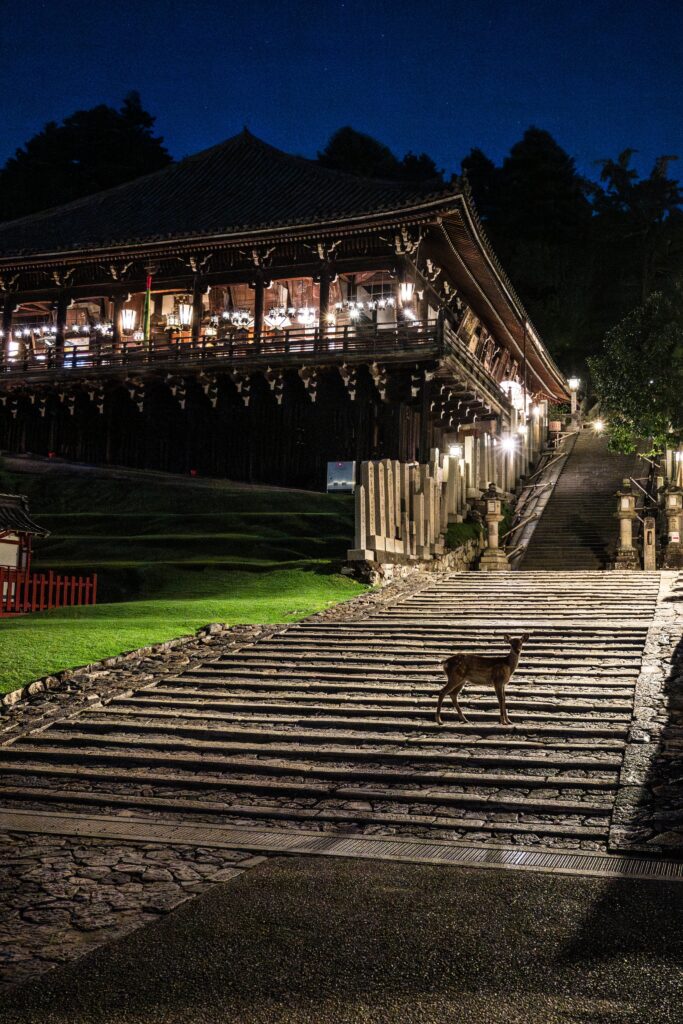
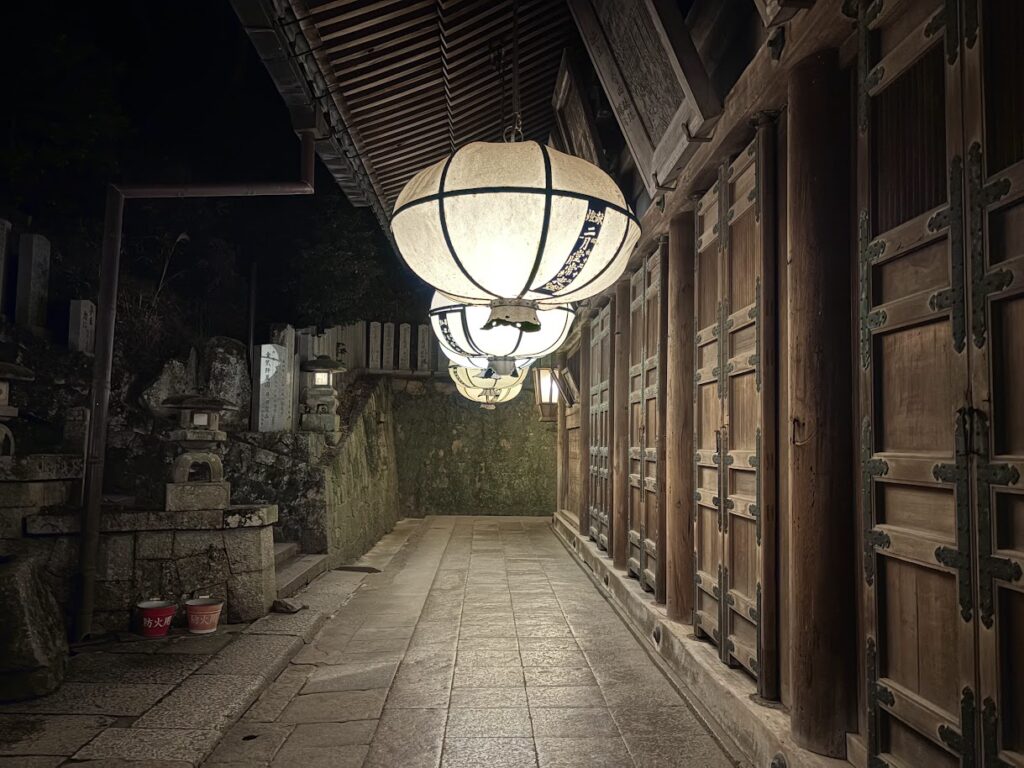
Hidden on the eastern hillside of Todai-ji lies Nigatsu-do Hall—a place that rewards those who take a little extra time with history, silence, and one of the most beautiful sunsets in Nara.
What Is Nigatsu-do?
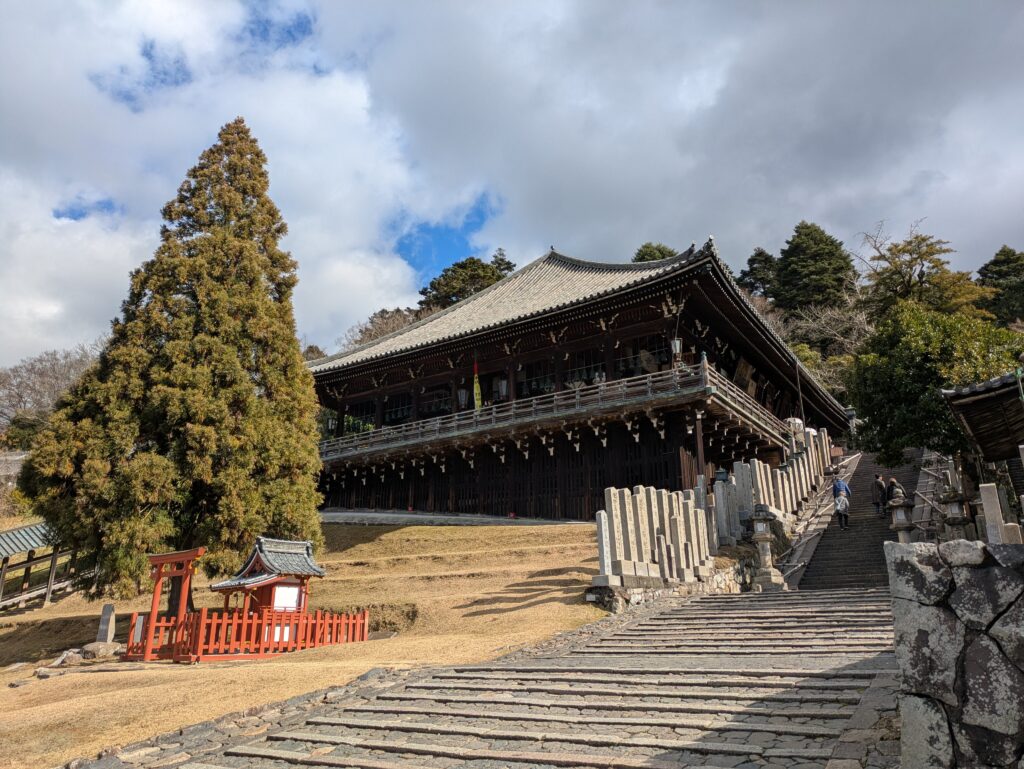
Nigatsu-do, meaning “Hall of the Second Month,” is a National Treasure of Japan located within the Todai-ji temple complex, a UNESCO World Heritage Site.
Despite its importance, Nigatsu-do is remarkably accessible:
it is open 24 hours a day, free to enter, and often much quieter than Todai-ji’s main buildings.
Standing on a high platform overlooking the city, Nigatsu-do feels both elevated and separate from everyday life.
Over 1,250 Years of Unbroken History
Nigatsu-do was founded in 752 during the Nara Period by the monk Jitchu.
Since its founding, the hall has been the center of an annual Buddhist ritual called Shuni-e, held every March.
This ceremony—also known as Omizutori—has continued without interruption for more than 1,250 years.
Even during wars, fires, earthquakes, and pandemics, the ritual has never been canceled.
Shuni-e is a ceremony of repentance and prayer, performed for the peace, safety, and well-being of all people.
For many Japanese, Nigatsu-do is not just a historic structure—it is a living symbol of faith and continuity.
A Masterpiece of Wooden Stage Architecture
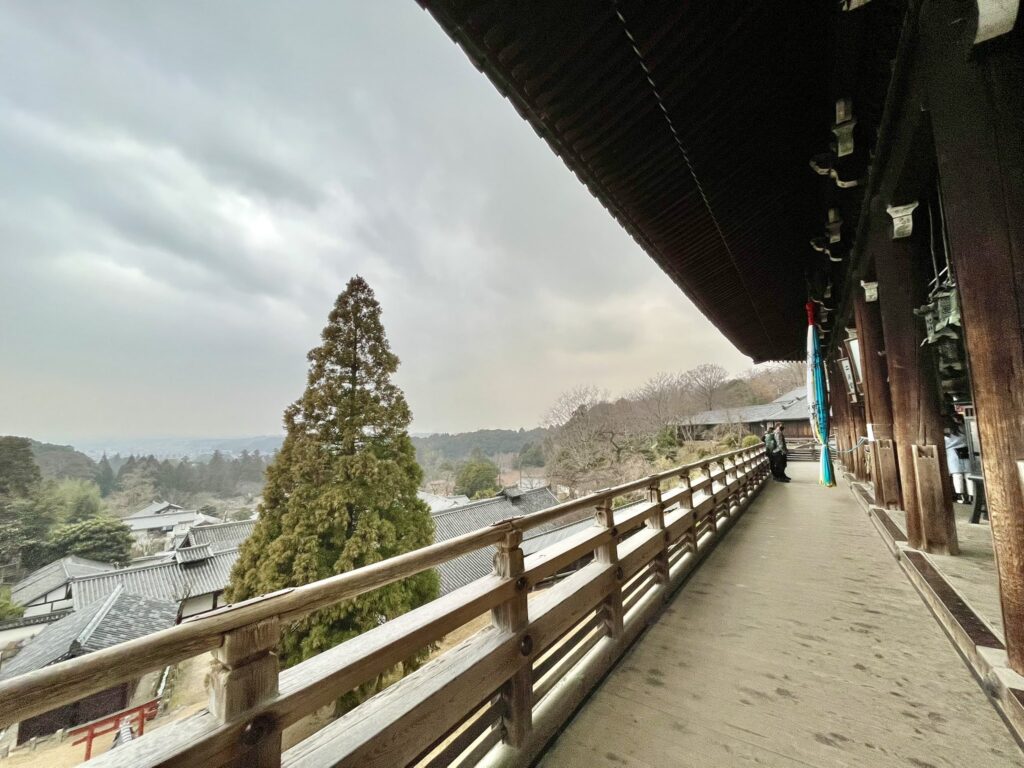
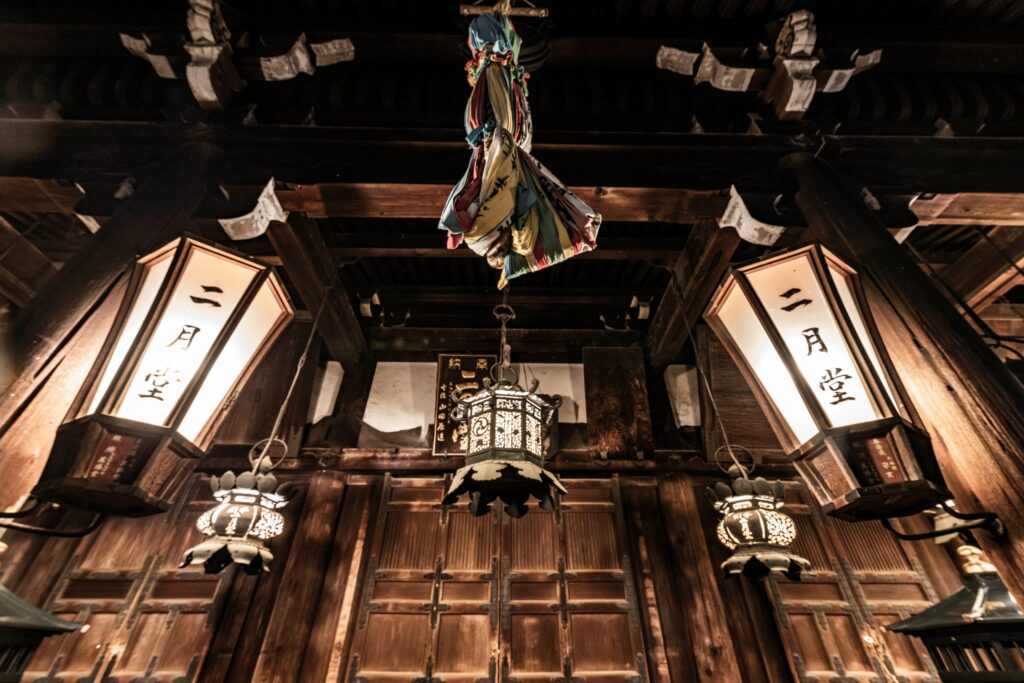
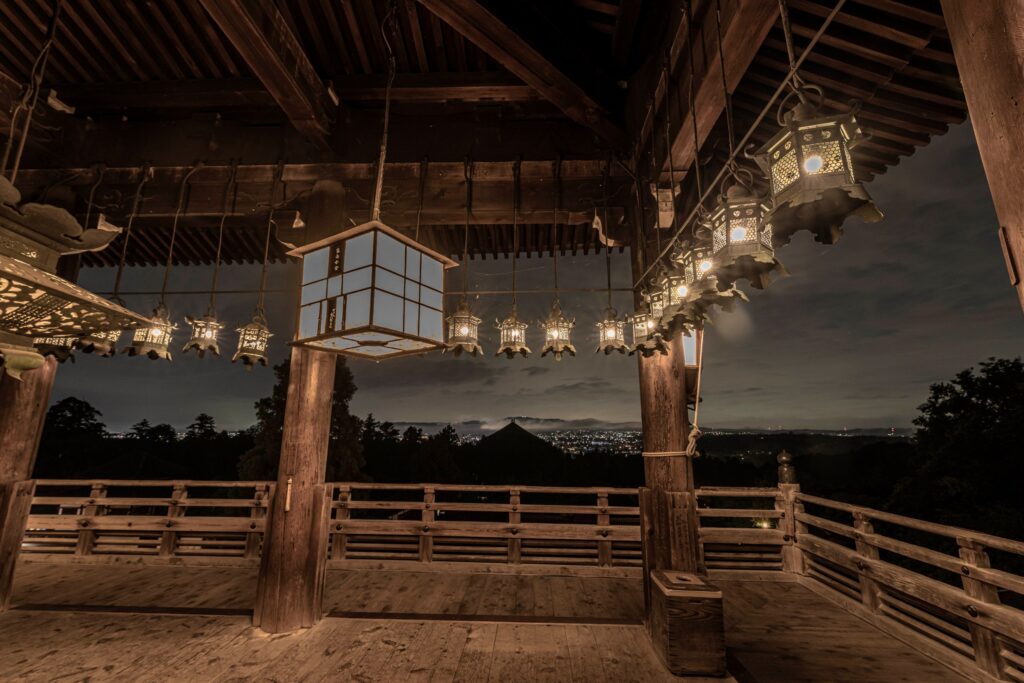
Nigatsu-do is famous for its wooden stage-style construction, built along the slope of the hill without using nails.
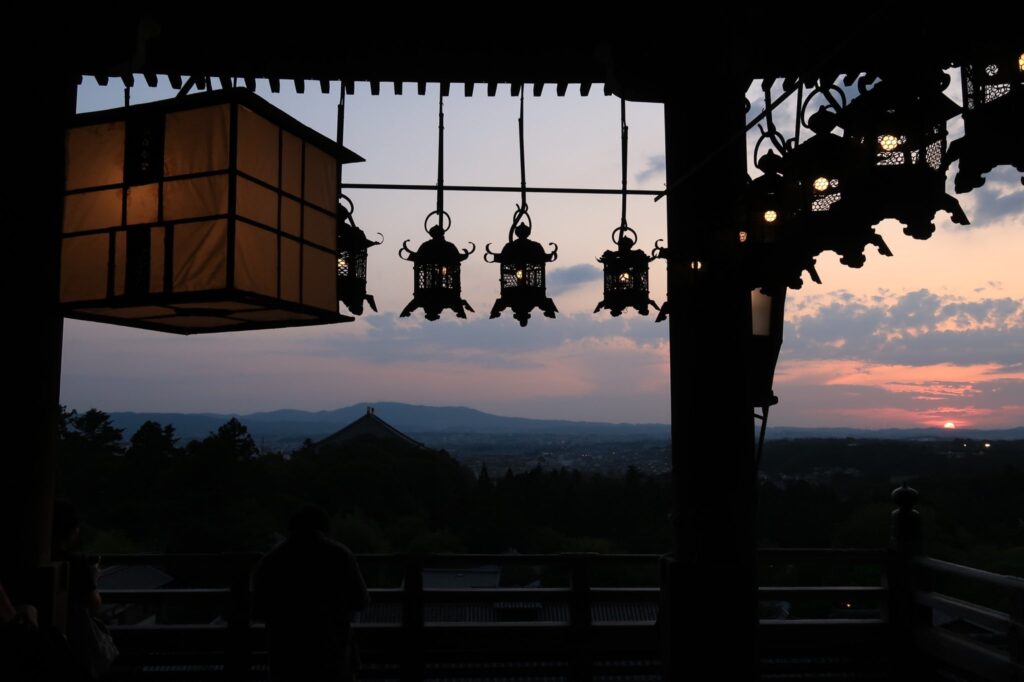
From the stage, visitors enjoy sweeping views across Nara City, extending to Mount Ikoma on clear days.
The openness of the structure allows wind, light, and sound to pass freely through the space, creating a strong connection with nature.
It is a place designed not to dominate the landscape, but to exist in harmony with it.
The Best Time to Visit: Sunset
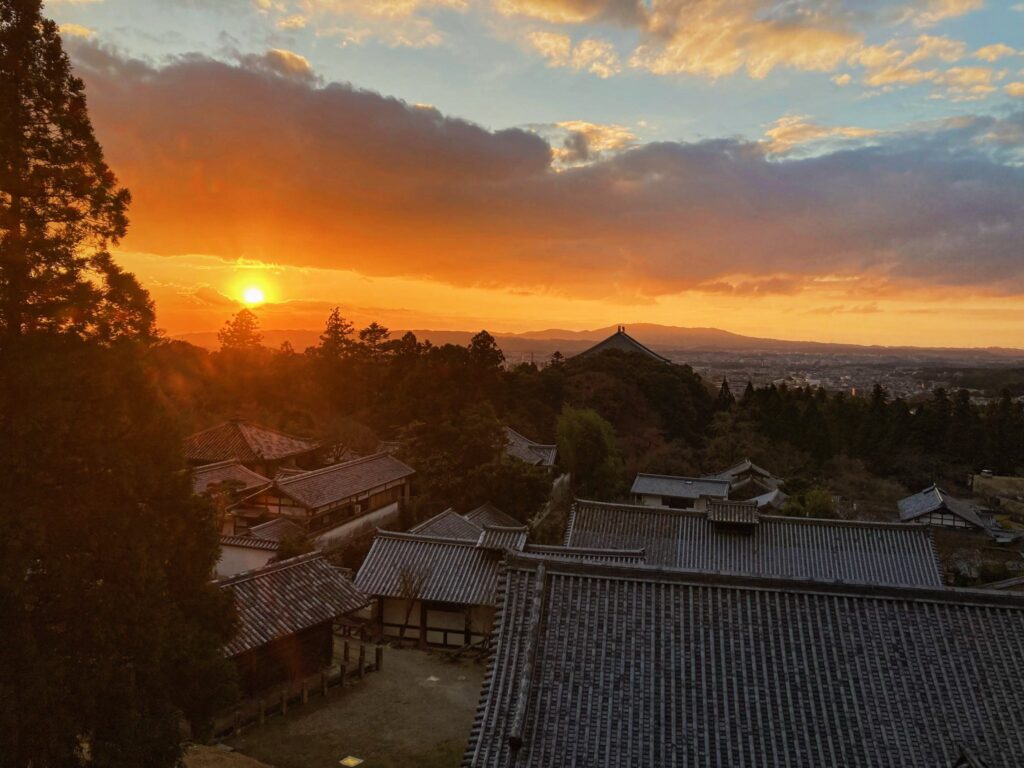
While Nigatsu-do is beautiful at any time of day, sunset is truly unforgettable.
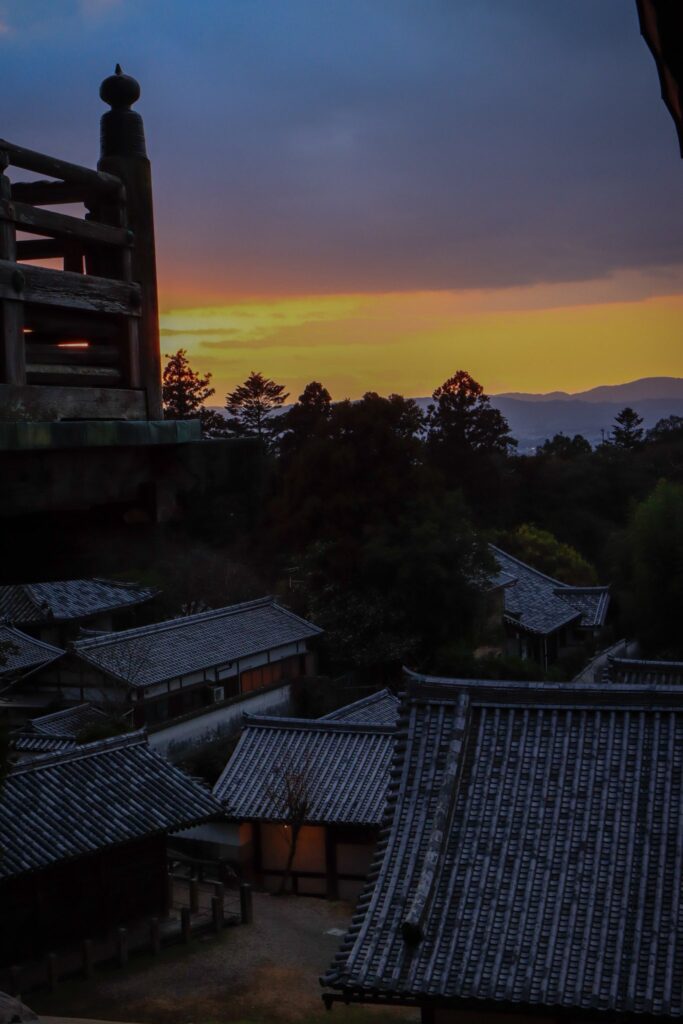
As the sun lowers, the wooden pillars and floor glow softly in golden light.
The city below slowly darkens, and the sky changes from blue to orange, then to deep purple.
Many visitors fall silent at this moment.
Standing on the stage, watching the light fade, it becomes easy to forget crowds, schedules, and noise.
It is a quiet, emotional experience—one that captures the essence of Japan’s appreciation for fleeting beauty.
A Quiet Alternative to the Crowds
Compared to the busy Great Buddha Hall, Nigatsu-do offers:
- Fewer tourists
- A calmer, more spiritual atmosphere
- Free entry at any hour
- One of Nara’s best panoramic views
If you are already visiting Todai-ji, Nigatsu-do is only a short uphill walk away—but it feels like a different world.
Tips for Visiting Nigatsu-do
- Best time: Late afternoon to sunset
- Be respectful: This is an active religious site
- Photography: Allowed, but avoid flash and loud behavior
- Evening visits: Bring comfortable shoes—the path is slightly steep
Why Nigatsu-do Matters
Nigatsu-do is not just a place to see.
It is a place to pause, reflect, and feel time passing.
In a country where tradition and modern life coexist, Nigatsu-do quietly reminds visitors that some things—prayer, craftsmanship, and the beauty of a setting sun—have remained unchanged for over a thousand years.
If you truly want to experience Todai-ji, do not stop at the Great Buddha.
Walk a little further.
Wait for the sun to set.
And let Nigatsu-do become one of the most memorable moments of your journey in Japan.
Aichi Airport Alcoholic beverage Anime Anime pilgrimage April Architecture August Autumn Building Capital Area Cherry blossom Convenience store February Flower January Japanese food kanto Kinki Kyoto March May Nagoya Nature Nightlife Night view Osaka Photogenic Pink Sakura Shopping Shrine Souvenir Spring Station Summer Superb view Temple Tips Tokai Tokyo Traffic train White Winter

More from my site
 Hikone Castle: Japan’s Authentic Feudal Stronghold Near Kyoto, Osaka & Nagoya
 Ine Funaya Guide: How to Visit Kyoto’s Scenic Boat Village
 Explore Omori – The Historic Heart of Iwami Ginzan
 Best Autumn Leaves Spots in Nara: A Dreamlike Day Trip from Osaka or Kyoto
 Aizu Sazae-dō – The Only Wooden Double-Helix Structure in the World
 Feel the Magic of Summer at Nara’s Ofusa Kannon Temple