
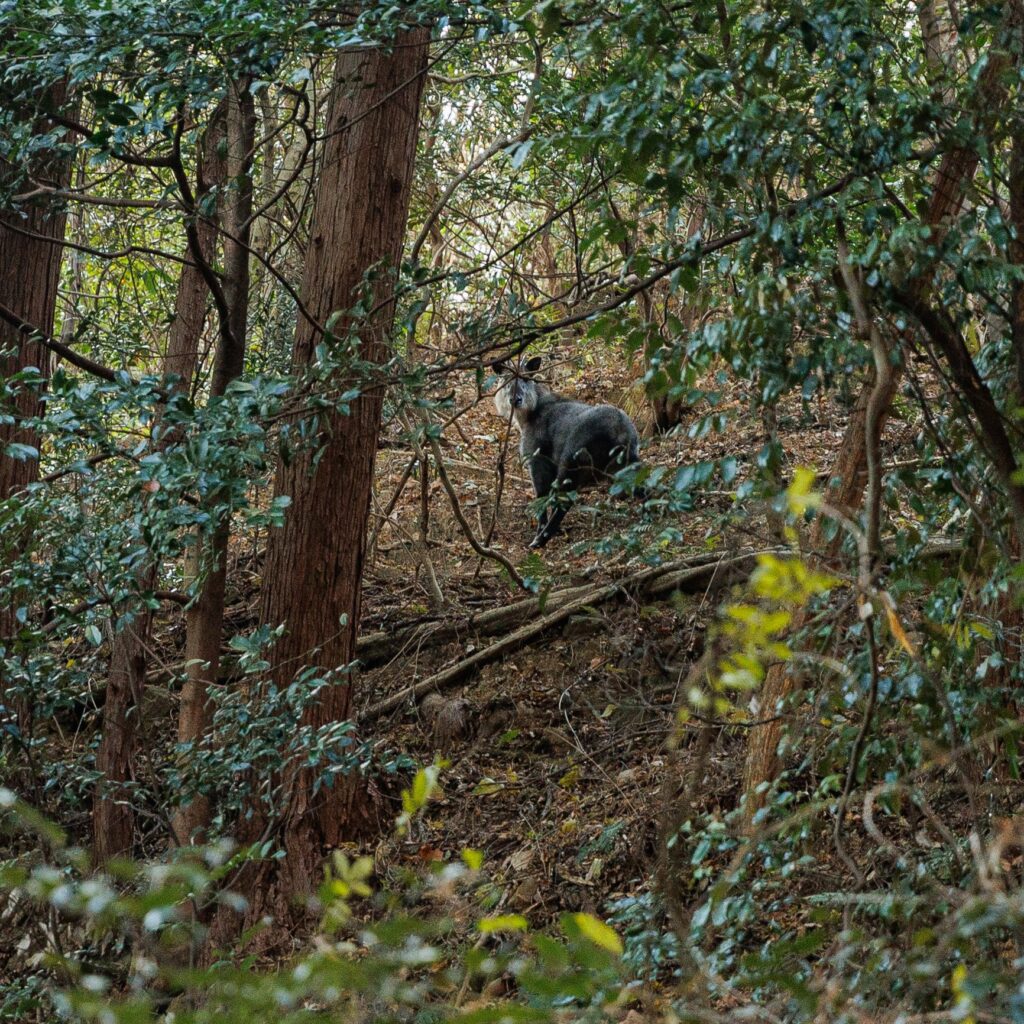
When traveling in Japan’s countryside or mountainous regions, you might be lucky enough to encounter a unique and mysterious animal: the Japanese serow, known in Japanese as kamoshika.
This animal is found only in Japan and holds a special place in both nature and culture.
What Is a Japanese Serow?

The Japanese serow (Capricornis crispus) is a native Japanese animal belonging to the bovid family, which includes cattle, goats, and antelopes.
Despite its name including the word shika (deer), the serow is not a deer. It is actually closer to goats and cattle.
Because of its rarity and cultural importance, the Japanese serow is designated as a Special Natural Monument of Japan, meaning it is legally protected.
Where Do Japanese Serows Live?
Japanese serows inhabit mountainous forests across:
- Honshu
- Shikoku
- Kyushu
They prefer steep terrain, rocky slopes, and dense forests, where their strong legs and flexible hooves allow them to move easily across cliffs and uneven ground.
Although they usually live deep in the mountains, serows sometimes appear near villages or roads—often due to curiosity rather than aggression.
How to Tell a Serow from a Deer
Many visitors mistake serows for deer at first glance, but there are clear differences:
| Feature | Japanese Serow | Deer |
|---|---|---|
| Horns | Short, straight horns (both males & females) | Branching antlers (males only) |
| Body | Stocky, goat-like | Slim, long-legged |
| Behavior | Usually solitary | Often in groups |
| Movement | Calm, slow, confident | Alert, quick, skittish |
A key point: both male and female serows have unbranched horns, which is unusual compared to deer.
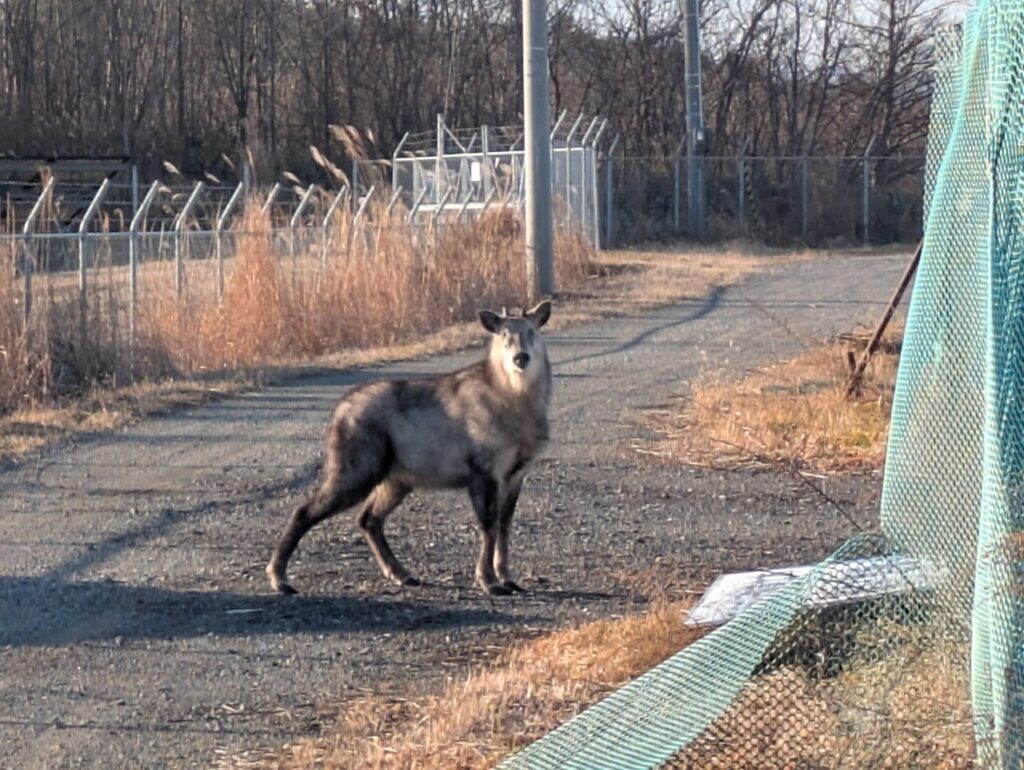
Behavior and Personality
Japanese serows are:
- Solitary animals
- Territorial
- Generally calm and shy
They are not dangerous and rarely show aggression toward humans.
Serows also have a strong homing instinct, so even if they wander into human areas, they usually return to the mountains on their own.
What Should You Do If You See One?
If you encounter a Japanese serow during your travels:
✔ Observe quietly
✔ Keep your distance
✔ Let it pass naturally
❌ Do not touch
❌ Do not chase or surround it
❌ Do not make loud noises or try to take close-up photos
Exciting or cornering a wild animal can cause unnecessary stress. Respectful observation is the best approach.
Is the Serow the Model for a Character in Princess Mononoke?
Many fans of Studio Ghibli wonder about this.
In Princess Mononoke, Ashitaka rides a red, horned animal named Yakru. Yakru closely resembles a serow-like creature, and many believe it was inspired by the Ōkamoshika (giant serow), an extinct species also known as Akashishi.
While Yakru is not the same as the Forest Spirit (Shishigami)—the deer-like god of the forest—its calm strength and sacred presence often remind people of the Japanese serow.
Because of this, serows are sometimes described as having a mystical or spiritual aura, deeply connected to Japan’s ancient forests.
Legal Protection: Strictly Protected by Japanese Law
The Japanese serow is not only rare—it is strictly protected by law.
Under Japan’s Law for the Protection of Cultural Properties, causing the death, injury, or serious harm of a Japanese serow is a criminal offense.
This includes killing, injuring, or driving the animal into a weakened or dying condition.
Violations may result in:
- Up to 5 years of imprisonment or detention, or
- A fine of up to 300,000 yen
Because of this strong legal protection, touching, capturing, feeding, or interfering with a Japanese serow is strictly prohibited.
If you encounter one during your travels, the correct action is simple:
observe quietly from a distance and allow it to return to the mountains on its own.
A Symbol of Japan’s Untouched Nature
The Japanese serow represents:
- Pristine mountain ecosystems
- Harmony between humans and wildlife
- The quiet beauty of rural Japan
Spotting one is considered a rare and special experience, even for locals.
If you see a Japanese serow during your journey, consider yourself lucky—and remember to admire it from afar.ience if it happens. Just remember to enjoy the moment respectfully and safely.
More from my site
 Is it Safe to Hike in Japan? What You Need to Know About the Recent Bear Surge
 Japan Bear Safety Guide 2026: Staying Safe After Hibernation
 Bear Warning in Japan 2025: How to Stay Safe While Hiking and Traveling
 Can You See Wild Tanuki in Japan?
 Exploring Akiyoshido Cave: A Hidden Underground World in Yamaguchi, Japan
 Is the Poké Ball Hotel Real? Location, How to Stay, & Campaign Rules Explained