
With its adorable raised paw, the maneki-neko, or “beckoning cat,” is one of Japan’s most beloved lucky charms. Often displayed at shop entrances, it is believed to bring good fortune, business success, and many customers.
While maneki-neko are a familiar sight in Japan, many people—especially visitors from overseas—may not know that the meaning of a maneki-neko changes depending on its pose, color, and even where it is made.
In this article, we explore the fascinating history, symbolism, and regional styles of Japan’s iconic lucky cat.
What Does a Maneki-neko Mean?
The Raised Paw: Right or Left?
The defining feature of a maneki-neko is its raised paw, and which paw is lifted matters.
- Right paw raised: Brings money and financial luck
- Left paw raised: Attracts people or customers
Although the exact origin of this belief is unclear, one theory suggests that since most people use their right hand to handle money, a right-pawed cat naturally came to symbolize wealth.
Some maneki-neko raise both paws, hoping to attract both money and people. However, these are sometimes avoided, as the pose can resemble a person giving up with raised hands—suggesting “nothing left to do.”
The Height of the Paw
Even the height of the raised paw carries meaning:
- High-raised paw (above the ears): Attracts distant or great fortune
- Lower, modest paw: Brings nearby, everyday happiness
Cats with long, extended arms are said to reach faraway luck, while shorter arms symbolize blessings close to home.
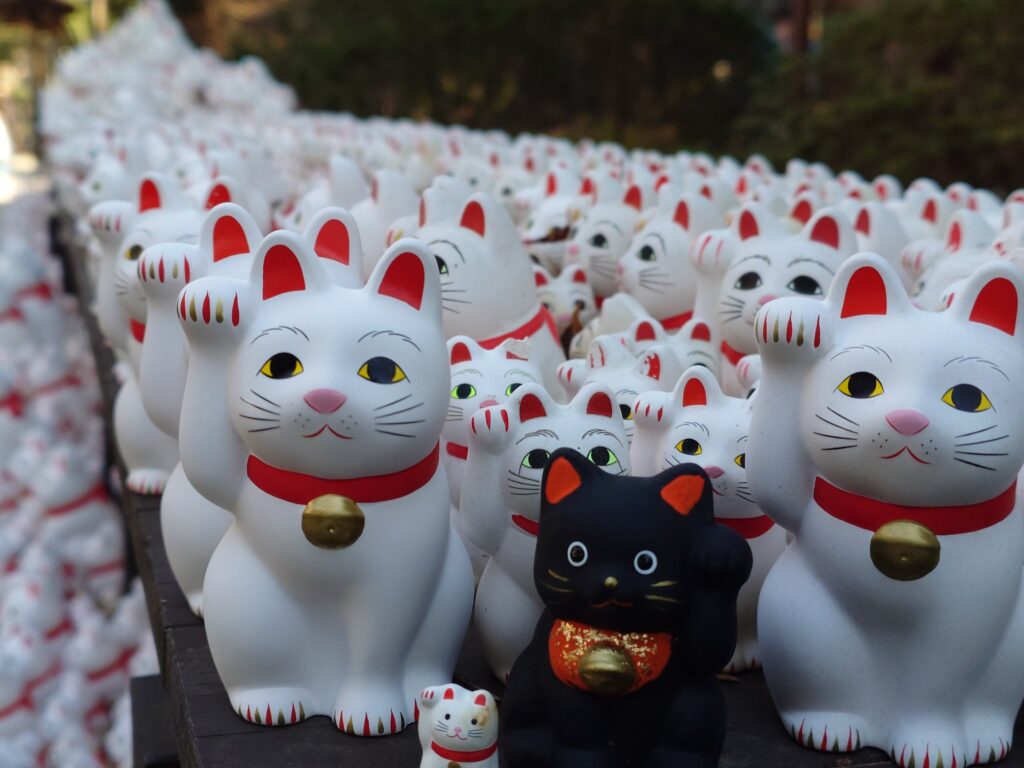
The Meaning of Colors
White Maneki-neko
The most traditional and common type. White symbolizes purity and overall good luck, bringing happiness in all areas of life.
Black Maneki-neko
Unlike in Western cultures, black cats in Japan are considered lucky. Black maneki-neko are believed to ward off evil and misfortune. In Kyoto, they were especially associated with business prosperity.
Red Maneki-neko
Red is linked to health and protection from illness. Historically, red was thought to repel diseases such as smallpox, making red maneki-neko symbols of longevity and well-being.
Modern Colors
Today, you’ll also find pink, gold, and other colorful maneki-neko, each representing specific wishes such as love, wealth, or success.
What Is the Maneki-neko Holding?
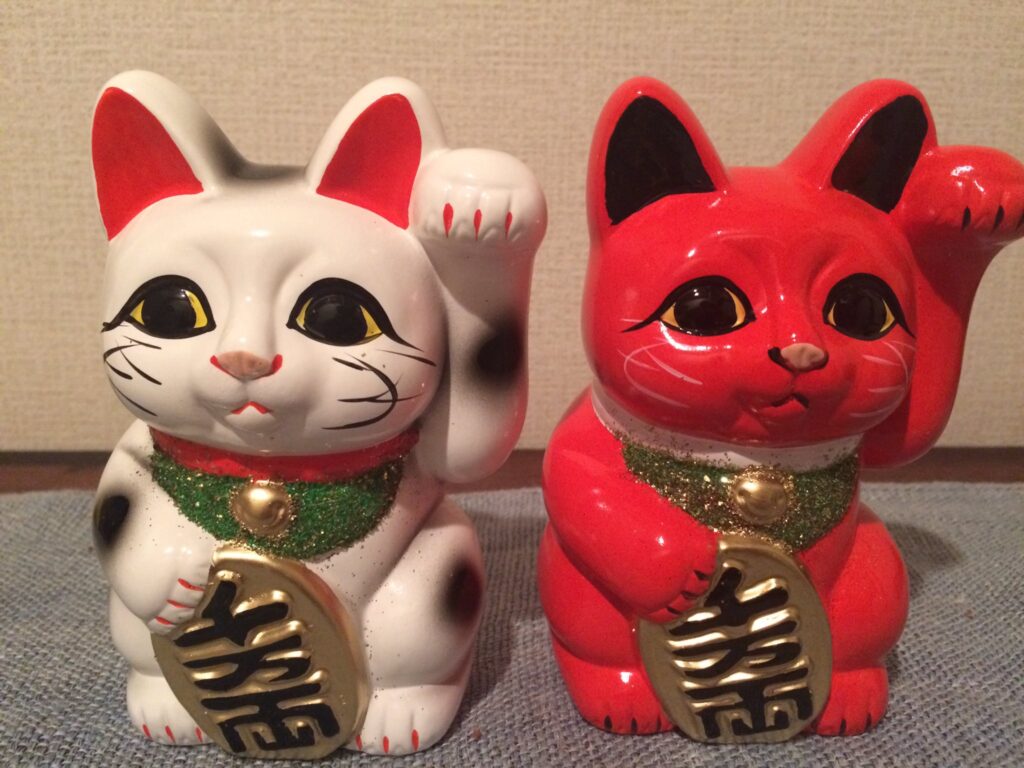
Today, maneki-neko are often depicted holding a koban, a gold coin. Interestingly, early maneki-neko did not hold coins at all—they usually wore a collar with a bell.
Over time, the bell evolved into the koban, which often bears inscriptions like “Good Fortune” or “Prosperity.”
The amount written on the coin is also telling: older maneki-neko tend to show modest sums like “1,000 ryo,” while modern ones boldly display amounts as large as “10 million ryo.”
Today’s maneki-neko may also hold:
- Sea bream (tai) for good luck
- Daruma dolls for perseverance
- Rakes (kumade) for “raking in” fortune
- Magic mallets for wishes coming true
The variety is said to be as limitless as human wishes.
Three Major Production Regions of Maneki-neko
Although maneki-neko are made across Japan, three regions are especially famous.
Seto Style: Slender, Fox-like Faces (Aichi)
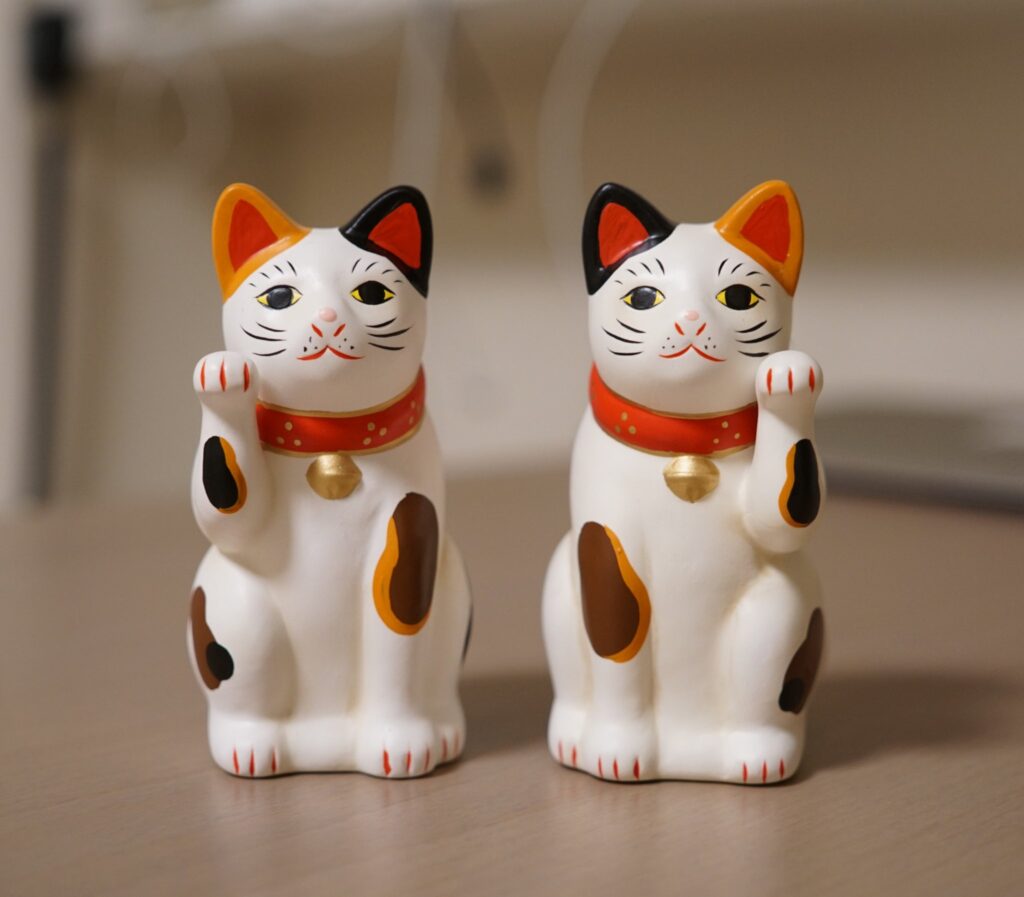
Seto maneki-neko trace their roots to Kyoto’s Fushimi Inari Shrine, where they were sold as pilgrimage souvenirs. Mass production began in Seto during the late Meiji period.
Classic Seto-style cats, known as Ko-Seto, are porcelain with slender bodies, slightly hunched backs, and fox-like faces. They often wear multiple bells and decorative bibs, with a subtly raised paw.
Tokoname Style: The Iconic Maneki-neko (Aichi)
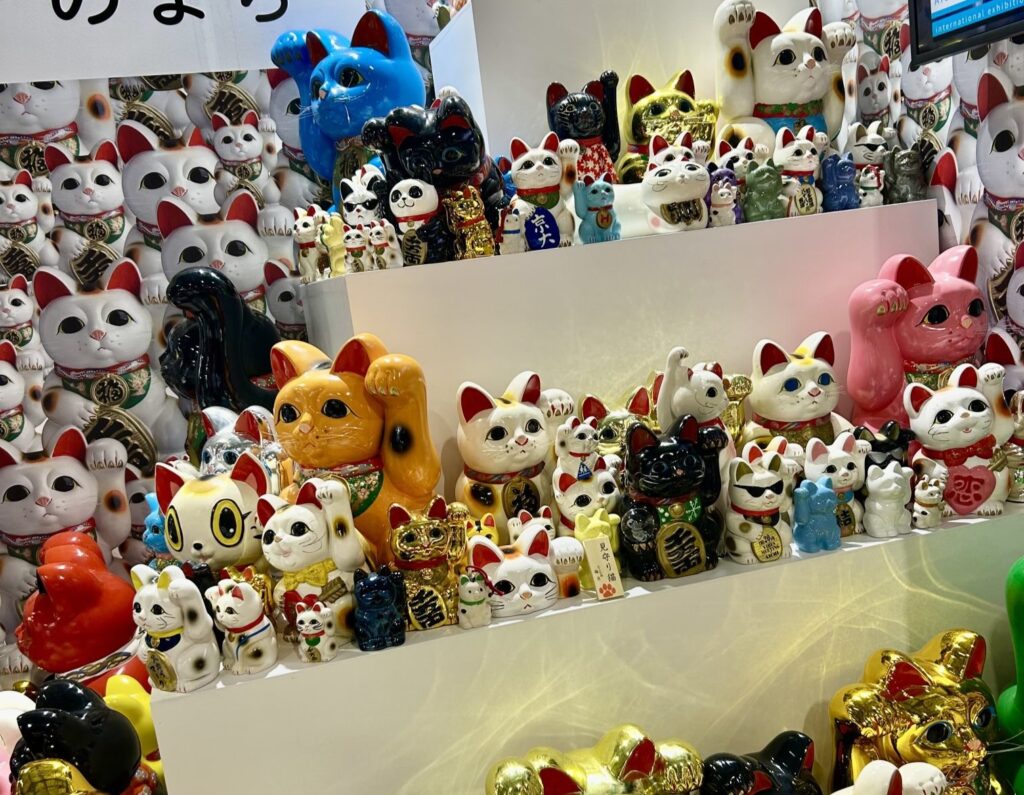
When people imagine a maneki-neko, they are often picturing the Tokoname style.
These ceramic cats feature:
- Large, round eyes
- A chubby, two-headed-tall body
- A koban held proudly in front
Developed in the late 1940s, their design was influenced by large folk dolls from the Mikawa region. Their sturdy, cheerful appearance became the standard image of maneki-neko during Japan’s postwar economic boom.
Kutani Style: Brilliant and Ornate (Ishikawa)
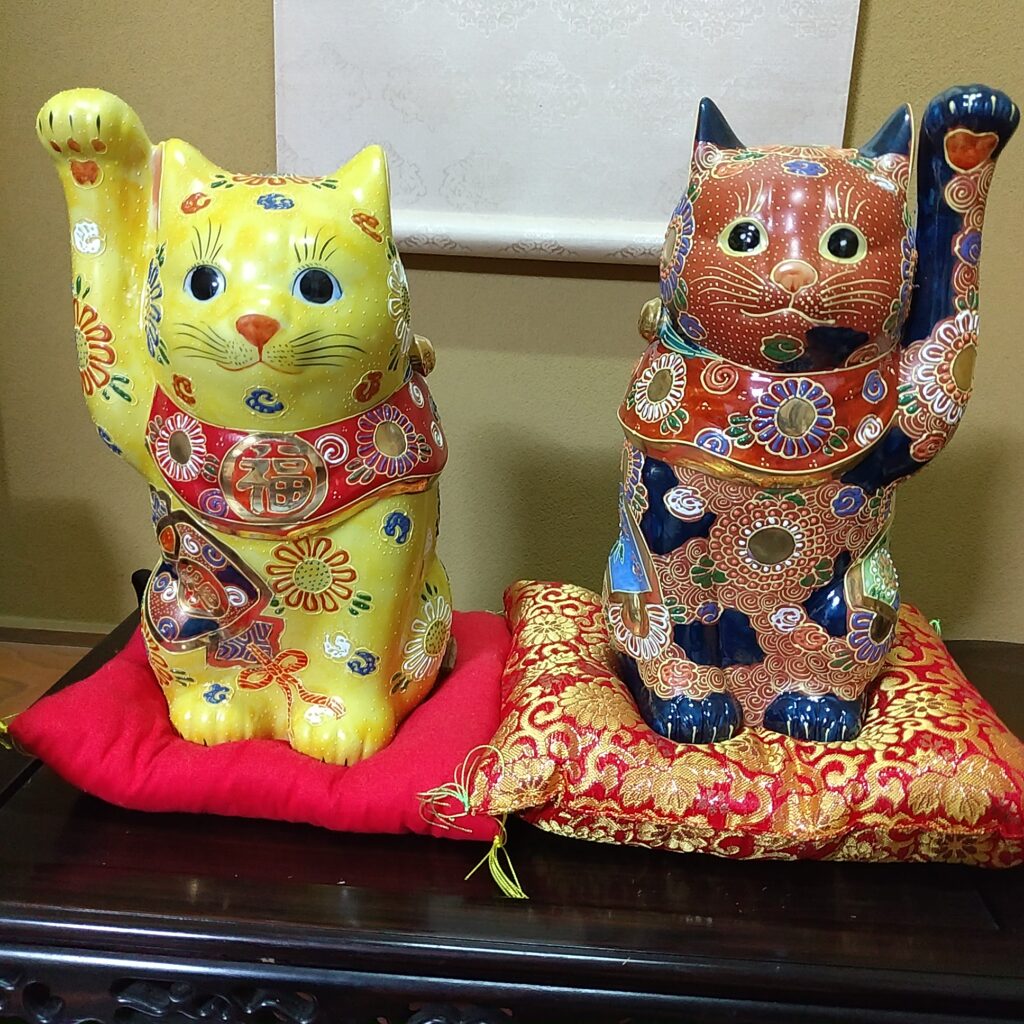
Kutani maneki-neko are instantly recognizable for their vivid colors, intricate patterns, and gold decoration. With dignified expressions and exotic designs, they were primarily produced for export during the boom of Japonisme overseas.
They often feature:
- Side-facing ears
- Bells attached sideways at the neck
- Unique seated poses
Because most were made for export, they are less commonly seen in everyday Japan.
The Mysterious Origins of Maneki-neko
Cats were not originally native household animals in Japan. Domestic cats arrived during the Nara period, brought from China alongside Buddhist scriptures to protect them from rats.
By the Heian period, cats were common enough to appear in classic literature such as The Pillow Book and The Tale of Genji.
While the exact origin of maneki-neko remains unknown, Chinese influence is often suggested. One Chinese proverb states:
“When a cat washes its face past its ears, a visitor will soon arrive.”
Popularity in the Edo Period
Most origin stories place the birth of maneki-neko in the Edo period, with several competing legends.
One famous story comes from Gotokuji Temple in Tokyo, where a cat is said to have beckoned Lord Ii Naotaka into the temple just before a storm, saving him from disaster. In gratitude, he became the temple’s patron. Today, thousands of maneki-neko offerings line the temple grounds.
Other legends involve courtesans in Yoshiwara, folk dolls in Asakusa, and a poor elderly woman who created a cat doll after dreaming of her lost pet.
By the late Edo period, cat figurines known as Maru-jime Neko became a popular object of folk belief, often considered the prototype of modern maneki-neko.
From Folk Belief to Modern Icon
As the maneki-neko craze spread nationwide, each region adapted the design using local craftsmanship. In silk-producing areas, cats were revered as protectors against mice, making them natural guardian figures.
During the Meiji era, white porcelain maneki-neko were mass-produced in Seto, while ornate Kutani cats were exported overseas.
In the postwar period, Tokoname maneki-neko became widely popular, cementing their role as a classic gift for new business openings.
How to Display a Maneki-neko
In the past, maneki-neko were placed on household altars. Today, they are most commonly displayed near entrances or in easily visible locations, both in shops and homes. The key is visibility—so the cat can “welcome” good fortune inside.
Learn More: The Maneki-neko Museum (Aichi)
For those who want to dive deeper, the Maneki-neko Museum is one of Japan’s largest museums dedicated to lucky cats. It houses around 5,000 maneki-neko, ranging from folk toys to antiques.
In addition to permanent exhibitions organized by region and era, visitors can enjoy hands-on workshops such as painting their own maneki-neko, as well as a museum shop filled with unique souvenirs.admiring the sea of lucky cats, this charming temple offers a unique and memorable visit.
How to Get There: Maneki-neko Museum (Seto)
By Train
From Nagoya Station, take the Meitetsu Seto Line to Owari-Seto Station.
The journey takes about 30 minutes.
From Owari-Seto Station, the museum is about a 15-minute walk.
By Bus
From Owari-Seto Station, local buses are also available.
Get off at a stop near the Seto Kurinuki Art Museum area, then walk a few minutes.
From Nagoya (Summary)
- Travel time: about 45–50 minutes total
- Easy half-day trip from Nagoya
- Can be combined with sightseeing in Seto’s historic pottery streets
Because signs and displays are visitor-friendly, even travelers who do not speak Japanese can enjoy the museum comfortably.
Aichi Airport Alcoholic beverage Anime Anime pilgrimage April Architecture August Autumn Building Capital Area Cherry blossom Convenience store February Flower January Japanese food kanto Kinki Kyoto March May Nagoya Nature Nightlife Night view Osaka Photogenic Pink Sakura Shopping Shrine Souvenir Spring Station Summer Superb view Temple Tips Tokai Tokyo Traffic train White Winter

More from my site
 Toyota Commemorative Museum of Industry and Technology: The Ultimate Guide for Car & History Lovers
 Inside Onitsuka Tiger’s World Largest Store in Shinjuku & Nagoya Flagship
 What is Tebasaki? The Ultimate Nagoya Chicken Wings Guide for Foodies
 10 Best Things to Do in Nagoya, Aichi
 Best Japan Souvenirs: Toyota’s New Upcycling Store Opens at Centrair Airport
 Nagoya’s Cutest New Icon: “Piyorin Village” Opens at Nagoya Station!