
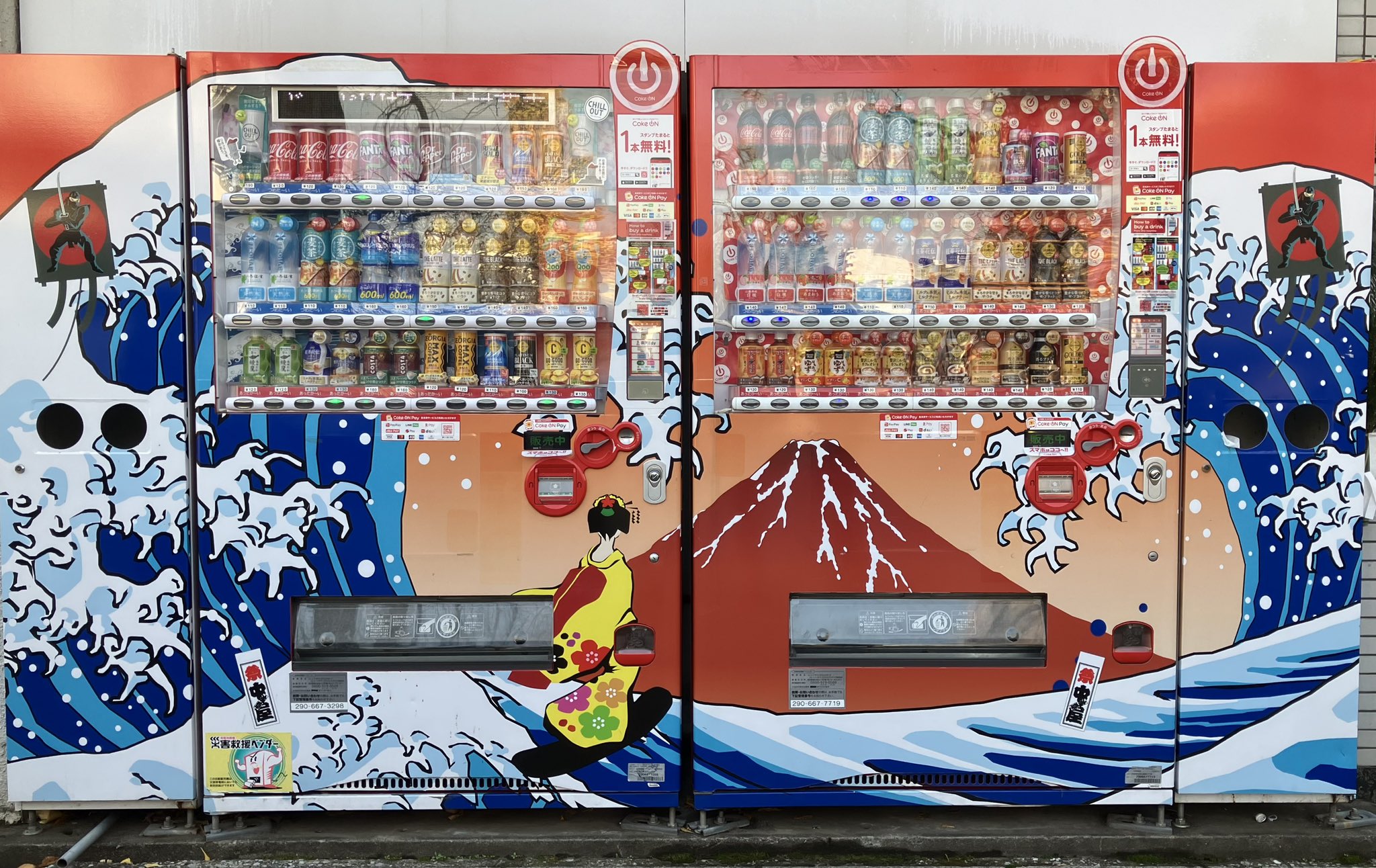
When traveling in Japan, you will quickly notice something unique: vending machines are everywhere.
From busy city streets to quiet countryside roads, Japanese vending machines are an essential part of everyday life—and a surprisingly helpful tool for travelers.
Why Are Vending Machines So Common in Japan?
Japan has over 5 million vending machines, one of the highest numbers per capita in the world.
There are several reasons why they are so widespread.
Safe and Secure Environment
Japan is known for its low crime rate.
Because vandalism and theft are rare, vending machines can safely operate outdoors 24 hours a day—even in remote areas.
Convenience Comes First
Convenience is deeply valued in Japanese culture.
- No need to enter a store
- Available 24/7
- Quick and easy to use
For commuters, travelers, and late-night needs, vending machines are the fastest solution.
Reliable Technology
Japanese vending machines are well maintained, rarely broken, and frequently restocked.
You can usually trust that they will work exactly as expected.
What Can You Buy from Japanese Vending Machines?
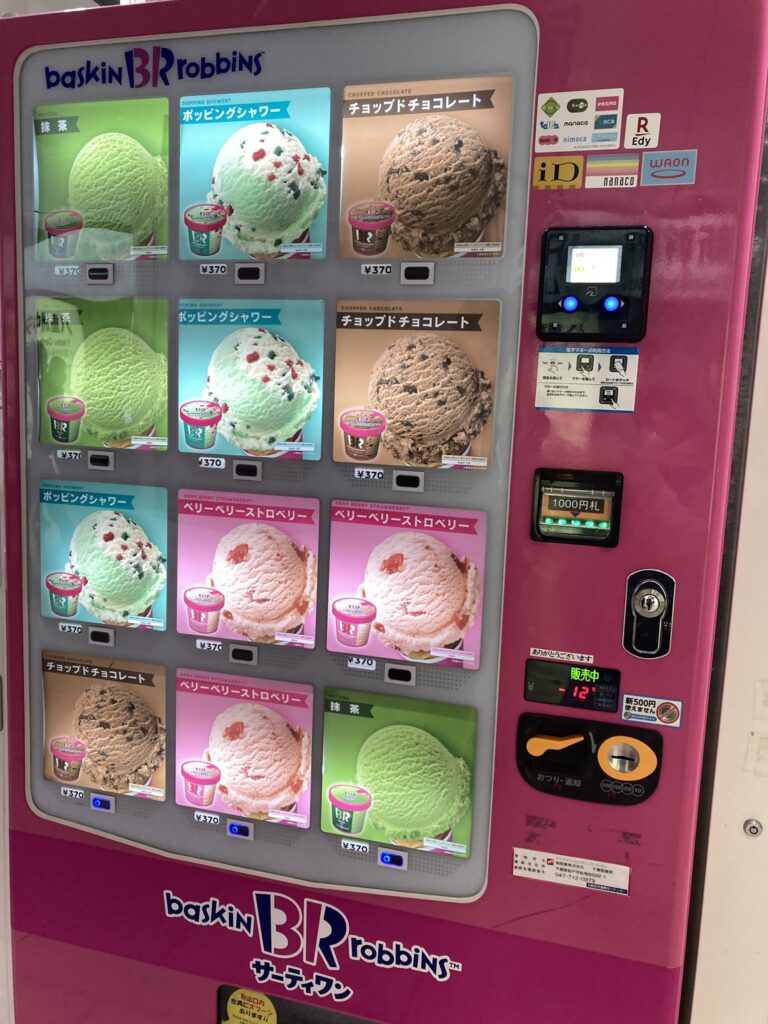
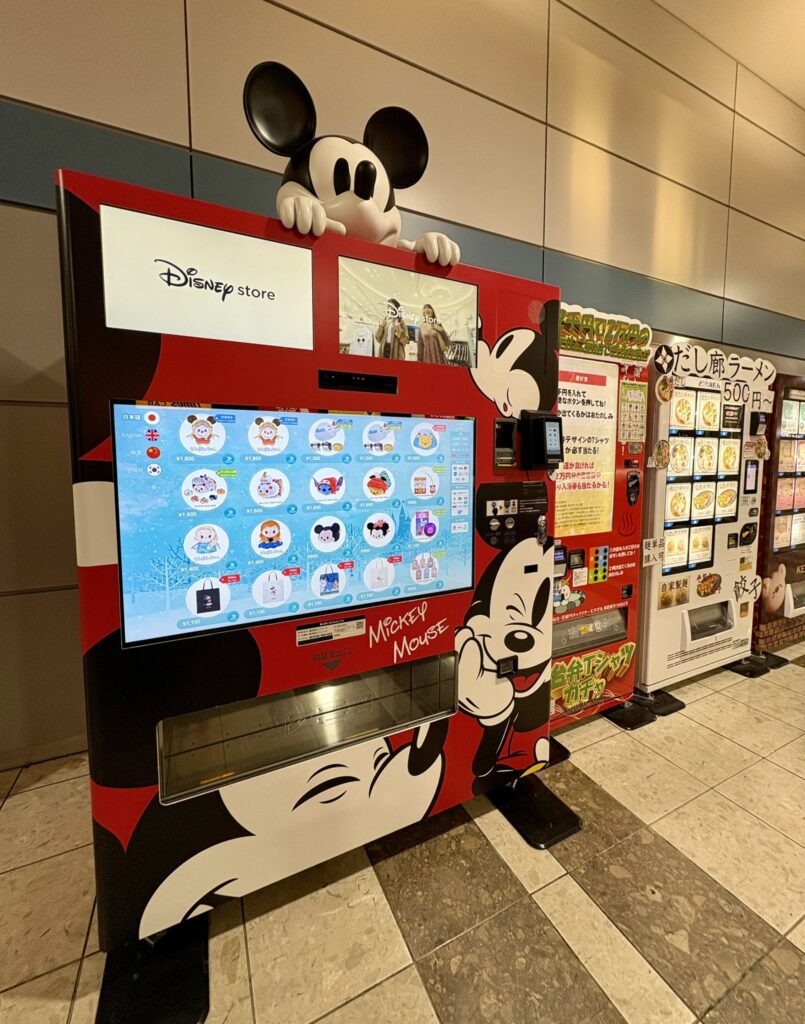
Most vending machines sell drinks, but the variety may surprise you.
- Water, tea, juice, soda
- Hot canned drinks (coffee, tea, milk tea)
- Ice cream
- Snacks
- Alcohol (in some locations)
- Regional and seasonal products
The selection often changes by season and location.
“Atatakai” and “Tsumetai”: Hot or Cold?
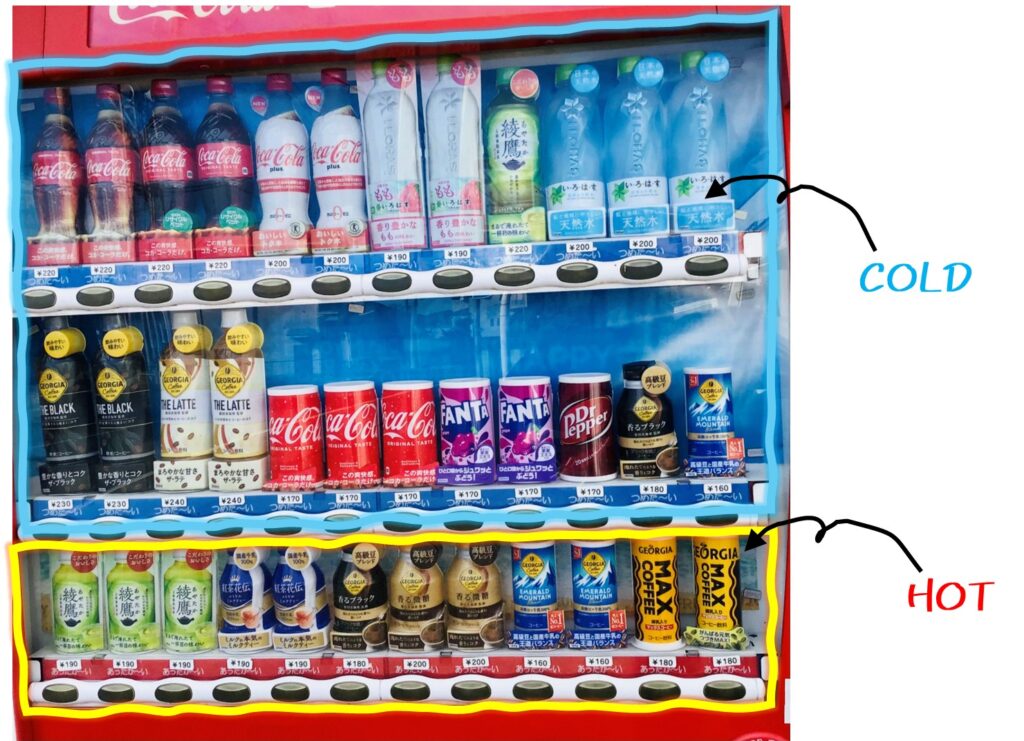
Japanese vending machines clearly indicate whether a drink is hot or cold using friendly Japanese expressions.
あったかーい (Atatakai) – Hot
This label means warm or hot.
You’ll often see it on:
- Canned coffee
- Hot tea
- Milk tea
- Lemon drinks
Hot drinks are usually available from autumn through early spring.
つめたーい (Tsumetai) – Cold
This label means cold.
Common cold drinks include:
- Bottled water
- Iced tea
- Juice
- Sports drinks
Cold drinks are available year-round, especially popular in summer.
Easy Visual Clues
Even without reading Japanese:
- Red or orange labels usually mean hot
- Blue labels usually mean cold
- Some machines clearly show HOT / COLD in English
In some cases, the same drink is available in both hot and cold versions depending on the season.
How to Use a Vending Machine in Japan
Using a vending machine is simple, even if you don’t speak Japanese.
- Choose the item you want
- Insert cash or use a cashless payment
- Press the button
- Pick up your item from the tray at the bottom
That’s it.
Paying at Japanese Vending Machines
Paying with Cash
Many vending machines still accept cash.
- Coins: ¥10, ¥50, ¥100, ¥500
- Bills: usually ¥1,000
Small coins like ¥1 and ¥5 are often not accepted.
Cashless Payment
Cashless options are becoming increasingly common, especially in cities.
- IC cards (Suica, PASMO, ICOCA, etc.)
- Credit cards
- QR code payments
Just tap or scan to pay.
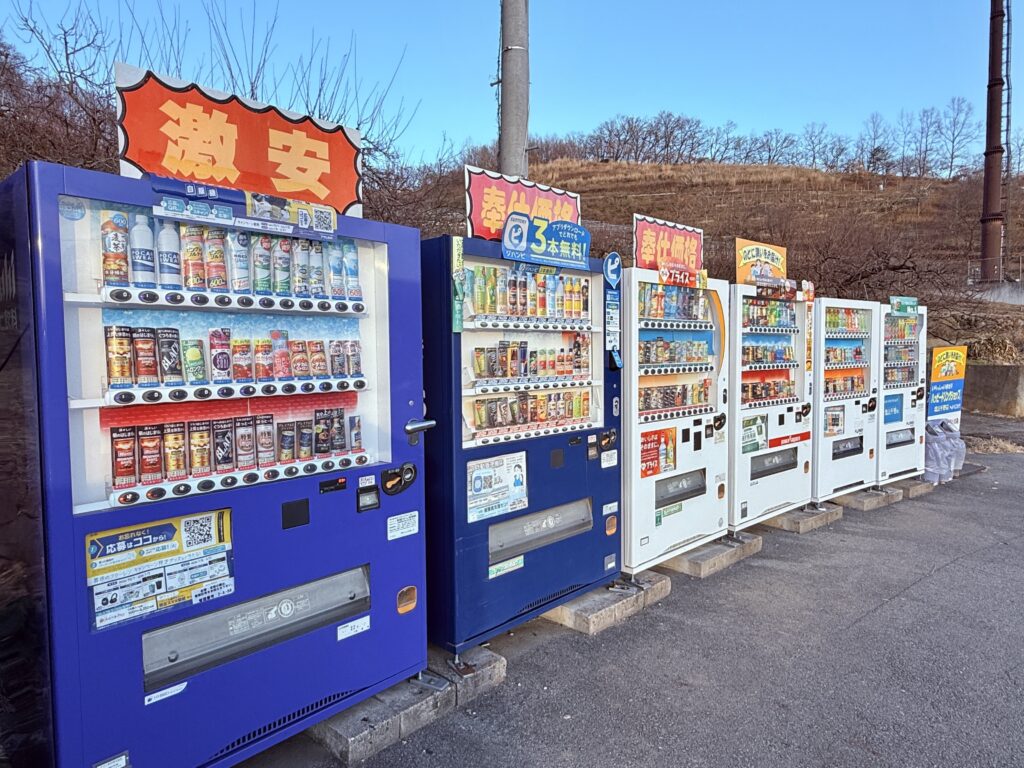
Where Can You Find Vending Machines?
Japanese vending machines are located almost everywhere:
- Train stations
- Sidewalks and street corners
- Outside hotels
- Near temples and shrines
- Along rural roads and countryside areas
Even in places with few shops, vending machines are often available.
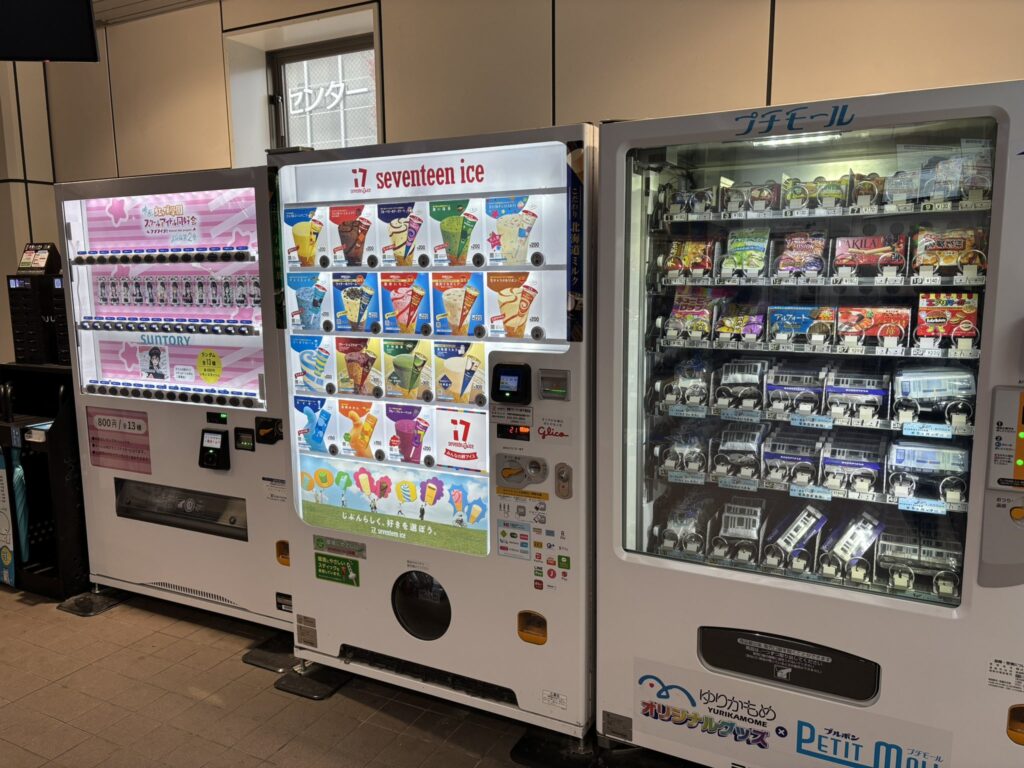
Why Vending Machines Are Perfect for Travelers
For foreign visitors, Japanese vending machines offer many advantages:
- Easy to use
- Language-friendly displays
- Available 24/7
- Useful in remote areas
They are a small detail, but one that perfectly represents Japan’s culture of safety, comfort, and convenience.
Aichi Alcoholic beverage Anime Anime pilgrimage April Architecture August Autumn Building Capital Area Cherry blossom Convenience store February Flower January Japanese food July kanto Kinki Kyoto March May Nagoya Nature Nightlife Night view Osaka Photogenic Pink Sakura Shopping Shrine Souvenir Spring Station Summer Superb view Temple Tips Tokai Tokyo Traffic train White Winter

More from my site
 Useful Japanese Phrases for Traveling in Japan: Easy Words Every Tourist Should Know
 Is Tap Water in Japan Safe to Drink?
 Is the Water in Japanese Restaurants Really Free? (No, It’s Not a Scam!)
 Attention Travelers! Japan’s Tax-Free System is Changing: What You Need to Know in 2026
 Is Japan Still Cheap? 2026 Price Comparison for Travelers
 What Is Japow? Why Japan Has the Best Powder Snow