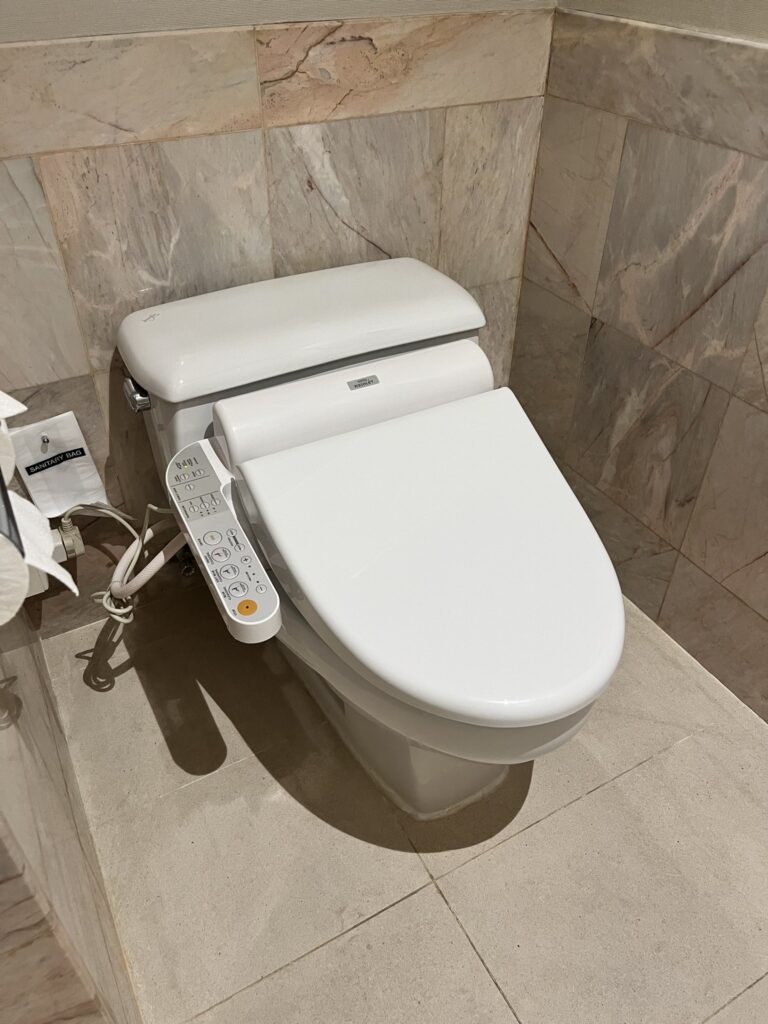
If you travel to Japan, one thing you’ll encounter almost everywhere—hotels, stations, shopping malls, and even public parks—is the high-tech Japanese toilet.
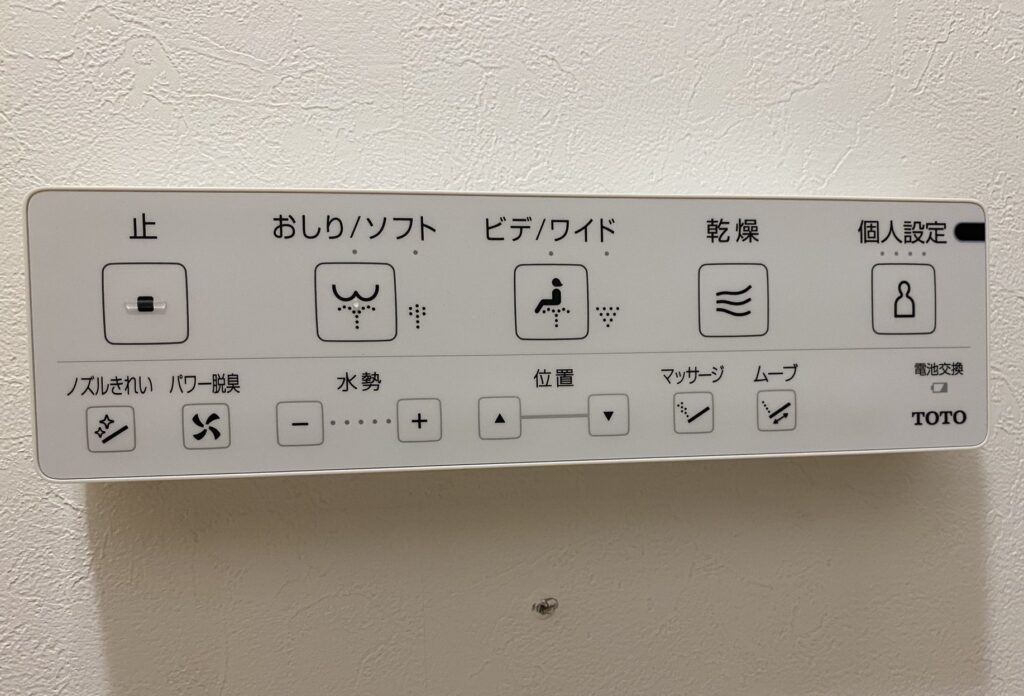
At first glance, the control panel may look confusing, but once you understand it, you may never want to go back to a regular toilet again.
This guide explains what Washlets and bidets are, the meaning of the icons, their differences, and other useful functions, so you can use them with confidence during your trip.
What Is a “Washlet”?
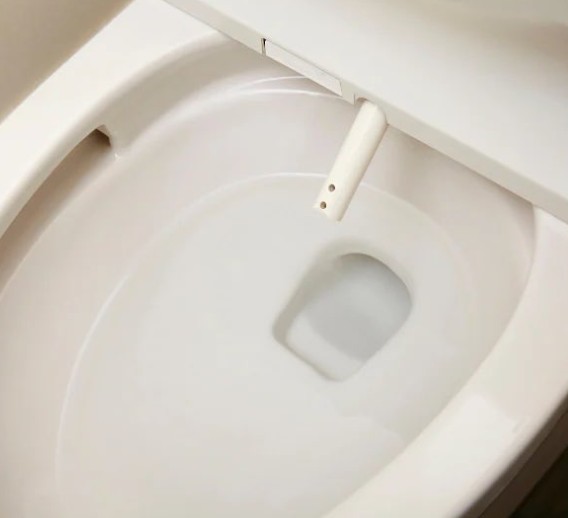
“Washlet” is the commonly used term in Japan for a toilet seat with built-in water-spray cleaning functions.
Originally, Washlet is a brand name by TOTO, one of Japan’s largest toilet manufacturers. However, many people now use the word generically to describe all similar toilets.
Other manufacturers may use different names, but the functions are very similar.
Washlet vs. Bidet: What’s the Difference?
On Japanese toilet control panels, you will usually see two main cleaning options:
Washlet (Rear Wash)
- Icon: Butt / bottom symbol
- Purpose: Cleans the rear (anus)
- Water pressure and position are often adjustable
- Used by everyone
Bidet (Front Wash)
- Icon: Female symbol
- Purpose: Cleans the front area
- Designed mainly for women
- Gentler water pressure than the rear wash
👉 Key difference:
- Washlet = rear cleaning
- Bidet = front cleaning
Different Names You Might See
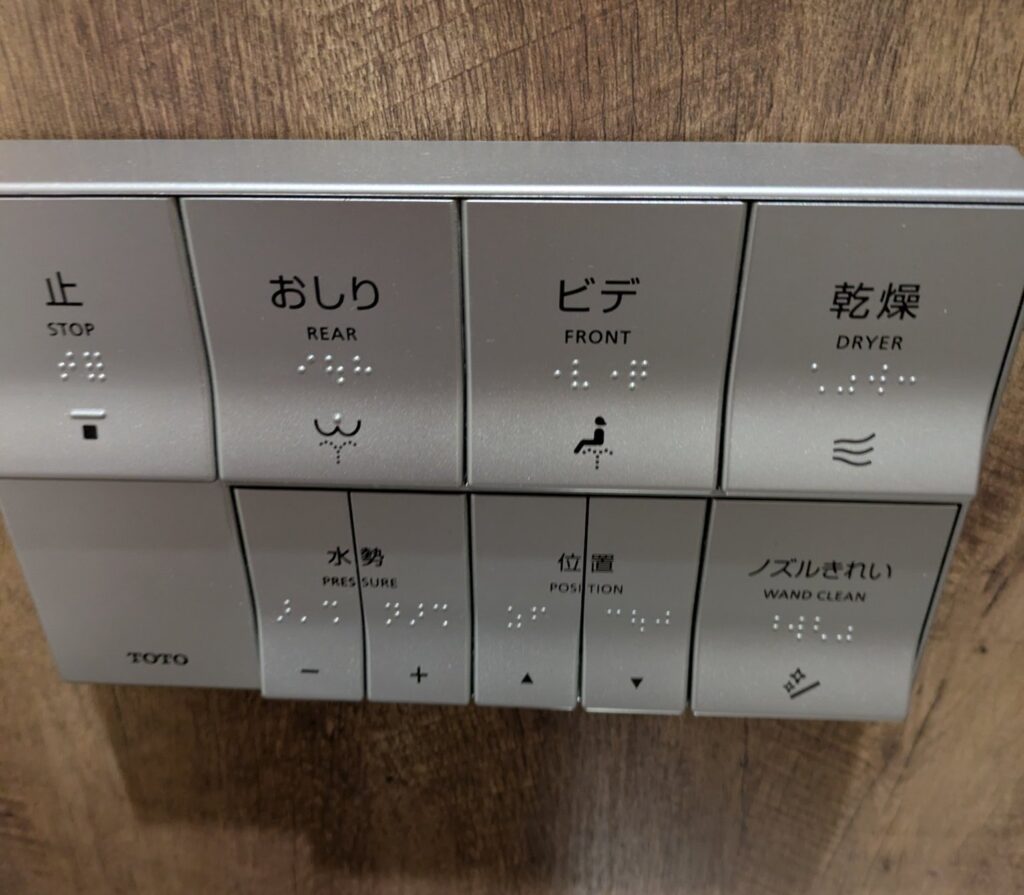
Depending on the manufacturer, the buttons may not always say “Washlet” or “Bidet.”
Common alternative labels include:
- Rear / Front
- Oshiri / Bidet
- Cleansing / Feminine Wash
- Simple icons only, without words
Even if the wording changes, the icons are the most reliable guide.
Other Common Washlet Functions
Japanese toilets often come with many extra features designed for comfort and privacy.
Heated Seat
- Keeps the seat warm, especially appreciated in winter
- Usually turns on automatically
Sound Masking (Otohime)
- Plays a flushing or water sound
- Used for privacy, especially in public restrooms
Adjustable Water Pressure & Position
- Allows you to customize the spray strength and angle
- Helpful for first-time users
Warm Water Control
- Lets you choose the water temperature
- Cold water is rarely used by default
Dryer Function
- Blows warm air after washing
- Optional, but reduces the need for toilet paper
Automatic Lid & Flush
- Lid opens and closes automatically
- Some toilets flush when you stand up
Is It Safe and Hygienic?
Yes. Japanese Washlets are designed with hygiene and safety in mind:
- Nozzles are cleaned automatically before and after use
- Water is clean, fresh, and temperature-controlled
- Controls are intuitive once you know the icons
Tips for First-Time Users
- Start with low water pressure
- Sit properly before pressing any button
- If unsure, look for a STOP button (usually a square)
- Don’t worry—Japanese toilets are designed to be user-friendly
Why Japanese Toilets Are Loved Worldwide
Once you get used to them, Japanese Washlets feel:
- More hygienic
- More comfortable
- More considerate of privacy
For many visitors, using a Washlet becomes a memorable part of their Japan experience.
Aichi Airport Alcoholic beverage Anime Anime pilgrimage April Architecture August Autumn Building Capital Area Cherry blossom Convenience store February Flower January Japanese food kanto Kinki Kyoto March May Nagoya Nature Nightlife Night view Osaka Photogenic Pink Sakura Shopping Shrine Souvenir Spring Station Summer Superb view Temple Tips Tokai Tokyo Traffic train White Winter

More from my site
 Japan’s Power Outlets: What Travelers Need to Know
 Useful Japanese Phrases for Traveling in Japan: Easy Words Every Tourist Should Know
 Attention Travelers! Japan’s Tax-Free System is Changing: What You Need to Know in 2026
 Is Japan Still Cheap? 2026 Price Comparison for Travelers
 How to Enjoy a Traditional Japanese Ryokan: 8 Must-Try Experiences
 The Ultimate Guide to Japan’s Capsule Hotels