
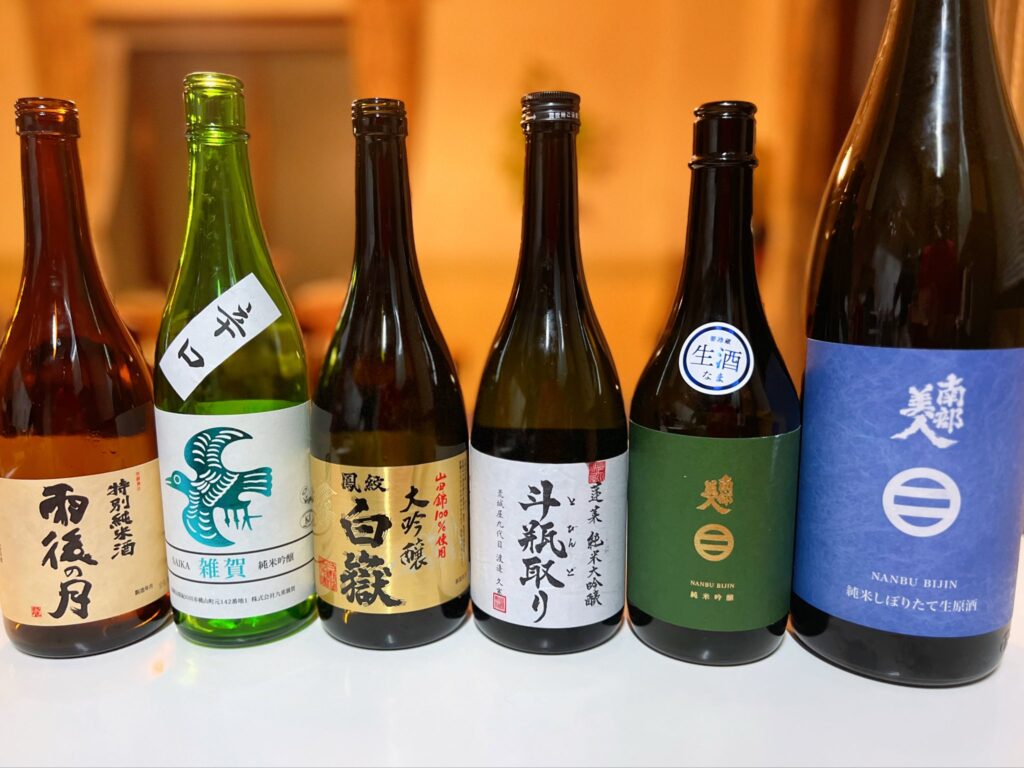
For many visitors to Japan, the world of sake (locally called nihonshu) feels like a beautiful mystery. With so many labels and terms, how do you find the one you’ll love? This guide breaks down the complex classification system into simple steps, helping you choose the perfect bottle for your palate and your meal.
1. The Two Major Pillars: “Junmai” vs. “Aruten”
The first thing to look for is the ingredients. Almost all premium sake can be divided into two main categories:
Junmai Type (Pure Rice Sake)
- Ingredients: Rice, Water, and Koji (rice malt) only.
- Taste Profile: These sakes highlight the natural, rich “umami” and sweetness of the rice. They tend to be fuller-bodied and savory.
- Perfect for: Those who love rich, authentic flavors or have dietary preferences for pure ingredients.
Alcohol-Added Type (Aruten)
- Ingredients: Rice, Water, Koji, plus a small amount of Brewers’ Alcohol.
- Taste Profile: The added alcohol isn’t to make it “stronger”—it’s a traditional technique used to “lift” the aroma and create a crisp, clean finish. These sakes are often lighter and very refreshing.
- Perfect for: Those who enjoy a fragrant aroma and a “dry” finish that cleanses the palate between bites.
2. The Classification Table: The “Premium 8” + Standard Sake
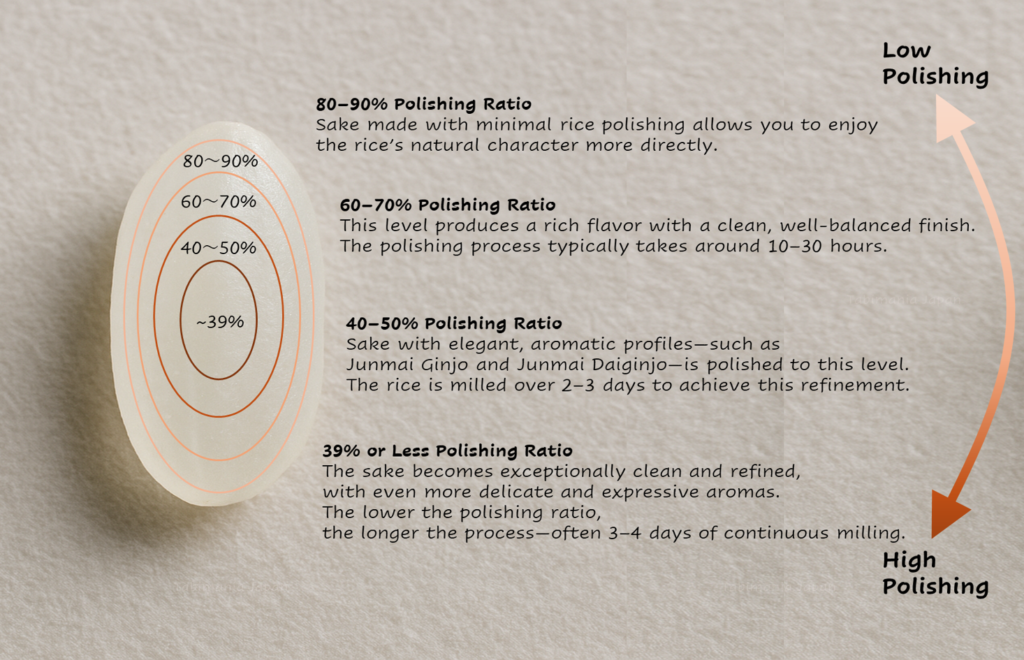
Sake is further classified by its Rice Polishing Ratio (Seimai-buai). Rice is polished to remove the outer layers (proteins/fats) that can cause bitter flavors. Generally, the more the rice is polished, the more “refined” and expensive the sake becomes.
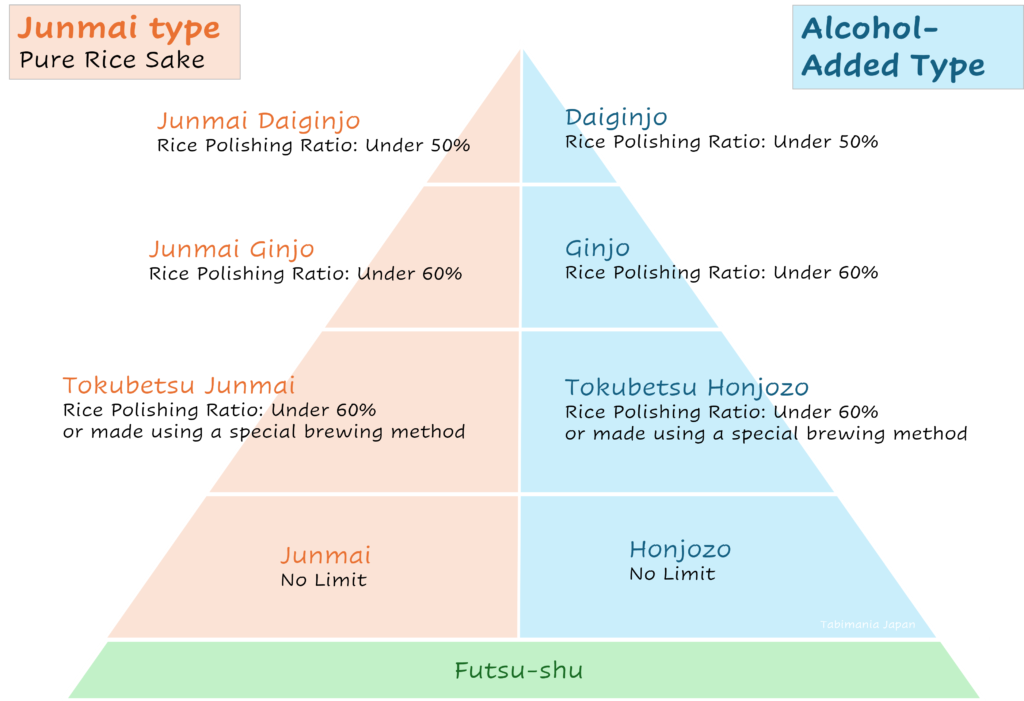
| Category | Type | Polishing Ratio | Characteristics |
| Junmai Type (Rice Only) | Junmai Daiginjo | Under 50% | The Masterpiece. Elegant, silky, fruity. |
| Junmai Ginjo | Under 60% | The Crowd Pleaser. Balanced and aromatic. | |
| Tokubetsu Junmai | Under 60%* | The Unique. Distinctive brewery styles. | |
| Junmai | No Limit | The Soulful. Rich, rice-forward, earthy. | |
| Alcohol-Added (Aruten) | Daiginjo | Under 50% | The Aromatic. Light, crisp, floral. |
| Ginjo | Under 60% | The Refreshing. Clean and easy to drink. | |
| Tokubetsu Honjozo | Under 60%* | The Smooth. Sharp finish, very versatile. | |
| Honjozo | Under 70% | The Classic. Dry, simple, great warm. | |
| Standard | Futsu-shu | No Limit | The Everyday. Casual “Table Sake.” |
*Or made using a special brewing method.
3. Four Iconic Brands You Must Try
To make it easier, here are four world-famous brands that represent these styles perfectly.
Dassai (獺祭) – The Modern Legend
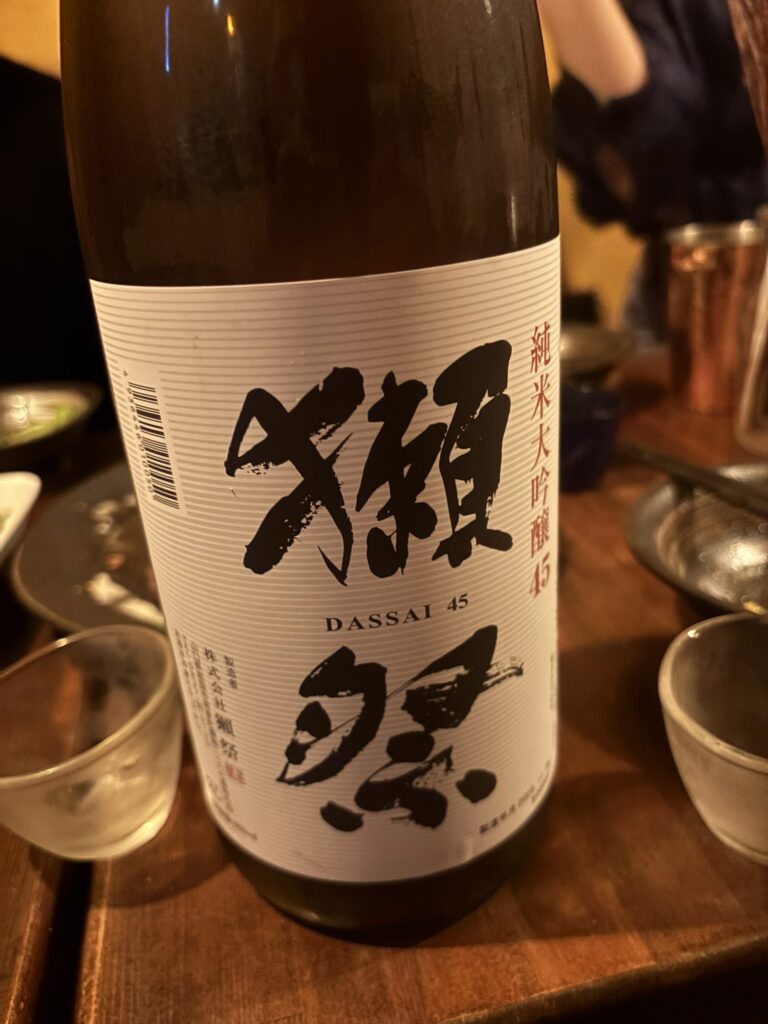
- Type: Junmai Daiginjo
- The Experience: Famous for extreme polishing (down to 23%!). It tastes like premium fruits—peaches and melons.
- Best for: A luxurious toast. Sip it chilled from a wine glass.
Born (梵) – The Golden Standard
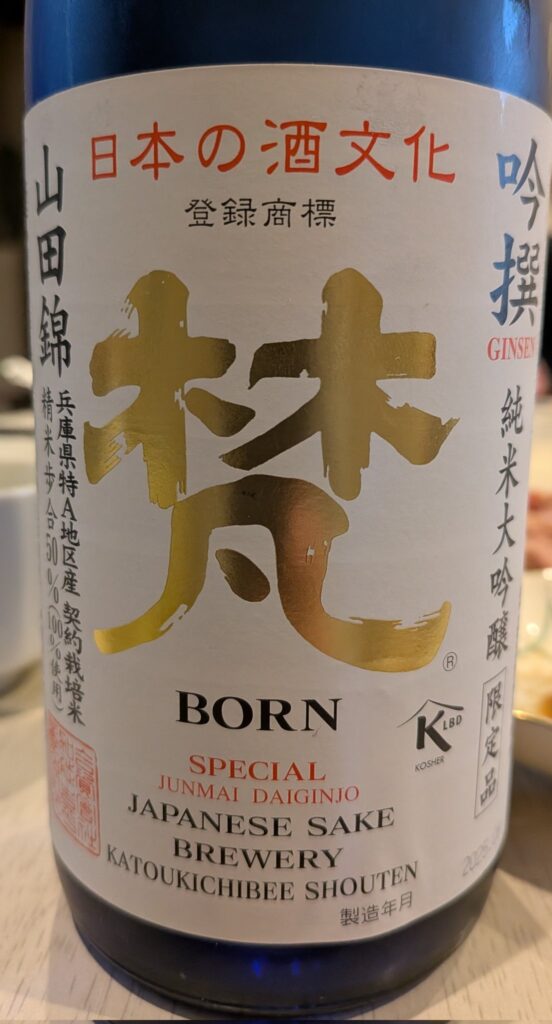
- Type: Junmai Daiginjo
- The Experience: A brand often served to world leaders. Their sake is aged at sub-zero temperatures, resulting in a deep, sophisticated, and silky elegance.
- Best for: High-end sushi dinners or as a prestigious gift.
Kubota (久保田) – The Perfection of Dry
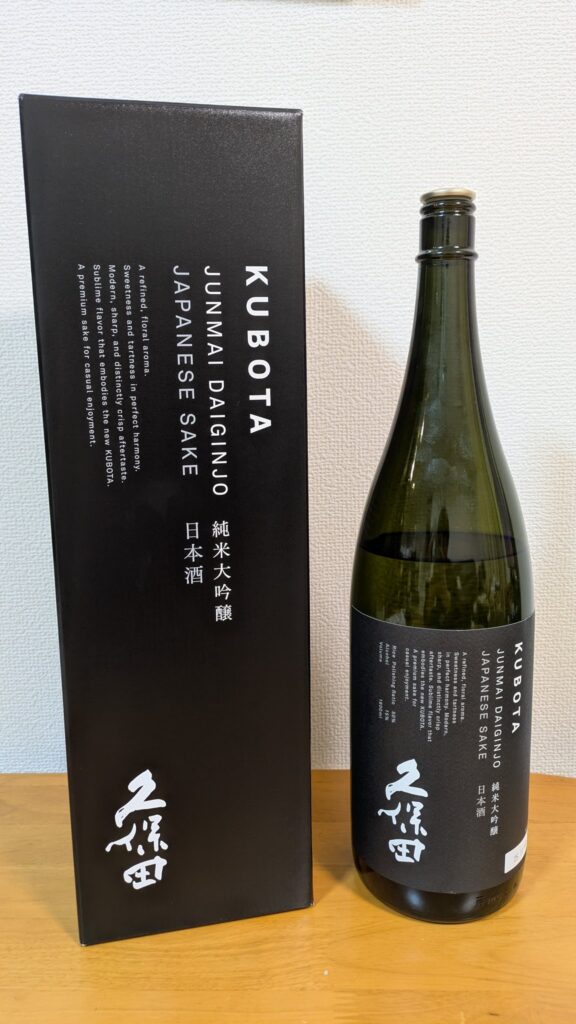
- Type: Ginjo / Junmai Daiginjo
- The Experience: The king of the “Tanrei Karakuchi” (Light & Dry) style from Niigata. It is incredibly clean and designed not to interfere with the taste of food.
- Best for: Pairing with delicate Sashimi or Tempura.
Hakkaisan (八海山) – The Everyday Hero
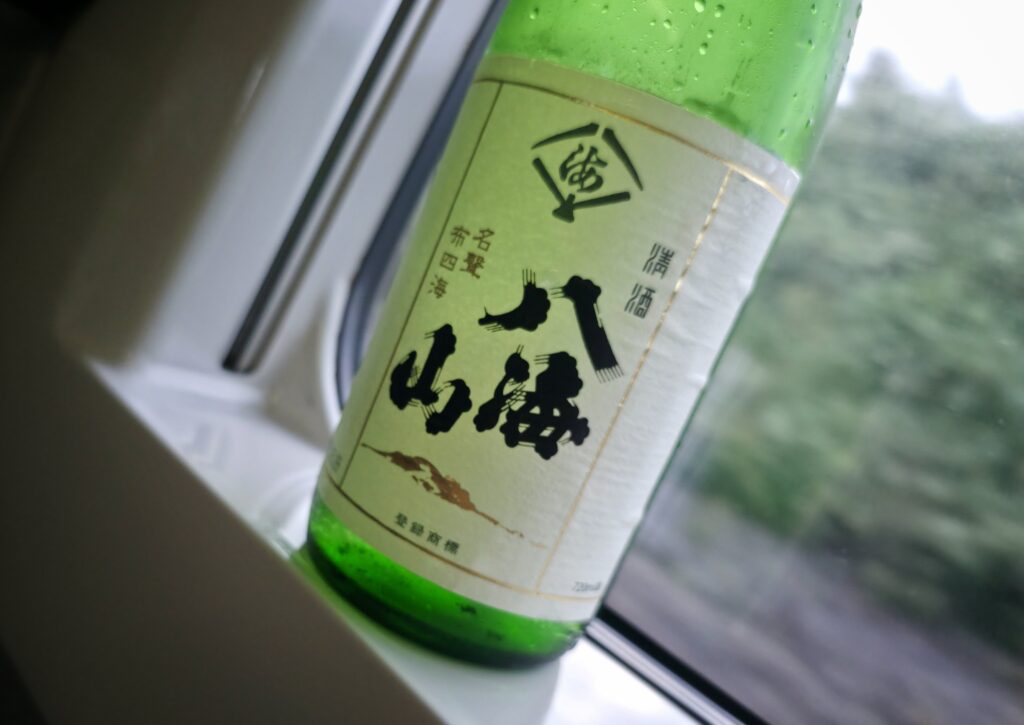
- Type: Tokubetsu Honjozo / Futsu-shu
- The Experience: While they make premium bottles, they are famous for the high quality of their “everyday” sake. It is as crisp and pure as mountain snow.
- Best for: A casual Izakaya night. Try it “Atsukan” (Warm)—it’s a Japanese comfort experience.
4. Quick Pairing & Temperature Guide
- Chilled (5–10°C): Best for Daiginjo and Ginjo. This preserves their delicate, fruity aromas.
- Room Temp / Warm (20–45°C): Best for Junmai, Honjozo, and Futsu-shu. Heat expands the umami and creates a soothing, mellow flavor.
- The Pairing Rule: * Light & Fruity sake $\rightarrow$ Seafood, Salads, Carpaccio.
- Rich & Savory sake $\rightarrow$ Meat dishes, Teriyaki, Miso-flavored foods.
Summary: Higher Price ≠ Better Taste
In the sake world, price usually reflects the labor and rice waste involved in high polishing (like Daiginjo). However, sake is about the “right match.” A $100 bottle of Daiginjo is a work of art, but a $15 bottle of Honjozo might be the perfect partner for a hot bowl of Ramen.
Don’t be afraid to experiment. Whether it’s a “One Cup” from a convenience store or a “Dassai 23” at a sky lounge, your perfect sake is waiting for you!
Aichi Airport Alcoholic beverage Anime Anime pilgrimage April Architecture August Autumn Building Capital Area Cherry blossom Convenience store February Flower January Japanese food kanto Kinki Kyoto March May Nagoya Nature Nightlife Night view Osaka Photogenic Pink Sakura Shopping Shrine Souvenir Spring Station Summer Superb view Temple Tips Tokai Tokyo Traffic train White Winter

More from my site
 Sake Brewery Hopping in Fushimi, Kyoto: A Local Guide
 The Secret Sake Locals Love: What Is Hire-zake in Japan?
 Sake or Shochu? Differences Between Japan’s Popular Alcohol Drinks
 Kyakuhiki in Japan: How to Avoid Street Touts & Bar Scams
 What is Horoyoi? Japan’s Most Popular Chu-Hi for Beginners
 Nama Beer Explained: Why Japan’s Fresh Beer Is a Must-Try