
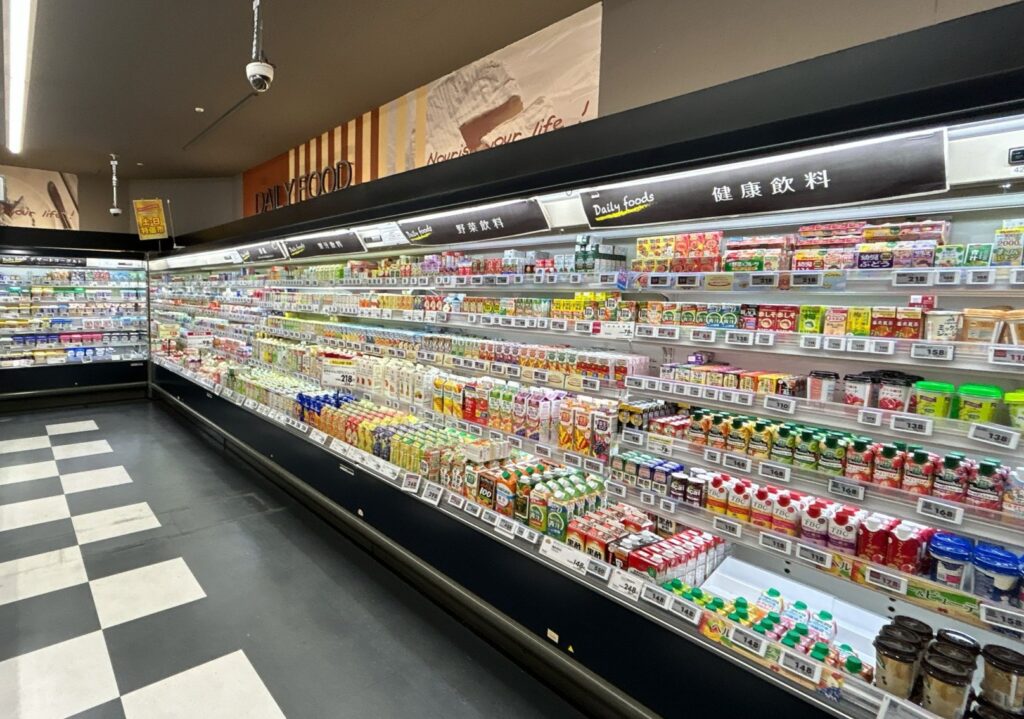
Supermarkets in Japan are a wonderland of high-quality snacks, fresh bento boxes, and unique souvenirs. While the experience is generally straightforward, there are a few local customs and rules you should know to shop like a local.
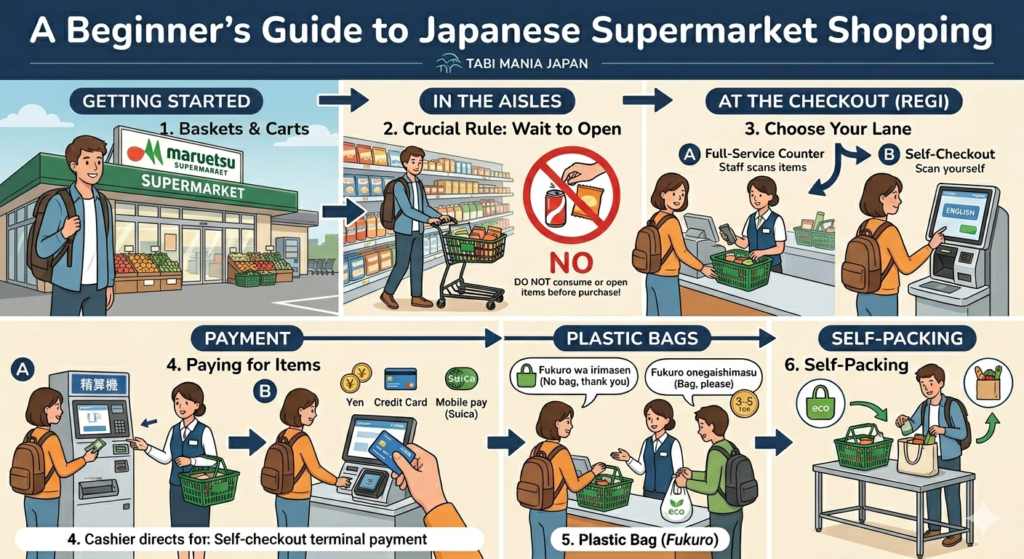
1. Getting Started: Baskets and Carts
When you enter, you will find shopping baskets (kago) and carts (kato).
- The “Stack” System: In Japan, it is standard to place your shopping basket on top of the cart rather than putting items directly into the cart’s metal frame.
- Compact Design: Japanese aisles can be narrow, so carts are designed to be slim and easy to maneuver.
2. At the Checkout (Regi)
There are two main types of checkouts you will encounter:
Full-Service Counters (Staffed)
- Place your basket: Put your entire basket onto the counter. The staff will scan each item and carefully place them into a second basket.
- Payment: * Direct: You pay the staff member directly.
- Semi-Self Payment: Increasingly common, the staff scans your items, but you are directed to a nearby machine to insert your cash or card yourself. This keeps the line moving quickly.
Self-Checkout Machines
- Scan: Select “English” on the screen (if available) and scan your items one by one.
- Pack & Pay: Follow the on-screen prompts to pay. Note that these machines are very sensitive to weight; keep your items on the bagging scale until you finish paying.
3. Plastic Bags and Packing
- Bags are not free: In Japan, plastic shopping bags usually cost between 3 to 5 yen.
- The “Eco-bag”: Most locals bring their own reusable “My Bag.” If you need a plastic bag, let the cashier know by pointing to the bags at the counter or saying, “Fukuro onegaishimasu.”
- Self-Packing: Unlike some countries where staff bag your groceries, in Japan, you take your basket to a separate packing table (kakaidai) after paying to put items into your bag yourself.
⚠️ Important Rules & Etiquette
To ensure a smooth visit, please keep these “Golden Rules” in mind:
- DO NOT open items before paying: This is the most important rule. In Japan, consuming food or drinks—even if you intend to pay for them later—is considered shoplifting or extremely rude. Wait until you have a receipt in hand.
- Handle produce with care: Fresh fruit and vegetables are treated with high respect in Japan. Avoid squeezing or poking produce to check for ripeness.
- Wait in line: Look for markers on the floor indicating where the queue starts. Japanese lines are very orderly; “cutting” is a major social faux pas.
💡 Useful Phrases
| English | Japanese (Romaji) |
| Could I have a bag? | Fukuro o itadakemasuka? |
| Do you accept credit cards? | Kurejitto kado wa tsukaemasuka? |
| No bag, thank you. | Fukuro wa irimasen. |
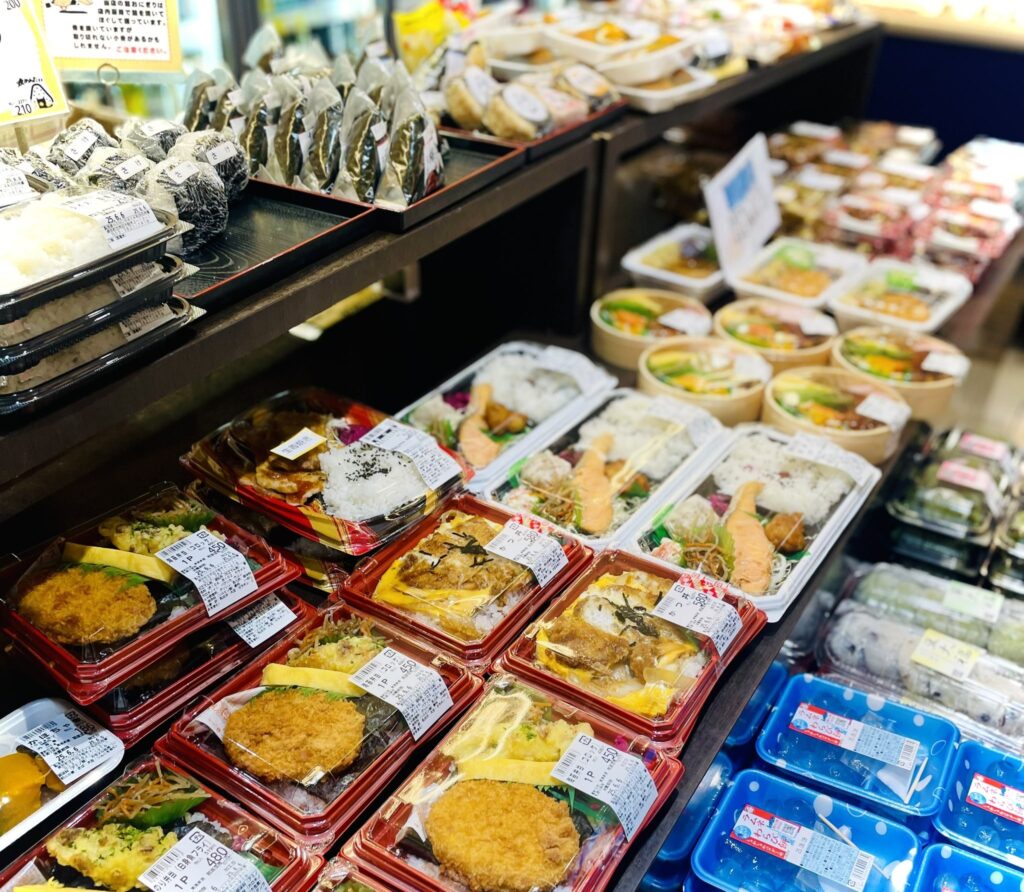
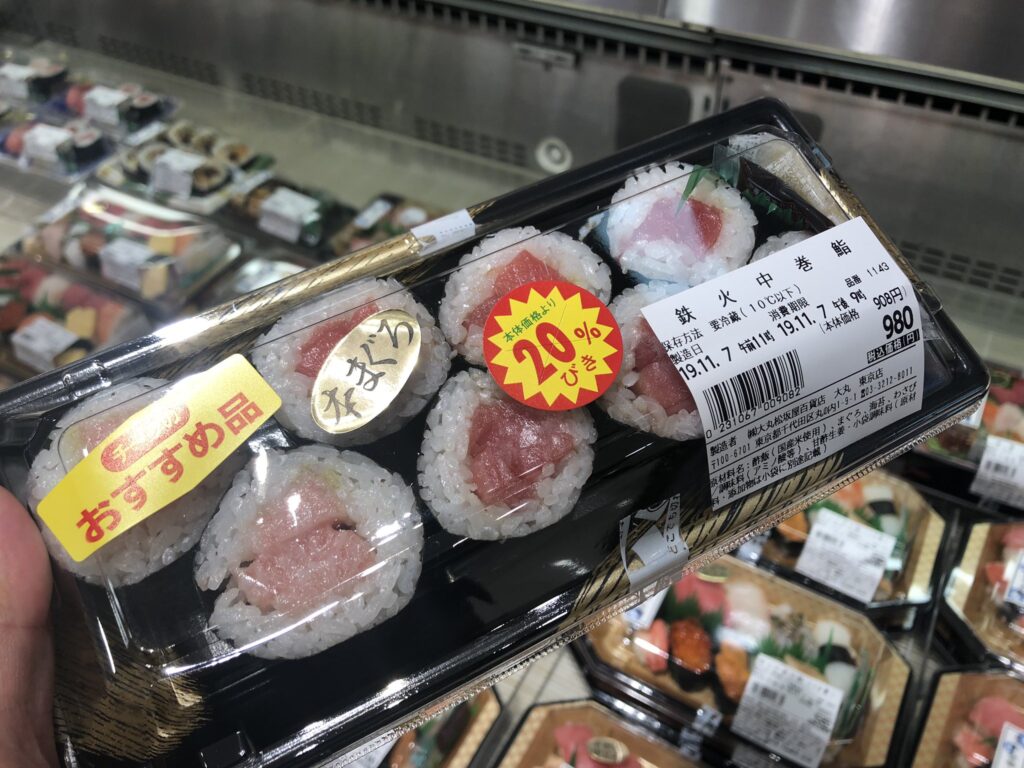
Tabimania Tip: If you visit the supermarket about an hour before closing, you’ll find significant discounts (often 20% to 50% off) on fresh sushi and bento boxes!
Aichi Airport Alcoholic beverage Anime Anime pilgrimage April Architecture August Autumn Building Capital Area Cherry blossom Convenience store February Flower January Japanese food kanto Kinki Kyoto March May Nagoya Nature Nightlife Night view Osaka Photogenic Pink Sakura Shopping Shrine Souvenir Spring Station Summer Superb view Temple Tips Tokai Tokyo Traffic train White Winter

More from my site
 Gourmet Supermarkets in Tokyo: The Ultimate Guide for Foodie Travelers
 Chiikawa Bakery Osaka: The Ultimate Guide for Visitors
 Strawberry Picking in Japan 2026: A Complete Guide for First-Time Visitors
 Chiikawa Bakery Launches Exclusive Summer Menu in 2025
 Chiikawa Yaki Guide in Yokohama: Reservations, Menu, and Exclusive Goods
 Chiikawa Bakery Tokyo Guide: Reservations, Menu, and Exclusive Goods