
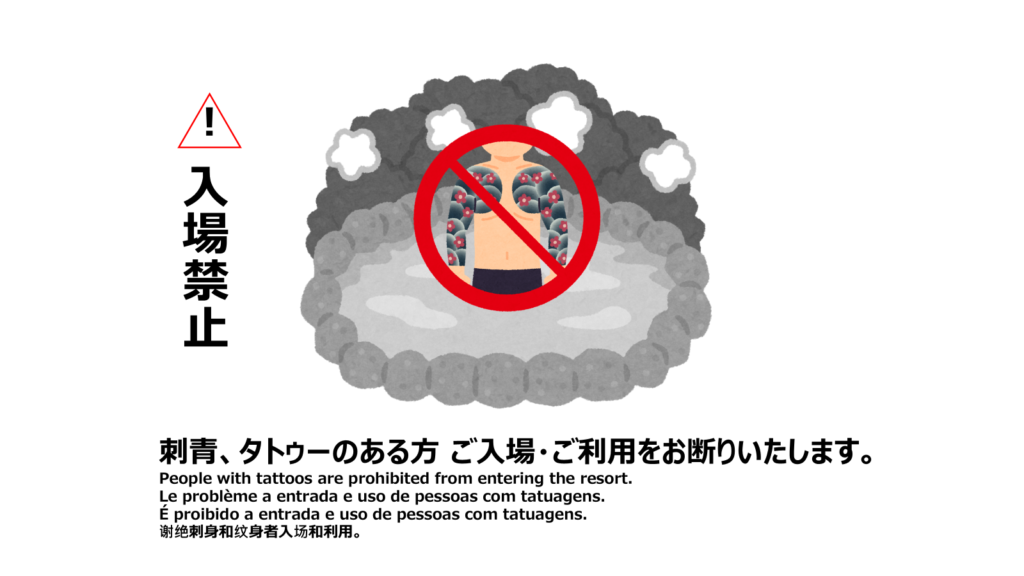
Are you planning a trip to Japan and looking forward to relaxing in a traditional onsen (hot spring)? If you have tattoos, you might have heard a discouraging rumor: “People with tattoos are banned from Japanese public baths.”
Is this actually true? Why is Japan so strict about ink? And most importantly, how can you still enjoy this incredible cultural experience?
Here is everything you need to know as a traveler.
1. The Reality: Are Tattoos Really Banned in Onsens?
The short answer is yes, but not everywhere.
Historically, the majority of traditional onsens and public baths (sento) have maintained a strict “no tattoo” policy. Even a tiny, hidden tattoo could get you politely asked to leave.
However, things are changing. With the surge of international tourism, a growing number of modern ryokans, hotels, and public baths are softening their rules to welcome tattooed guests.
2. Why is Japan So Strict About Tattoos?
To many visitors, tattoos are a form of self-expression, art, or fashion. However, in Japan, the taboo is deeply rooted in history.
- The Yakuza Connection: For centuries, full-body tattoos (irezumi) were heavily associated with members of the Yakuza (the Japanese organized crime syndicates).
- Keeping the Peace: To keep ordinary citizens and families feeling safe, businesses simply banned everyone with tattoos to prevent gang members from entering.
- Cultural Inertia: Even though younger Japanese generations view tattoos differently today, many traditional establishments still stick to the old rules out of respect for elderly customers.
It is rarely an act of personal discrimination against you as a tourist; it is simply a deeply embedded cultural rule.
3. Where Can You Find Tattoo-Friendly Onsens?
If you have ink, you still have plenty of options to experience Japan’s hot spring culture:
- Look for Tattoo-Friendly Facilities: Websites like Tattoo-Friendly Japan list hundreds of spots nationwide that welcome tattooed guests.
- Book a Private Bath (Kashikiri): Many ryokans (traditional inns) allow you to rent a private onsen room for an hour, or offer rooms with their own private outdoor baths. Since you are in a private space, tattoos are 100% perfectly fine!
4. The Ultimate Hack: Cover It Up with a Tattoo Seal
What if you want to visit a specific, famous public onsen that has a strict “no tattoo” rule?
If your tattoo is small or medium-sized, the easiest solution is to cover it up. Many onsens will allow you entry if your tattoos are completely hidden from view.
Instead of using awkward bandages or medical tape that peels off in hot water, you should use a specialized water-resistant tattoo cover seal.
👉 The Best Waterproof Tattoo Cover Stickers for Onsen

Why these seals are a game-changer:
- Just Like a Band-Aid: They are incredibly easy to apply. You just peel, stick, and press it over your ink.
- 100% Waterproof & Steam-proof: Unlike regular bandages, these are designed to withstand hot spring water and won’t peel off mid-soak.
- Skin-Tone Matching: They come in various flesh-toned shades to blend in naturally with your skin, making your tattoo completely invisible to other guests.
Before you pack your bags for Japan, make sure to grab a pack of tattoo cover seals so you can experience Japan’s best hot springs without any stress!
Summary / Call to Action
Don’t let your body art stop you from experiencing one of Japan’s finest traditions. Respect the local culture, grab some cover-up seals, or book a private bath, and enjoy your soak!
Aichi Airport Alcoholic beverage Anime Anime pilgrimage April Architecture August Autumn Building Capital Area Cherry blossom Convenience store February Flower January Japanese food kanto Kinki Kyoto March May Nagoya Nature Nightlife Night view Osaka Photogenic Pink Sakura Shopping Shrine Souvenir Spring Station Summer Superb view Temple Tips Tokai Tokyo Traffic train White Winter

More from my site
 Ashiyu in Japan: How to Use Foot Baths, Benefits & Important Manners
 How to Enjoy a Traditional Japanese Ryokan: 8 Must-Try Experiences
 Enjoying Onsen the Right Way: A Beginner’s Guide to Bathing Etiquette
 Okawaso Onsen Ryokan: A Must-Visit Hot Spring Experience in Fukushima with “Demon Slayer” Vibes
 Kinrin Lake at Yufuin: Golden Reflections and the Mysterious Torii Gate
 Discover the Beauty of Shirarahama Beach: A Hidden Gem in Wakayama