
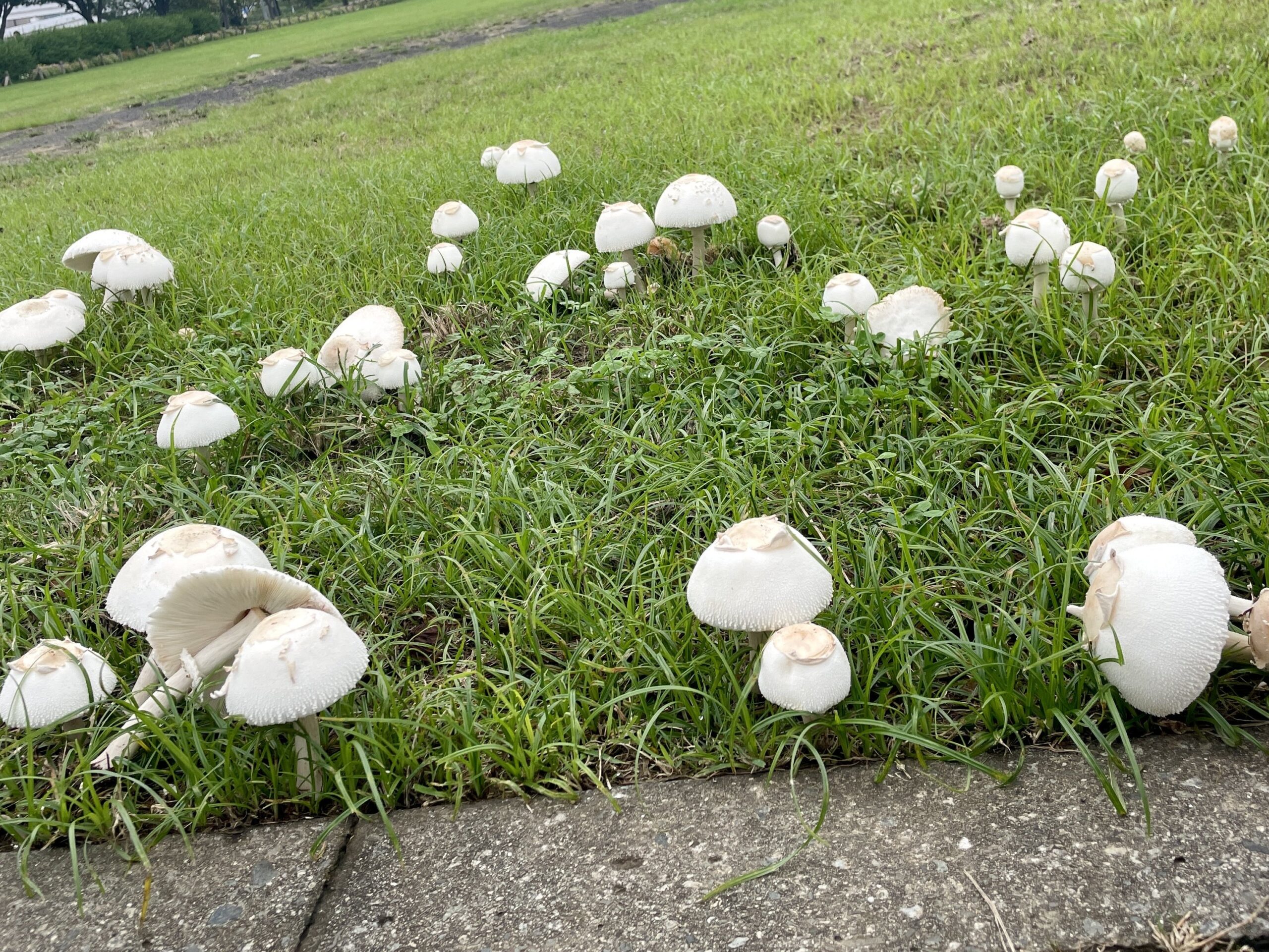
If you are walking in parks, gardens, or along riverbanks in Japan, you may notice large, clean-looking white mushrooms popping up in grassy areas.
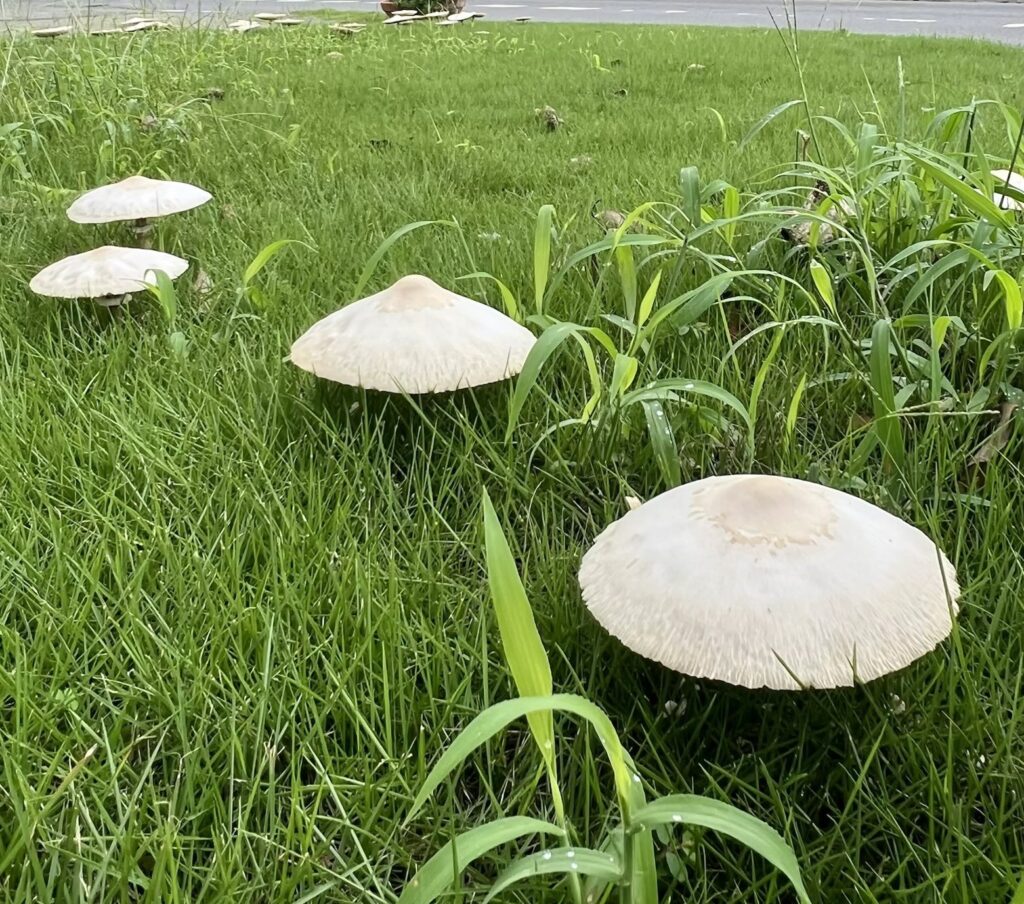
These are False Parasol mushrooms (Chlorophyllum molybdites / Japanese: オオシロカラカサタケ, Ooshirokarakasatake). They are highly toxic.
Quick Identification Guide
- Color: Pure white to off-white when young; develops brownish scales on the center of the cap as it grows.
- Cap Size: Large, expanding from 5 cm to over 20 cm wide.
- Gills (Underneath): Starts white, turning pale olive-green as spores mature.
- Stem: Tall (10–25 cm) with a distinct ring/collar near the top.
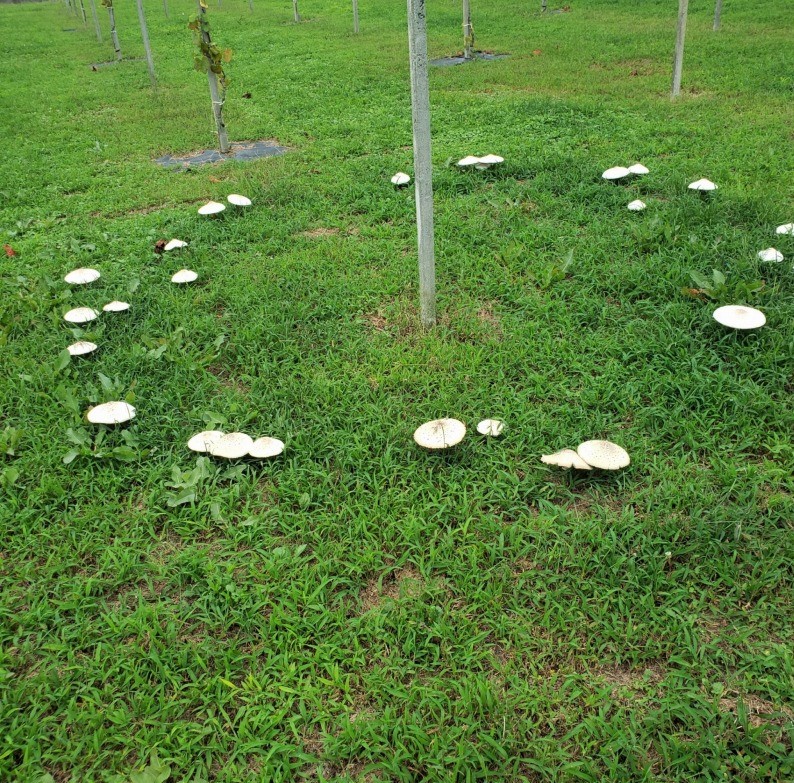
- Habitat: Open grassy lawns, city parks, golf courses, and riverbeds.
Crucial Safety Rules: Protect Children and Pets
Because these mushrooms look remarkably similar to edible species like the Parasol Mushroom (Macrolepiota procera) or common meadow mushrooms, accidental poisonings are common.
- Do NOT Eat: Ingestion causes severe gastrointestinal distress, including extreme vomiting, bloody diarrhea, and severe abdominal cramps within 1 to 3 hours.
- Do NOT Touch or Rub Eyes: Spores or residual toxins on hands can cause eye irritation or accidental ingestion. Wash hands immediately with soap if contact occurs.
- Supervise Children & Dogs: Pets often sniff or bite wild mushrooms, and young children may pick them out of curiosity. Keep dogs on a short leash in grassy park areas.
What to Do in an Emergency
If Ingested:
- Seek Emergency Medical Help Immediately. Call Japan’s emergency number 119 for an ambulance, or visit an urgent care facility.
- For Pets: Contact a local veterinary clinic (Dobutsu Byoin / 動物病院) right away.
- Save a Sample: Take a photo or keep a piece of the mushroom in a paper bag. Showing this to doctors helps confirm the species quickly.
Why Are They Increasing Suddenly?
These mushrooms thrive in warm, humid weather. Extended rainy seasons, summer heatwaves, and rich soil in urban lawns create ideal conditions for their underground mycelium to produce fruit bodies rapidly overnight.
Emergency Contacts in Japan:
Osaka hotline: 072-727-2499 (365 days, 24 hours)
Emergency (Ambulance/Fire): 119
Japan Poison Information Center (JPIC):
Tsukuba hotline: 029-852-9999 (365 days, 9:00 AM – 9:00 PM)
More from my site
 Where to See Tokyo’s Golden Ginkgo Trees in 2025
 Exploring Akiyoshido Cave: A Hidden Underground World in Yamaguchi, Japan
 Is the Poké Ball Hotel Real? Location, How to Stay, & Campaign Rules Explained
 Clear Water, Hidden Risks: Staying Safe at Rivers in Japan
 Is Biei Blue Pond Really Blue? The Truth & Guide
 Step Into an Underground Fantasy: The Hidden Labyrinth in Tochigi