
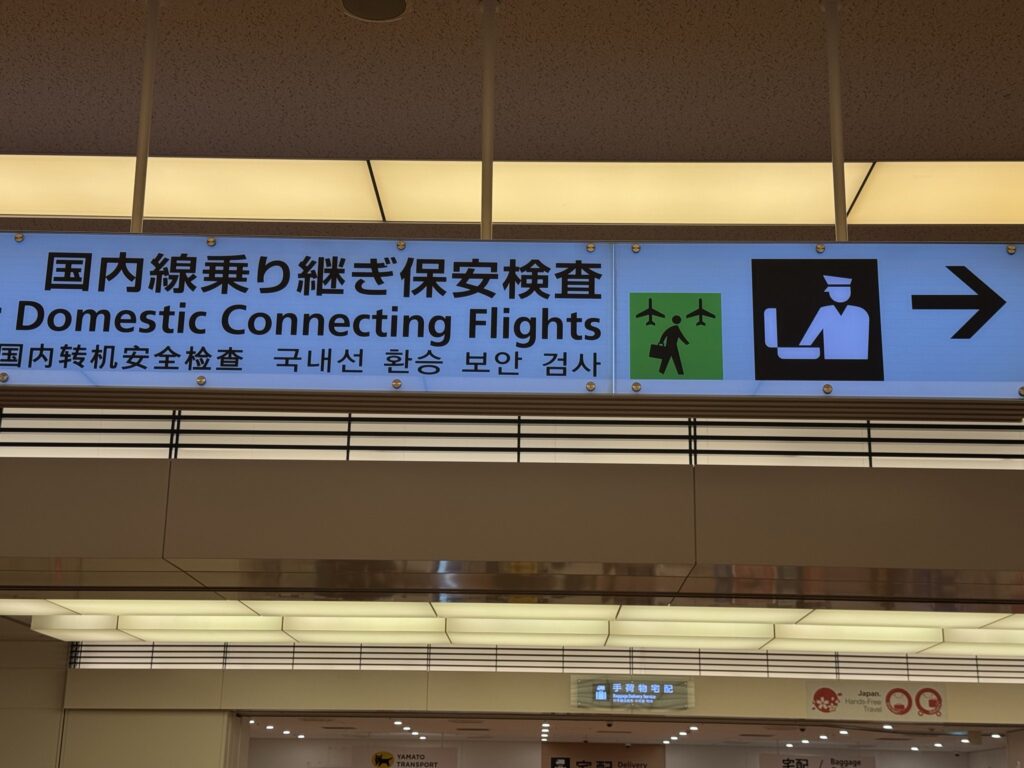
1. Timeline & Cutoff Times (How Early Should You Arrive?)
Quick Answer: For Japanese domestic flights, arrive at the airport 60 to 90 minutes before departure. Pass through the security checkpoint at least 20 minutes before departure (25–30 minutes for budget airlines).
Unlike international travel, domestic air travel in Japan is exceptionally fast and efficient. However, Japanese airlines enforce strict security cutoff times. Missing the security deadline by even one minute means you will not be allowed on the plane.
| Airline Category | Recommended Airport Arrival | Security Cutoff | Boarding Gate Arrival |
| Full Service (ANA, JAL) | 60 mins before | 20 mins before | 10–15 mins before |
| LCCs (Peach, Jetstar, etc.) | 90 mins before | 25–30 mins before | 20 mins before |
- Pro Tip: Major hubs like Tokyo Haneda (HND), Tokyo Narita (NRT), Kansai (KIX), and Fukuoka (FUK) can get extremely crowded during Japanese peak travel periods (Golden Week in May, Obon in August, and New Year). Add 30 minutes to your arrival time during these holidays.
2. Luggage & Item Rules: What’s Allowed vs. Prohibited?
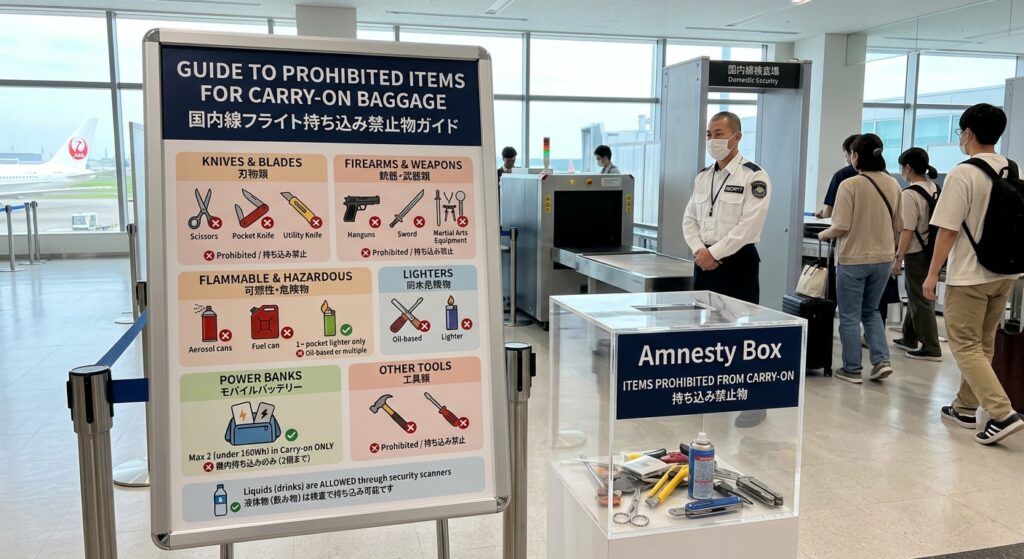
Quick Answer: Unlike international flights, liquids are ALLOWED through domestic security in Japan (including plastic water bottles and coffee). However, power banks are strictly prohibited in checked luggage and must stay in your carry-on.
Drinks & Liquids (✔ Allowed)
- Drinks in Plastic Bottles / Flasks: You can take soft drinks, water, or coffee through security. Inspectors will scan your bottle with a special liquid scanner at the checkpoint.
- Alcohol: You can carry alcohol onboard (up to 70% ABV), but consuming your own alcohol on board is restricted by most airlines.
Power Banks & Lithium Batteries (⚠️ Strict Safety Rules)
- Carry-on ONLY: Power banks must go into your carry-on bag. Never place them in checked baggage.
- Quantity Limit: Maximum of 2 power banks (under 160Wh each) per person.
- In-Flight Ban: You cannot use power banks to charge devices or charge the power bank via aircraft power outlets while onboard. Store them safely in your seat pocket or under your seat—never in the overhead compartment.
Other Common Items
| Item | Carry-on Bag | Checked Luggage | Important Notes |
| Scissors & Knives | ✖ Not Allowed | ✔ Allowed | Includes souvenir pocket knives & craft scissors. |
| Pocket Lighters | ✔ Allowed (Limit: 1) | ✖ Not Allowed | Standard gas lighters only (Oil/turbo lighters banned). |
| Cordless Hair Curlers | ✖ Restricted | ✖ Restricted | Models with non-removable lithium batteries are forbidden entirely. |
| Power Banks | ✔ Allowed (Max 2) | ✖ Not Allowed | Must be under 160Wh each. In-flight use/charging is prohibited. |
3. English Language Support at Japanese Airports
Quick Answer: Yes, English support is widely available at major airports and aboard major carriers (ANA/JAL). Automated systems and translation devices assist non-Japanese speakers at regional terminals.
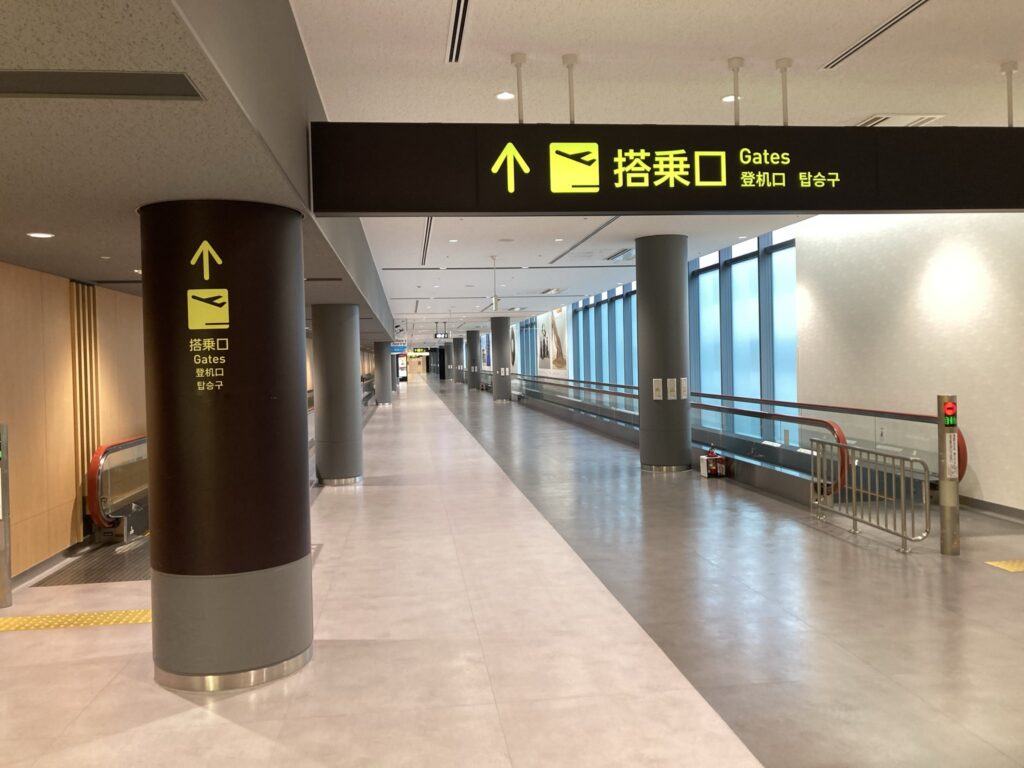
- Signage & Self-Check-in Kiosks: Major airports feature multi-language digital signage and self-service check-in kiosks with clear English, Simplified/Traditional Chinese, and Korean options.
- Flight Crew & Airport Staff: Ground staff and flight attendants on major airlines (ANA and JAL) speak English well. On budget airlines (LCCs) or regional routes (e.g., within Hokkaido or Kyushu), staff often rely on handheld translation devices.
- Automated Announcements: Gate changes, security alerts, and boarding calls are broadcast in both Japanese and English.
4. Step-by-Step Boarding Process for Foreign Travelers
- Online Check-in / Boarding Pass Check: If you checked in online (24 hours prior) and have no checked luggage, you can go straight to the security checkpoint using your mobile QR code.
- Security Inspection: Place your jacket, laptop, and metal items in the tray. Keep your plastic drink bottles out for quick scanning.
- Boarding Gate Arrival: Gates close strictly 10 to 15 minutes before the scheduled departure time.
5. Frequently Asked Questions (FAQ)
Q: Do I need my passport for domestic flights in Japan?
A: Yes. By Japanese law, foreign tourists must carry their physical passport at all times. While domestic check-in usually only requires your QR boarding pass, security officers or police may request your passport for identity verification.
Q: Can I take food and snacks bought outside through security?
A: Yes. You can bring food, Ekiben (station bento boxes), and unopened snacks through airport security and consume them onboard.
5. Frequently Asked Questions (FAQ)
Q: Do I need my passport for domestic flights in Japan?
A: Yes. By Japanese law, foreign tourists must carry their physical passport at all times. While domestic check-in usually only requires your QR boarding pass, security officers or police may request your passport for identity verification.
Q: Can I take food and snacks bought outside through security?
A: Yes. You can bring food, Ekiben (station bento boxes), and unopened snacks through airport security and consume them onboard.
More from my site
 Direct Flights to Japan 2026: Airport & Destination Guide
 Japan Train Etiquette 101: Can You Talk on the Phone?
 How to Get from Chubu Centrair Airport to Nagoya City Center
 Japan Travel Planning Made Simple: Times from Tokyo & Osaka
 Safe Travel in Japan: Understanding Train and Bus Security
 How to Get from Kansai International Airport (KIX) to Osaka, Kyoto, and Nara