
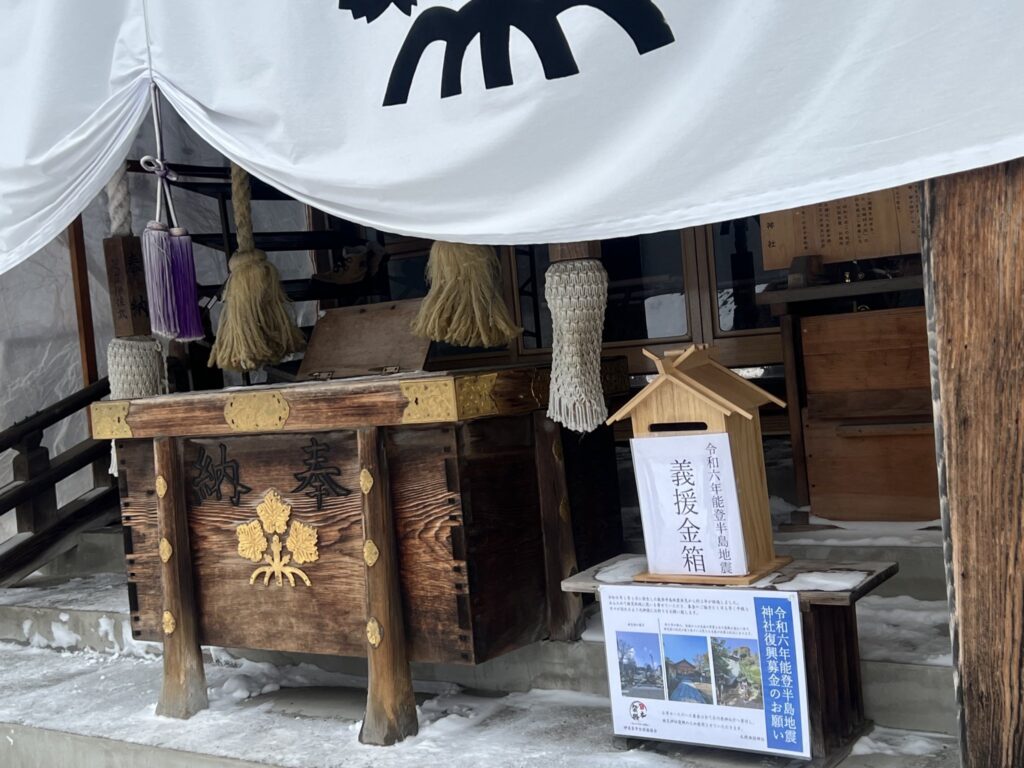
When visiting a shrine or temple in Japan, you’ll often see a large wooden box in front of the main hall. This is called an offering box, and the money placed inside is known as osaisen (お賽銭).
If you’re traveling in Japan, you may wonder:
- What is osaisen for?
- How much should I give?
- Are there unlucky amounts to avoid?
Here’s a simple guide to help you understand this beautiful Japanese custom.
What Is Osaisen?
At both Shinto shrines and Buddhist temples, visitors offer a small amount of money before praying.
- At a shrine (like Fushimi Inari Taisha in Kyoto), it is an offering to the kami (Shinto deities).
- At a temple (like Senso-ji in Tokyo), it is an offering connected to Buddhist practice.
Osaisen is not an entrance fee.
It is a symbolic gesture of gratitude, respect, and a wish for good fortune.
Think of it as a small donation combined with a prayer.
How Much Should You Give?
There is no fixed amount. Even a small coin is perfectly acceptable.
Most common amounts:
- ¥5 coin
- ¥10 coin
- ¥50 coin
- ¥100 coin
For tourists, ¥5 or ¥10 is completely fine. The meaning behind the amount is often more important than the value.
Why Is ¥5 Considered Lucky?
The ¥5 coin is very popular.
Why?
Because in Japanese, 5 yen is pronounced “go-en” (ご縁), which sounds like the word for “good connection” or “fate.”
So offering ¥5 symbolically means:
“I hope for a good connection.”
This could mean good relationships, success, love, or luck.
That’s why many Japanese people choose ¥5.
Are There Amounts to Avoid?
Some numbers are considered unlucky due to wordplay.
¥4 (shi)
“Shi” sounds like the word for death (死).
¥9 (ku)
“Ku” can sound like suffering (苦).
Because of these associations, some people avoid amounts like ¥4, ¥9, ¥40, or ¥90.
However, this is not a strict rule. It’s more cultural superstition than religious law.
Bigger Amount = Bigger Luck?
Not necessarily.
In Japan, sincerity matters more than money.
Offering ¥500 does not guarantee better luck than ¥5.
What’s important:
- Be respectful
- Pray sincerely
- Follow proper etiquette
How to Offer Osaisen Properly
At a Shrine:
- Gently toss the coin into the box.
- Ring the bell (if there is one).
- Bow twice.
- Clap twice.
- Pray silently.
- Bow once more.
At a Temple:
- Gently place or toss the coin.
- Put your hands together.
- Pray silently.
- Bow.
(Temples do not include clapping.)
Final Advice for Travelers
If you’re visiting famous places like Meiji Jingu or Kiyomizu-dera, don’t stress about the amount.
A simple ¥5 coin is perfectly respectful.
Remember:
- Osaisen is about gratitude, not transaction.
- There is no “correct” price for blessings.
- Your attitude matters more than the number.
Quick Summary
| Question | Answer |
|---|---|
| Required amount? | No fixed amount |
| Most popular coin? | ¥5 (“go-en” = good connection) |
| Unlucky numbers? | 4 and 9 (sound like death & suffering) |
| Is more money better? | No |
| Most important? | Respect and sincerity |
Experiencing osaisen is one of the small but meaningful cultural moments in Japan.
Next time you stand in front of an offering box, you’ll know exactly what to do — and why.ds tradition, humor, and bold design—just like the city itself.
Aichi Airport Alcoholic beverage Anime Anime pilgrimage April Architecture August Autumn Building Capital Area Cherry blossom Convenience store February Flower January Japanese food kanto Kinki Kyoto March May Nagoya Nature Nightlife Night view Osaka Photogenic Pink Sakura Shopping Shrine Souvenir Spring Station Summer Superb view Temple Tips Tokai Tokyo Traffic train White Winter

More from my site
 Ise Jingu Travel Guide: What to See, How to Pray & Okage Yokocho
 Beyond the Gates: Discover Japan’s Most Breathtakingly Beautiful Shrines
 Complete Guide to Kumano Nachi Taisha and Nachi Falls
 Conquer the Thrills: The Ultimate Guide to Fuji-Q Highland
 Torii in the Sky at Kuratake Shrine: Amakusa’s Hidden Viewpoint
 Kyoto in Snow: 7 Rare and Beautiful Winter Views