
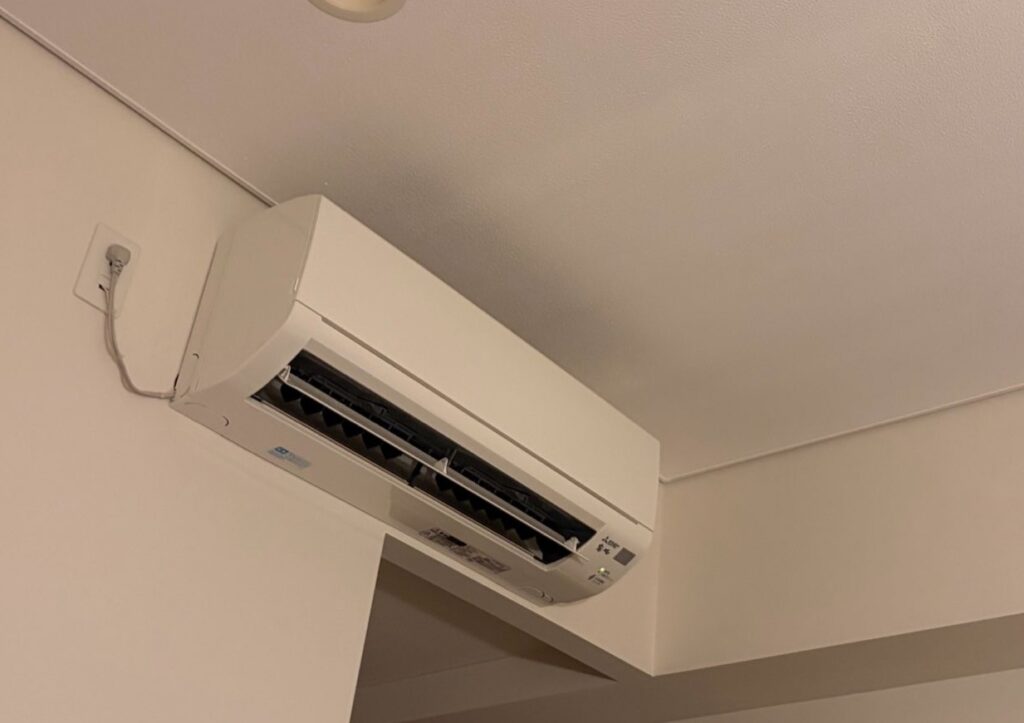
Planning a trip to Japan during the warmer months? You might be worried about the notorious summer heat and humidity. The good news: almost 100% of hotel rooms in Japan are equipped with modern air conditioning (AC) units to keep you comfortable.
However, operating a Japanese AC remote full of kanji characters—or dealing with central building controls—can sometimes be tricky. Here is everything you need to know about mastering your hotel room’s climate, along with a look at why Japanese air conditioners are considered among the best in the world.
1. Central vs. Individual AC: The #1 Thing to Watch Out For
Before you start tweaking the settings, it helps to understand how your hotel manages temperature:
- Individual Control (個別空調 – Kobetsu Kucho): Found in most modern hotels and business hotels. You have full control over cooling, heating, and exact temperature settings right from your room’s remote.
- Centralized Control (一括空調 – Ikkatsu Kucho): Common in older hotels or budget accommodations. The building sets the mode (Cooling or Heating) for all rooms at once. During transitional seasons like spring or autumn, you might find only heating available even if you feel hot.
Pro Tip: If you are sensitive to temperature, look for “Individual Air Conditioning” under room amenities when booking your hotel.
2. Cheat Sheet: Deciphering the Japanese AC Remote
Most hotel remotes only feature Japanese text. Bookmark or screenshot this quick guide to navigate the main buttons:
| Kanji | Reading | English Meaning | What it does |
| 運転 / 停止 | Unten / Teishi | Power On / Off | Turns the unit on or off |
| 冷房 | Reibo | Cooling | Standard cool air mode for summer |
| 暖房 | Danbo | Heating | Warm air mode for winter |
| 除湿 / ドライ | Joshitsu / Dry | Dehumidify | Removes muggy humidity without over-chilling |
| 自動 | Jido | Auto Mode | Automatically adjusts temperature and airflow |
| 風量 | Furyo | Fan Speed | Adjusts airflow intensity |
| 温度 | Ondo | Temperature | Raises or lowers the set temperature |
- Pro Tip for Summer: High humidity often makes room temperatures feel hotter than they are. Switching the mode to 除湿 (Dehumidify) keeps the air crisp and dry without freezing the room!
3. Why Japanese ACs Are Famous Worldwide
If you love how quiet and powerful your hotel AC is, you aren’t alone! Japan is home to global leaders in HVAC tech like Daikin, Panasonic, and Mitsubishi Electric. Here is why these units are world-class:
- Inverter Technology: Pioneered in Japan, inverter compressors adjust power output dynamically rather than constantly turning on and off. This keeps room temperatures perfectly stable, uses far less energy, and runs near-silently.
- Smart Sensors: Many modern Japanese units use infrared sensors (like Mitsubishi’s MoveEye) to detect body heat and direct airflow right where people are sitting or sleeping.
- Built-in Air Purification: Japanese ACs do more than adjust temperature—many feature advanced ion generation systems (such as Panasonic’s nanoe or Daikin’s Streamer) to neutralize odors, pollen, and allergens in real time.
4. Can You Buy One to Take Home?
It is common for travelers to fall in love with Japanese home electronics and want to take them home. However, buying an AC unit directly in Japan to export comes with challenges:
- Voltage Differences: Japan operates on 100V, whereas North America uses 120V and Europe/Australia use 220–240V. Running a domestic Japanese AC overseas requires heavy-duty power conversion.
- Installation & Piping: Ductless mini-split systems require professional installation, vacuuming of refrigerant lines, and specific mounting hardware that varies by country.
The Best Solution:
Instead of buying a unit in Japan, look for export models from brands like Daikin or Mitsubishi through licensed local distributors in your home country. You will get the same cutting-edge Japanese inverter technology built natively for your country’s voltage and electrical codes!
More from my site
 Japan Weather in August: What to Wear and Packing Guide
 Japan’s Summer Heat Explained: Humidity Data & Survival Tips
 Japan Weather in July: What to Wear and Packing Guide
 Japan Weather in June: What to Wear and Packing Guide
 Japan Weather in December: What to Wear and Packing Guide
 Japan Weather in November: What to Wear and Packing Guide