
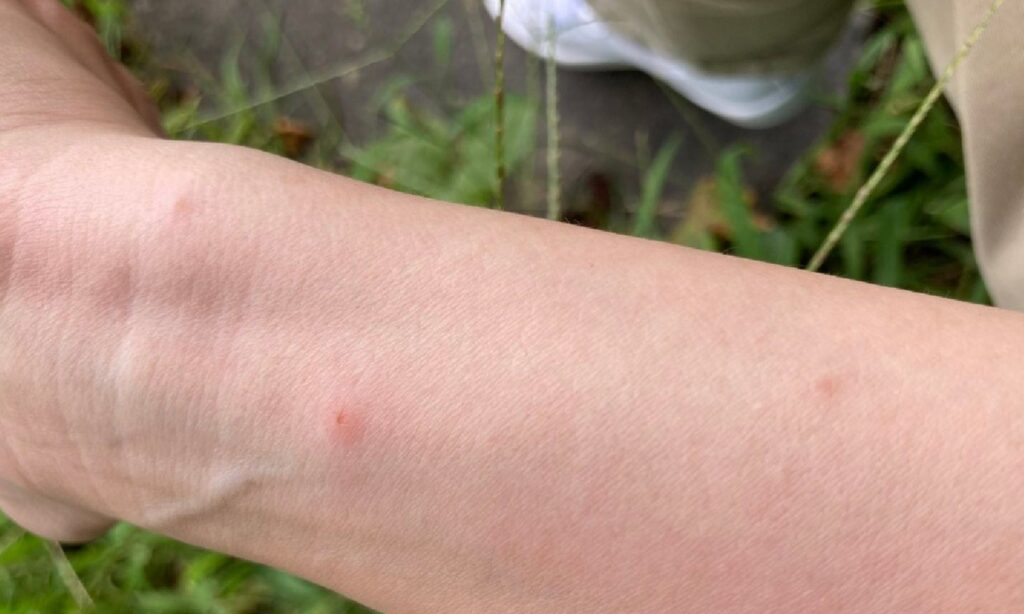
Japan’s summer is beautiful, filled with vibrant festivals, stunning fireworks, and delicious seasonal food. But alongside the fun, there’s a tiny, buzzing party crasher you need to watch out for: the Japanese mosquito (Ka / 蚊).
If you want to enjoy your summer without constantly scratching your skin, here is everything you need to know about staying safe and bug-free.
🦟 Is the Mosquito Season Real?
Yes, and they are enthusiastic.
In Japan, mosquito season generally runs from May to October, peaking during the sweltering heat of July and August. Because Japanese summers are notoriously hot and humid, mosquitoes find it to be the perfect paradise. You’ll encounter them not just in parks and forests, but also in urban areas, train stations, and even inside your hotel room.
🤒 Will I Get Sick If I’m Bitten?
The short answer: Highly unlikely, but keep an eye out.
For the most part, getting bitten by a mosquito in Japan is just a recipe for annoying, itchy red bumps. Japan does not have malaria. However, there are two rare risks to be aware of:
- Dengue Fever: Very rare, but occasional local transmissions have happened in past summers in crowded city parks.
- Japanese Encephalitis: Extremely rare in urban areas, as most of the Japanese population is vaccinated.
💡 The real danger: Scratching the bite too hard with dirty fingernails can cause a secondary bacterial infection. So, control the urge to scratch!
🛡️ How to Avoid Getting Bitten (The Ultimate Shield)
The best defense is a good offense. When you walk into any Japanese drugstore or convenience store, head straight for the seasonal aisle and look for Insect Repellent (Mushi-yoke / 虫よけ).
Here are the most common and effective types:
| Type | Japanese Name | How to Use |
| Spray / Mist | 虫よけスプレー (Mushi-yoke Supurē) | Spray directly onto skin or clothes. Look for ingredients like DEET or Icaridin for strong protection. |
| Wipes | 虫よけシート (Mushi-yoke Shīto) | Perfect for carrying in your bag. You just wipe your arms and legs. Great for airplanes or when you can’t spray around people. |
| Wearables | 虫よけリング (Mushi-yoke Ringu) | Wristbands or ankle bands infused with natural oils like citronella. Good for kids or light protection. |

Quick Tip: If you are staying in an Airbnb or apartment and a mosquito gets inside, buy an Earth No-Mat (アースノーマット). It’s an electric liquid vaporizer that plugs into the wall and keeps the room mosquito-free all night.
😭 Help! I Already Got Bitten! What Do I Do?
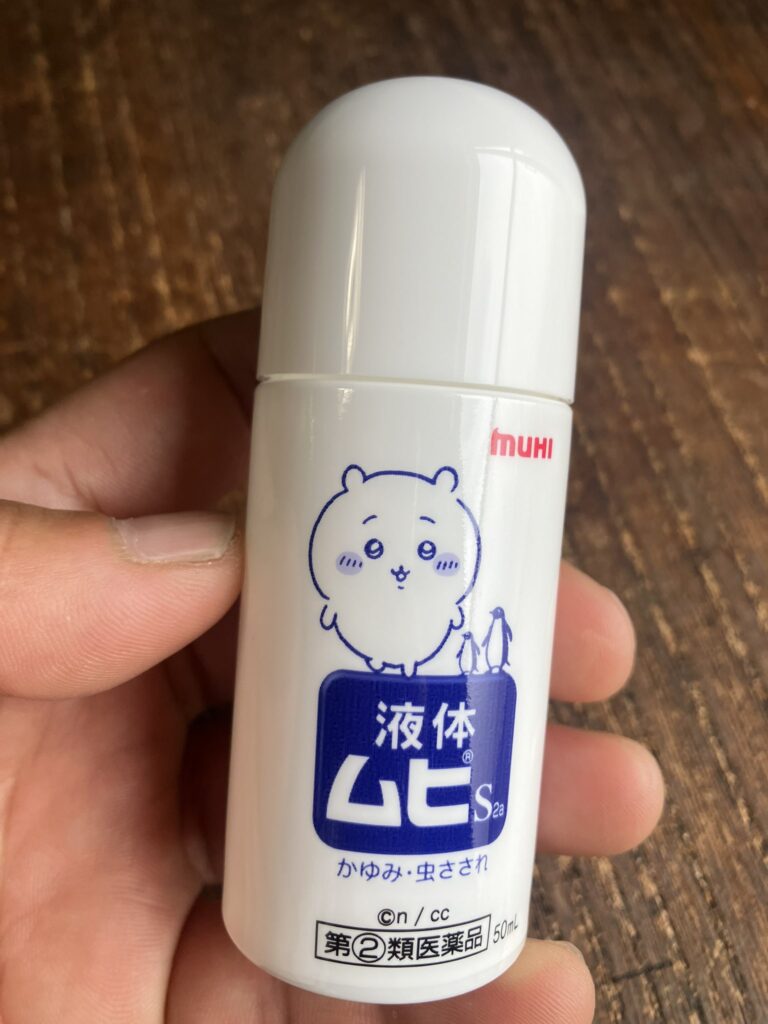
If you hear that dreaded bzzzz and realize you’ve been hit, don’t panic. Japanese drugstores have some of the best anti-itch remedies in the world.
Go to the counter and look for these lifesavers:
1. The Classic Liquid: Muhi (ムヒ)

This is Japan’s household staple. It usually comes in a bottle with a blue sponge-top applicator. You dab it directly onto the bite. It contains menthol, which gives an instant, icy-cool sensation that completely numbs the itch.
- Look for: Liquid Muhi S (液体ムヒS)
2. The Heavy Duty: Kinkan (キンカン)

An old-school, traditional liquid medicine. It smells strongly of ammonia and menthol, and it stings for a second when you apply it, but it kills the itch instantly.
3. For Kids (or the young at heart): Anti-Itch Patches (Mushi-yoke Shīto / 虫パッチ)
These are small, round, skin-colored stickers that you put directly over the bite. They are often printed with popular anime characters like Anpanman or Pokémon. They contain anti-itch medication and, crucially, physically stop you from scratching the bite.
Enjoy Your Japanese Summer!
Don’t let the bugs ruin your trip. Grab a bottle of Muhi, spray some Mushi-yoke, and go enjoy the Kakigori (shaved ice) and matsuri festivals safely.
Stay cool, stay covered, and have an amazing time in Japan!ntly lower your skin temperature.
More from my site
 Shikisai-no-Oka: A Must-Visit Colorful Flower Field in Biei, Hokkaido
 What You Need to Know About Typhoons in Japan
 Best Japanese Sunscreens to Buy in 2026: Budget to Luxury
 Cool Down in Kagoshima with Shirokuma: Japan’s Insta-Worthy Frozen Delight
 Summer Romance in Japan: The Ultimate Guide to Beach Dating & Flirting Etiquette
 Does It Rain Every Day? How to Survive and Enjoy Japan’s Rainy Season