
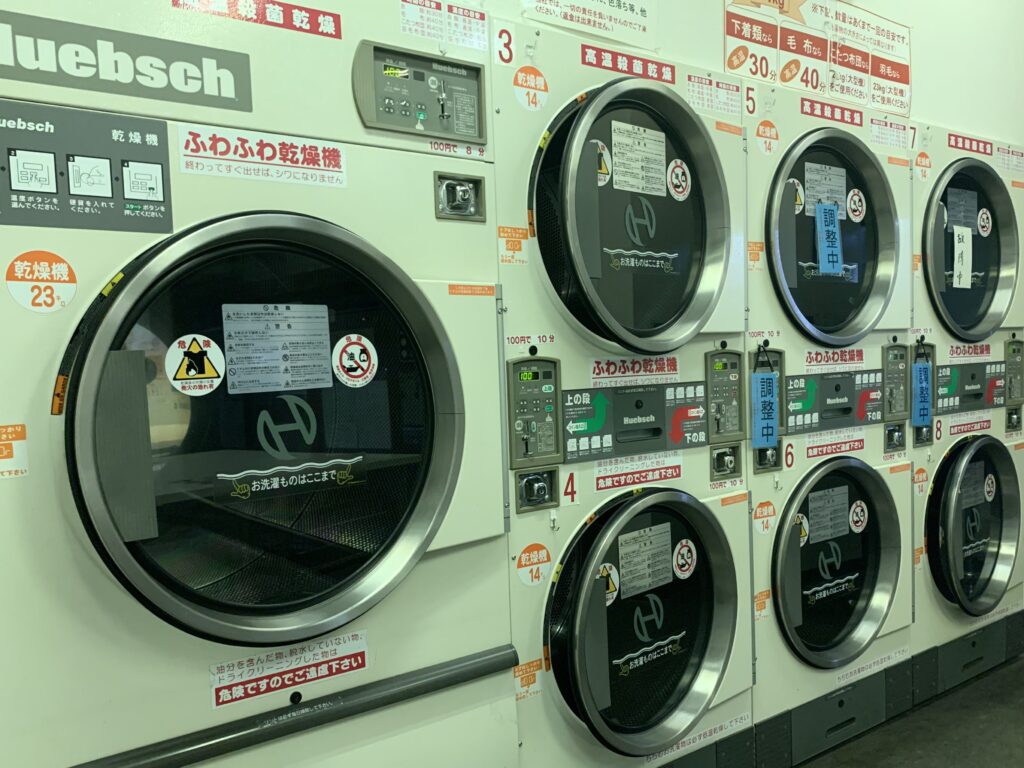
Whether you are backpacking across Japan or enjoying a longer stay, doing laundry is an inevitable part of the journey. Fortunately, Japanese Coin Laundries (コインランドリー – Koin Randorī) are clean, high-tech, safe, and often open 24/7.
However, if you can’t read Kanji or aren’t sure how the machines work, doing your laundry can feel a bit intimidating. Here is everything you need to know to do your laundry in Japan like a pro!
1. Three Essential Things to Know Before You Go
Before packing up your clothes, keep these three key points in mind:
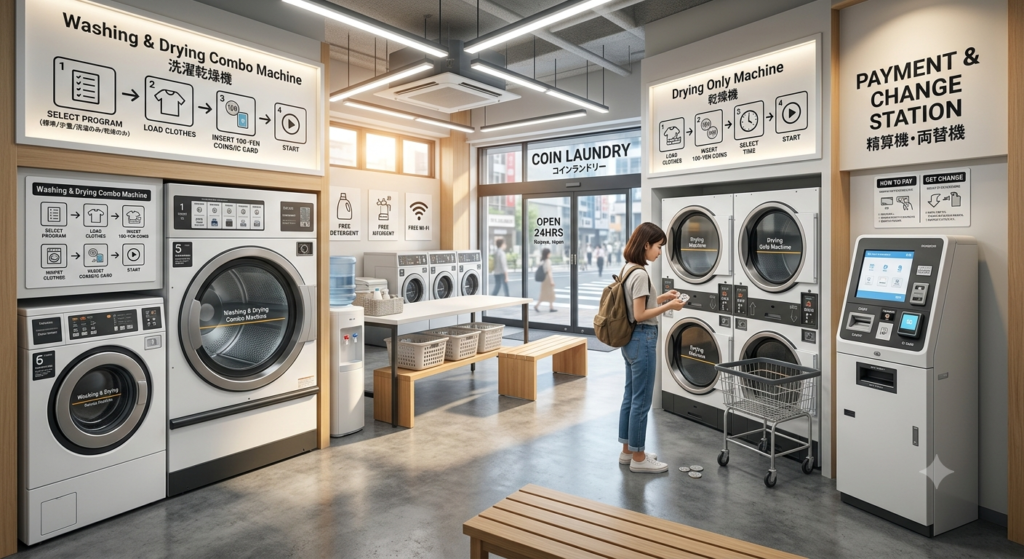
- No Need to Buy Detergent: Most modern Japanese laundromats use machines that automatically inject detergent and fabric softener. You don’t need to bring or buy your own (unless you use an older, top-loading machine).
- Bring 100-Yen Coins: While most laundromats have a bill change machine (両替 – Ryōgae) that accepts ¥1,000 notes, the washing machines themselves usually only take ¥100 coins. Keep a few coins handy!
- IC Cards and Cashless Payment: Newer laundromats feature a central payment kiosk that accepts transit IC cards (Suica, PASMO), credit cards, or QR code payments (PayPay).
2. Types of Machines & Cost Breakdown
| Machine Type | Description | Average Cost & Time |
| Washer/Dryer Combo (洗濯乾燥機) | The most convenient option. It washes and dries your clothes in one continuous cycle—no need to switch machines! | ¥1,000–¥1,500 (~60 to 80 mins) |
| Washing Machine Only (洗濯機) | Performs only the wash cycle. You will need to move your wet clothes to a separate dryer afterward. | ¥300–¥500 (~30 mins) |
| Dryer Only (乾燥機) | High-powered gas dryers that dry clothes quickly and make them extra fluffy. | ¥100 per 8–10 mins (~30–40 mins needed) |
| Sneaker Washer/Dryer (スニーカーランドリー) | Specialized machines designed specifically for washing and drying muddy or tired sneakers. | Wash: ¥200 Dry: ¥100 |
3. Step-by-Step: How to Use a Combo Washer/Dryer
- Clean the Drum (Optional but recommended):Before loading your clothes, close the door and look for a button labeled ドラム洗浄 (Drum Wash). Pressing this runs a free 2-minute water rinse to sanitize the drum.
- Load Your Clothes:Fill the drum up to about 70% capacity so the clothes can wash and dry effectively. Firmly close the door.
- Select Your Cycle:Choose your preferred program on the screen or panel. Common options include:
- 標準 (Standard / Wash & Dry)
- 少量 (Small Load / Quick Wash & Dry)
- 洗濯のみ (Wash Only)
- 乾燥のみ (Dry Only)
- Pay & Start:Insert your ¥100 coins or pay at the central kiosk. The machine will usually start automatically once the exact amount is paid.
4. Cheat Sheet: Japanese Laundromat Kanji
Bookmark this list to navigate the buttons on the machine effortlessly:
- スタート — Start
- 洗濯〜乾燥 — Wash & Dry
- 洗濯のみ — Wash Only
- 乾燥のみ — Dry Only
- ドラム洗浄 — Drum Cleaning (Pre-wash rinse)
- 残時間 — Time Remaining (in minutes)
- 両替 — Currency Exchange / Money Changer
5. Laundromat Etiquette & Tips for Travelers
⚠️ Watch Your Timer:
Japanese laundromat etiquette dictates that if a machine finishes and the owner isn’t there, the next person is allowed to move the clean clothes into a basket to use the machine. Set an alarm on your phone so you can return right when the cycle ends!
- Be Careful with Delicate Clothes: Japanese dryers are gas-powered and can get quite hot. Avoid putting heat-sensitive items, woolens, or printed graphic tees into the high-heat dryers to prevent shrinkage.
- Keep It Clean: Most facilities strictly prohibit smoking, eating, or leaving trash behind.
Pro-Tip for Hotel Stays
Many Japanese business hotels (like Dormy Inn, APA Hotel, or Toyoko Inn) also have coin laundries inside the building! They are often smaller and take slightly longer than street laundromats, but they are incredibly convenient for late-night washing.a quick breakfast or looking for a quirky afternoon snack, exploring a local Pan-ya is an essential Japanese food experience. Don’t be afraid to try something that looks unusual—you might just find your new favorite snack!
More from my site
 Surviving Meitetsu Nagoya Station: Why It’s Tricky & How to Board
 Osaka Halloween 2026: The Ultimate Guide to Japan’s Best Party Spots After Shibuya’s Ban
 Shibuya Halloween 2026: Rules, Drinking Bans, Fines & What Travelers Need to Know
 Japan Weather in November: What to Wear and Packing Guide
 Japan Weather in October: What to Wear and Packing Guide
 Kyakuhiki in Japan: How to Avoid Street Touts & Bar Scams