
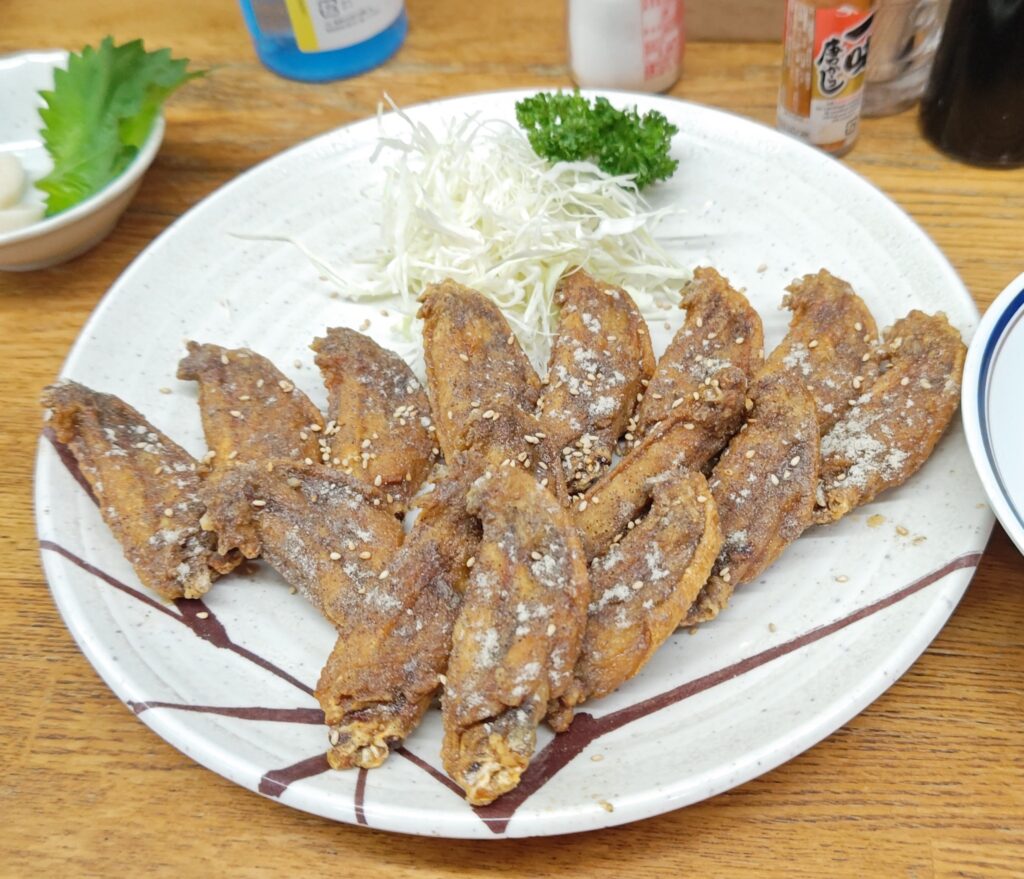
If you love crisp, savory, and beer-friendly snacks, Nagoya’s Tebasaki (手羽先) belongs at the absolute top of your Japan food bucket list. While sushi and ramen dominate international headlines, local foodies in Japan know that these deep-fried, heavily seasoned chicken wings are one of the country’s best-kept culinary secrets.
What is Tebasaki?
Tebasaki (手羽先) translates directly to “chicken wingtips.” In Japanese culinary culture, it refers specifically to Nagoya-style deep-fried chicken wings.
Unlike conventional fried chicken, Tebasaki is:
- Unbreaded or lightly dusted before frying (no thick batter)
- Double-fried to achieve an intensely crispy skin while keeping the meat juicy
- Coated in a savory-sweet soy sauce glaze immediately after frying
- Generously seasoned with white pepper, sesame seeds, and garlic
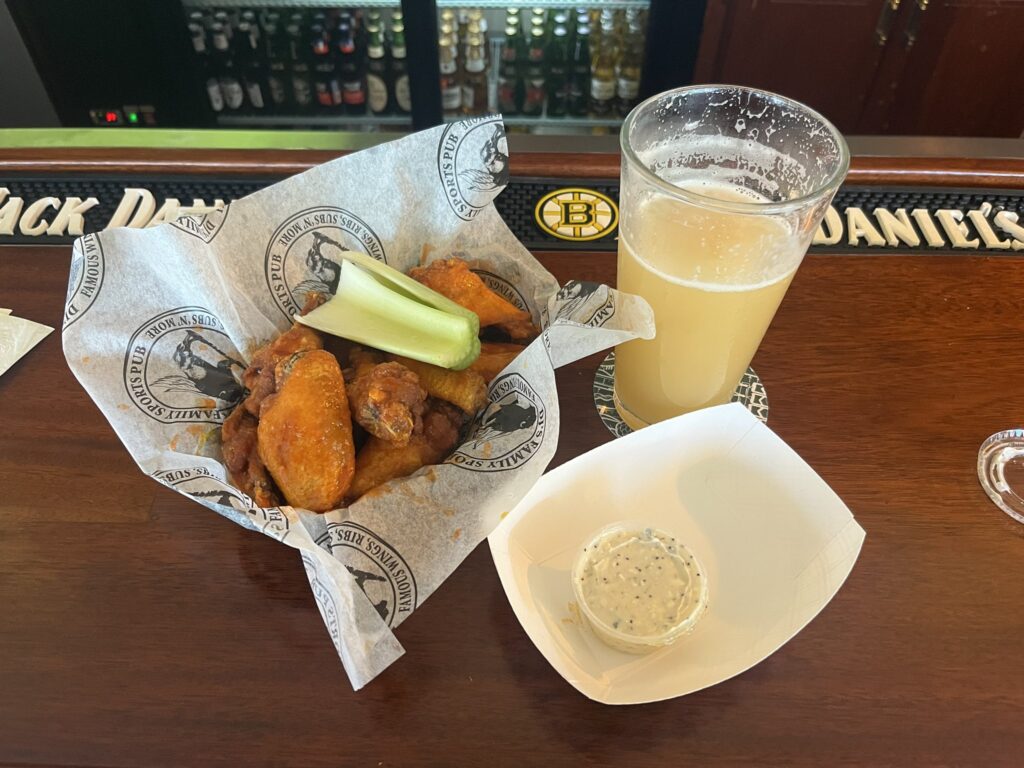
How Does Tebasaki Compare to Buffalo Wings?
If you are familiar with American Buffalo Wings, Tebasaki offers a fascinating comparison:
| Feature | Nagoya Tebasaki | American Buffalo Wings |
| Coating | Light starch dust or plain (Ultra-crispy) | Unbreaded or deep-fried plain |
| Sauce Base | Soy sauce, mirin, sake, garlic (Sweet & savory glaze) | Cayenne pepper hot sauce & butter (Tangy & spicy) |
| Finish | Heavy white pepper & toasted sesame seeds | Dipped in blue cheese or ranch dressing |
| Texture | Dry exterior, sweet-spicy crunch | Wet, saucy, tangy surface |
Think of Tebasaki as the Japanese cousin to Buffalo wings—less acidic, more umami-rich, with a sharp black/white pepper kick instead of vinegar heat.
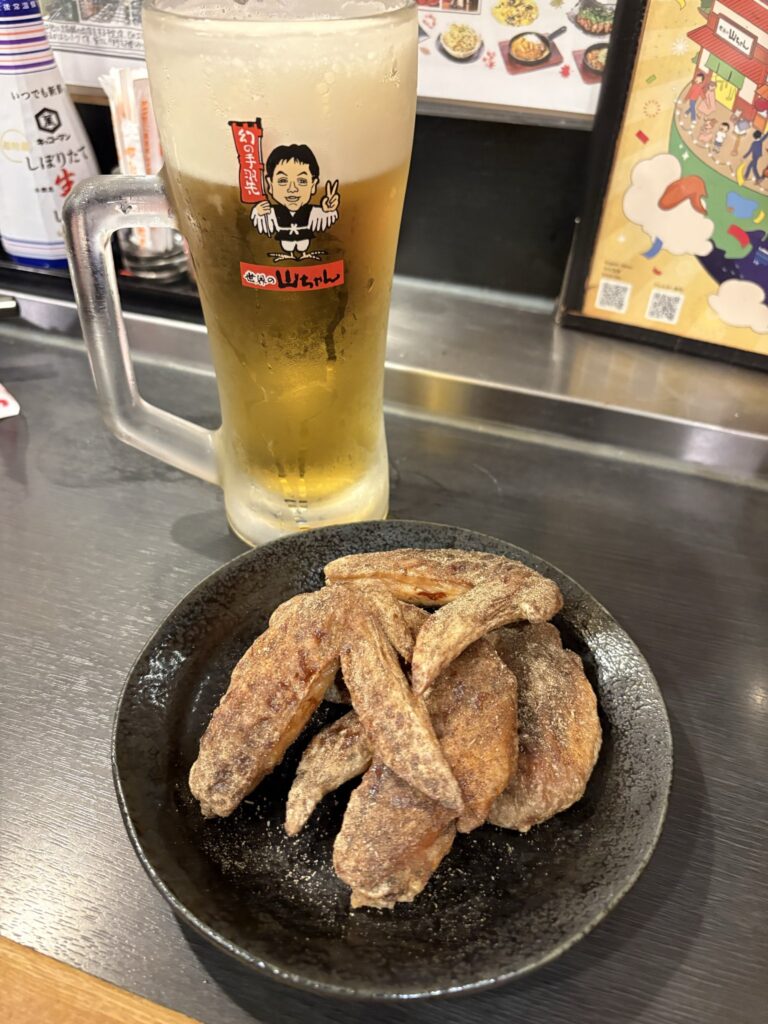
The Big Two: Furaibo vs. Sekai no Yamachan
Nagoya’s Tebasaki scene is dominated by two legendary restaurant chains, each championing a distinct flavor profile. Local residents (“Nagoyans”) remain fiercely loyal to their personal favorite.
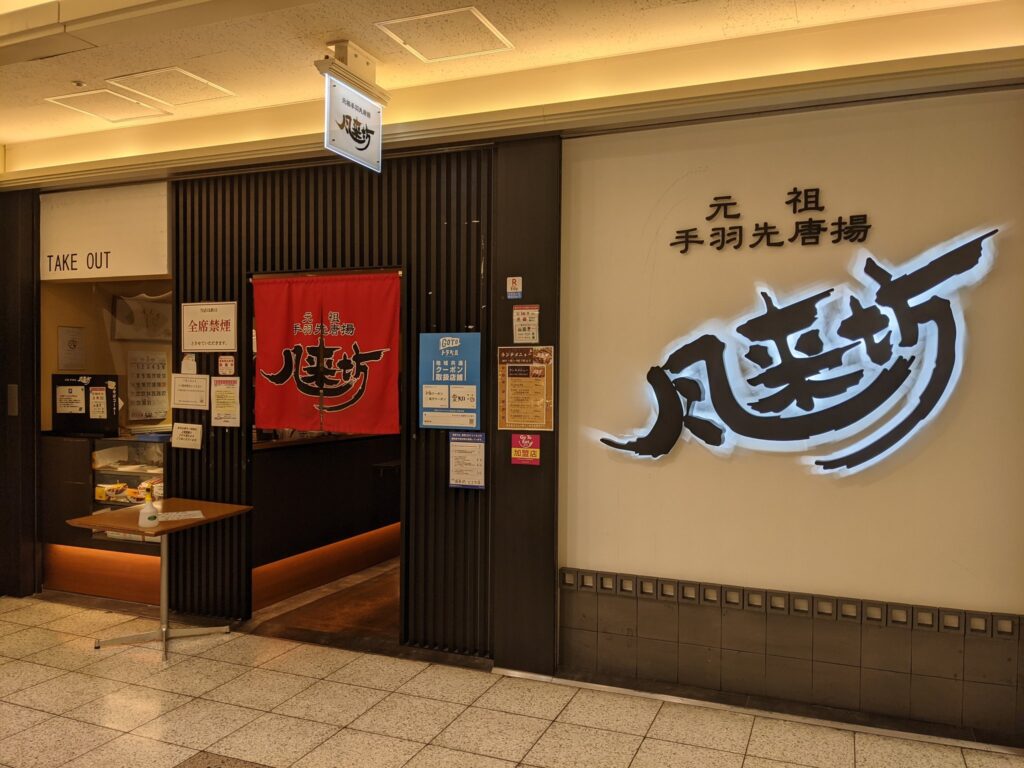
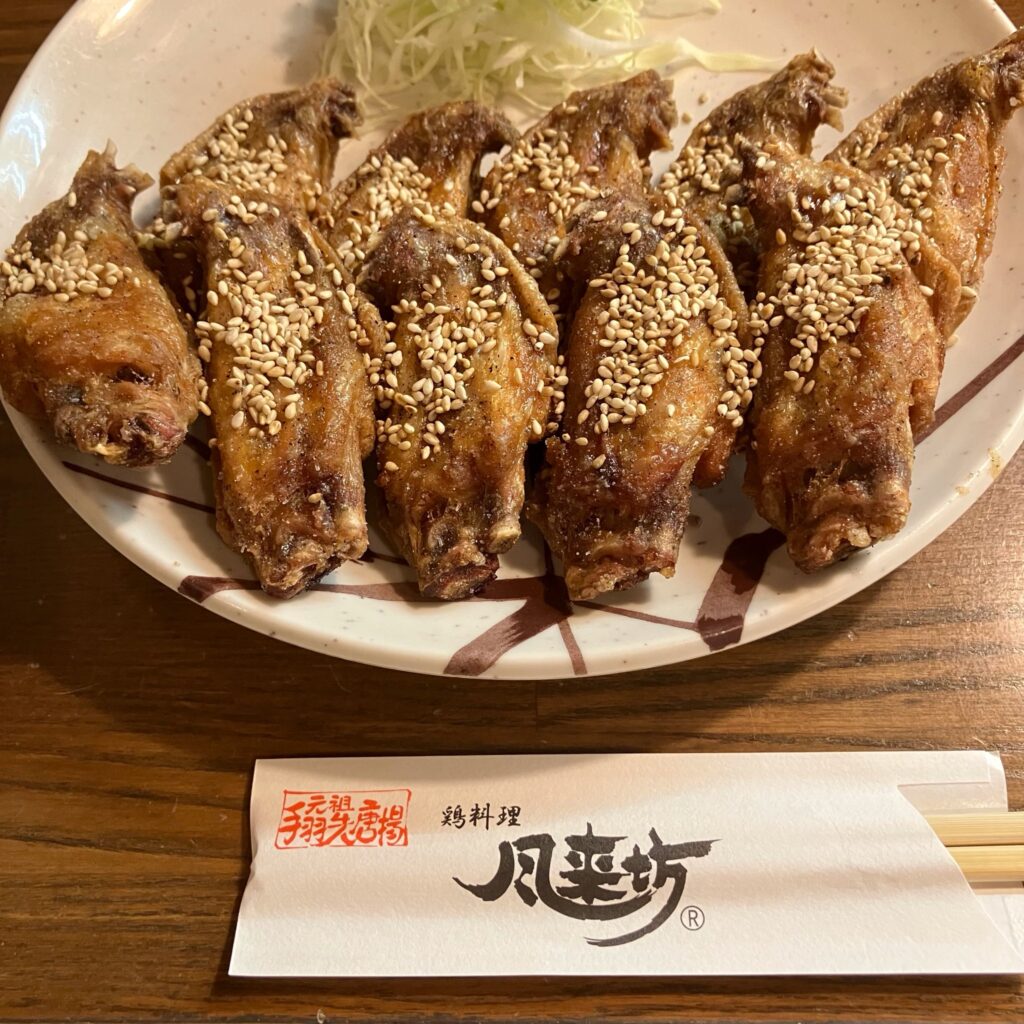
1. Furaibo (風来坊) – The Sweet & Savory Pioneer
Founded in 1963, Furaibo is recognized as the original creator of Tebasaki. Before Furaibo, chicken wings were primarily used only for making soup stock. The founder developed a signature double-frying method combined with a secret garlic-soy glaze.
- Flavor Profile: Balanced sweet-and-savory glaze with a mild pepper finish.
- Best For: Travelers who prefer subtle, rich umami flavors and less intense spice.
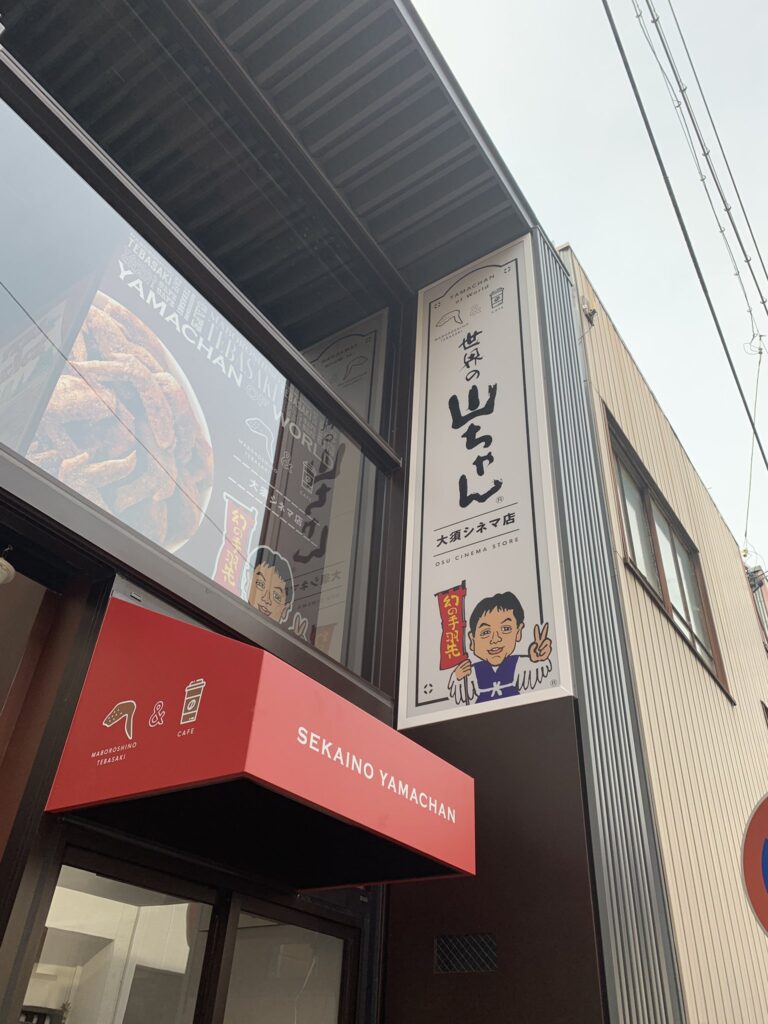
2. Sekai no Yamachan (世界の山ちゃん) – The Peppery Heavyweight
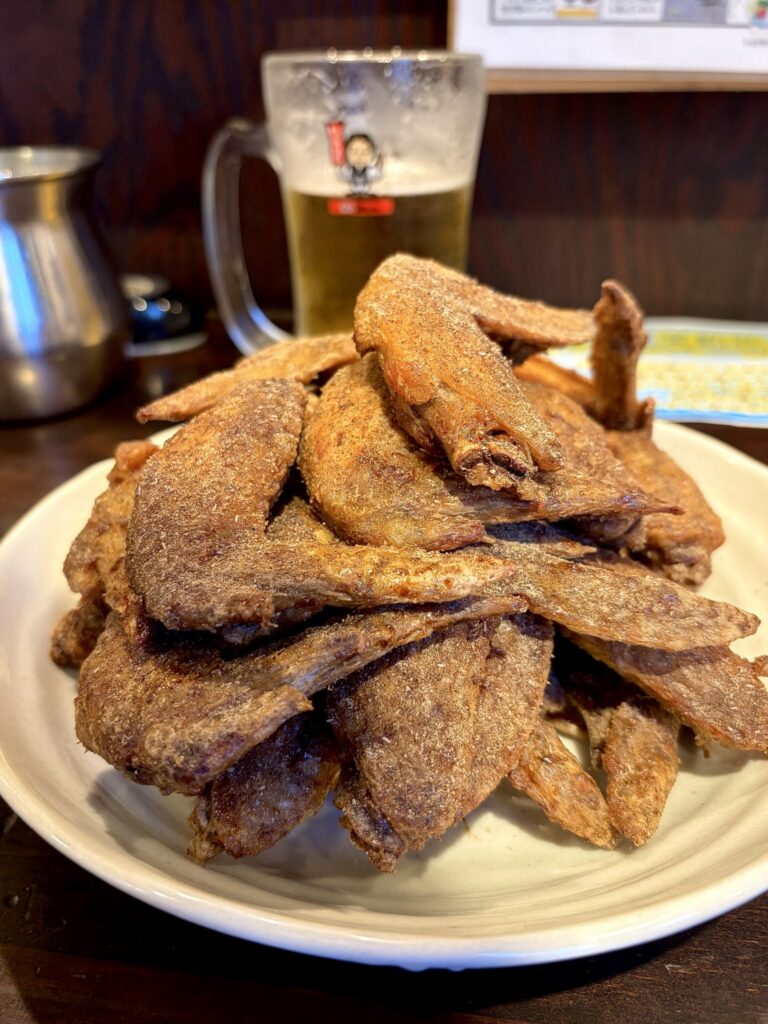
Famous for its cartoon mascot “Torishige-san,” Yamachan took Tebasaki to national fame with its signature “Maboroshi no Tebasaki” (Phantom Wings).
- Flavor Profile: Intensely peppery, garlic-heavy, and salty with a fiery bite.
- Best For: Spicy food lovers and anyone looking for the ultimate beer accompaniment.
Pro Tip: Don’t pick just one! Visiting both chains to compare the sweet glaze of Furaibo against the peppery kick of Yamachan is a classic Nagoya food adventure.
| Feature | Furaibo (風来坊) | Sekai no Yamachan (世界の山ちゃん) |
| Status | The Creator (Originator) | The Spicy Legend |
| Flavor | Sweet, savory, balanced | Fiery pepper, garlic |
| Vibe | Classic Izakaya | Lively, casual |
Where to Find Tebasaki in Nagoya
You don’t have to look far—Tebasaki is ubiquitous throughout Aichi Prefecture, especially around major transit hubs and nightlife districts.
Key Locations:
- Nagoya Station Area (Meieki):
- Esca Underground Shopping Center: Located right under the Shinkansen exit, featuring both Yamachan and Furaibo branches for a quick meal before your train.
- JR Central Towers & Gate Tower: Up-scale dining options near the main station exit.
- Sakae District:
- Nagoya’s downtown nightlife center holds dozens of izakayas (Japanese pubs). You will find multiple Yamachan and Furaibo outlets within short walking distance of Sakae Station.
- Chubu Centrair International Airport (NGO):
- Both chains operate locations inside the airport’s 4th-floor dining hall, making it easy to grab a final batch before flying out.
Furaibo (風来坊)
Sekai no Yamachan (世界の山ちゃん)
How to Eat Tebasaki Like a Local
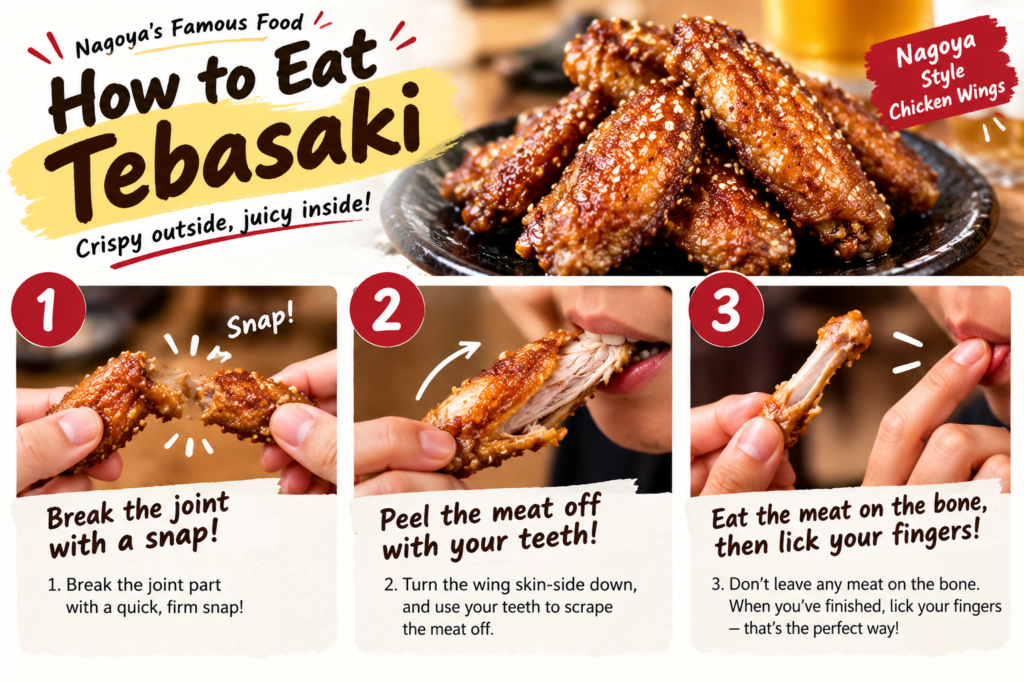
Eating Tebasaki clean is an art form in Nagoya. Follow these 4 easy steps:
Enjoy: The meat slides off cleanly, leaving only clean bones and maximum flavor!
Snap: Break the wing at the joint to separate the two bone tips.
Hold: Take the larger end of the main wing piece.
Insert & Pull: Put the entire wing into your mouth, clamp down lightly with your teeth, and pull the bones straight out.
More from my site
 10 Best Things to Do in Nagoya, Aichi
 Nagoya’s Cutest New Icon: “Piyorin Village” Opens at Nagoya Station!
 Hitsumabushi Guide: How to Eat Nagoya’s Famous Grilled Eel
 Nagoya Morning Service: Why Coffee Comes with Free Breakfast
 Nagoya’s Piyorin Dessert: Café Closure, Takeout Shop, and Buying Tips
 Top 10 Must-Try Nagoya local Foods Near Nagoya St. and Sakae