
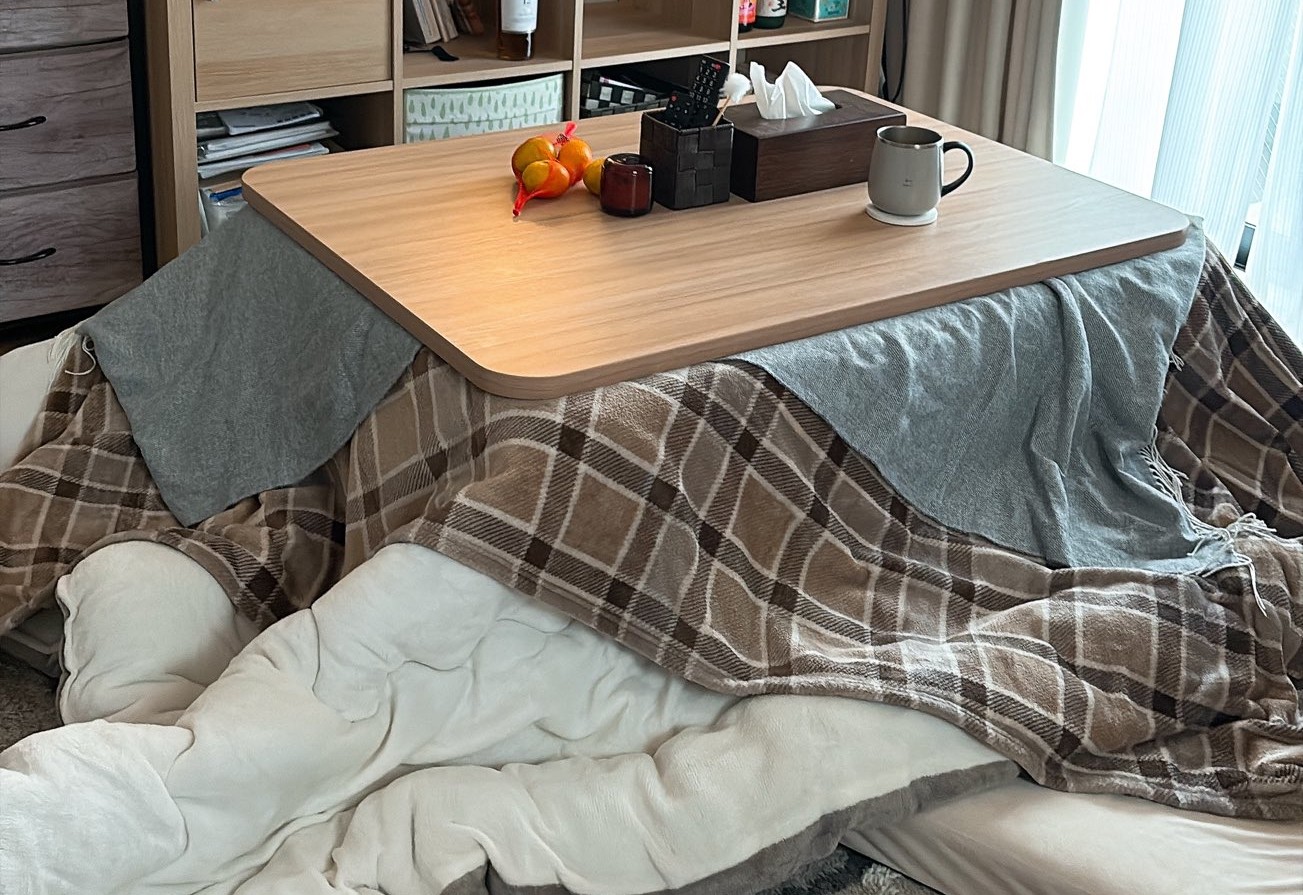
If you watch Japanese movies, TV dramas, or anime, you may have seen a low table surrounded by a thick blanket.
This is called a kotatsu (こたつ), a traditional Japanese heated table that is especially popular during winter.
It may look like an ordinary table with a blanket, but there is a secret underneath: an electric heater!
People sit around the table, put their legs underneath the blanket, and enjoy the warmth while watching TV, reading manga, eating, or relaxing.
For many Japanese people, spending time under a kotatsu is one of the best things about winter.
How Does a Kotatsu Work?
A modern kotatsu has three main components:
- Table: A low table designed for sitting on the floor.
- Heater: An electric heating unit attached underneath the tabletop.
- Blanket (Kotatsu Futon): A thick blanket that traps warm air inside.
When the heater is switched on, the space underneath the table becomes warm. The blanket keeps the heat from escaping, creating a cozy space for your legs and lower body.
Unlike an air conditioner or room heater, a kotatsu mainly warms the space underneath the table rather than the entire room.
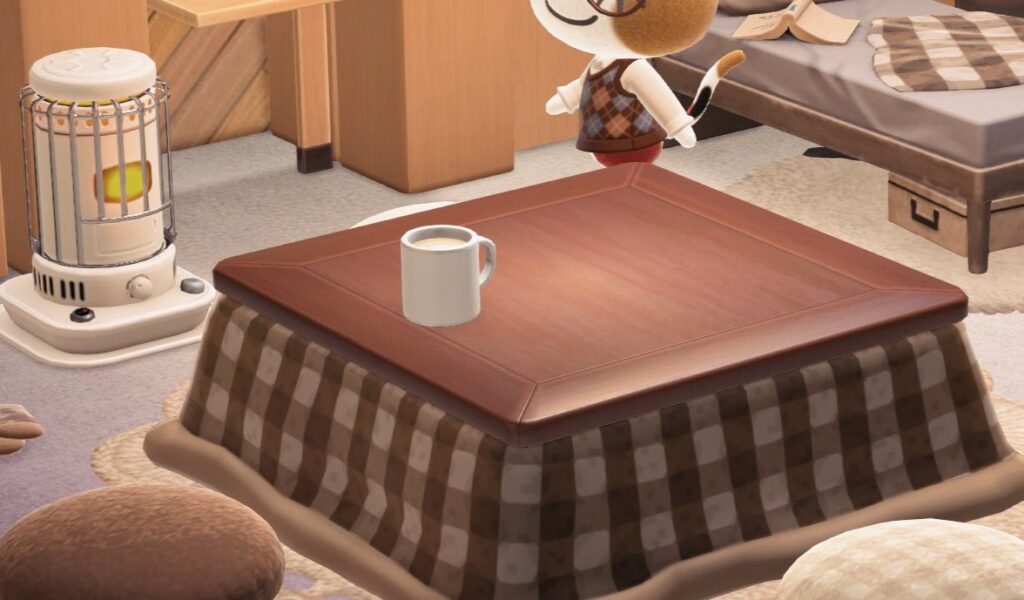
Is Kotatsu a Traditional Japanese Custom?
Yes! The history of the kotatsu goes back several centuries.
Its origins can be traced to the Muromachi period (1336–1573). Early versions used charcoal as a heat source, often in combination with a traditional Japanese sunken hearth called an irori.
Over time, the design evolved into the electric kotatsu commonly found in Japanese homes today.
Although modern kotatsu use electricity, they remain an important part of Japanese winter culture.
Kotatsu and Mikan: A Classic Japanese Winter Combination
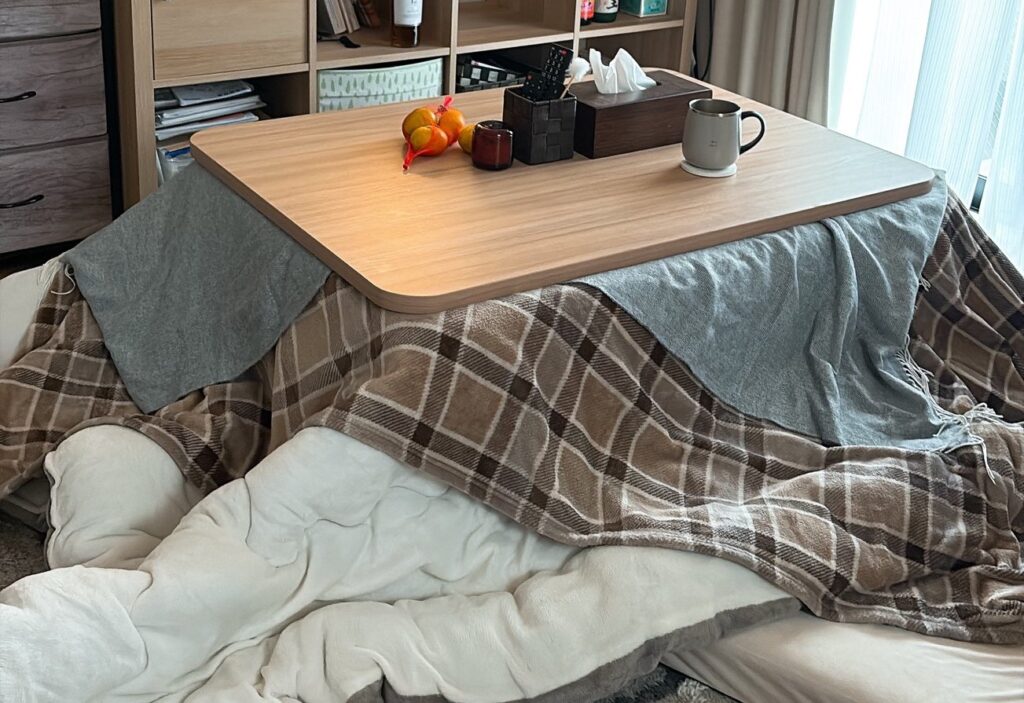
One of the most familiar images of Japanese winter is eating mikan (Japanese mandarins) under a kotatsu.
During winter, many Japanese households keep a basket of mandarins on or near the kotatsu.
Mikan are easy to peel by hand, making them a perfect snack while relaxing under the warm blanket.
Watching TV, eating mandarins, and spending a lazy afternoon under the kotatsu is a simple pleasure that many Japanese people associate with winter.
“Cats Curl Up Under the Kotatsu” – A Famous Japanese Winter Image
Have you ever heard the Japanese phrase:
「猫はこたつで丸くなる」(Neko wa kotatsu de maruku naru)
It means “Cats curl up under the kotatsu.”
This expression comes from the famous Japanese children’s song Yuki (雪), meaning “Snow.”
The song describes how dogs run around outside in the snow while cats curl up in the warm kotatsu.
Cats love warm places, so it is not unusual to see them sleeping comfortably under a kotatsu during winter!
Is Kotatsu Only Used in Winter?
Mostly, yes!
Kotatsu is strongly associated with autumn and winter in Japan. Many households bring them out around October or November and put them away when spring arrives.
Some modern kotatsu tables can also be used throughout the year by simply removing the blanket.
Important Things to Know Before Using a Kotatsu
A kotatsu is extremely comfortable, but there are a few things to keep in mind:
- Avoid sleeping for too long: Prolonged exposure to heat can cause low-temperature burns or dehydration.
- Keep the heater clear: Do not let blankets, clothing, or other objects touch or cover the heating unit.
- Never use it to dry clothes: This can create a fire hazard.
- Check the power cord: Make sure it is not damaged or twisted.
Also, remember that a kotatsu mainly warms your lower body. The rest of the room may still be cold!
Where Can You Experience a Kotatsu in Japan?
If you want to try a kotatsu during your visit, here are some places to look:
1. Traditional Japanese Inns (Ryokan)
Some ryokan provide kotatsu in their Japanese-style guest rooms, particularly during winter.
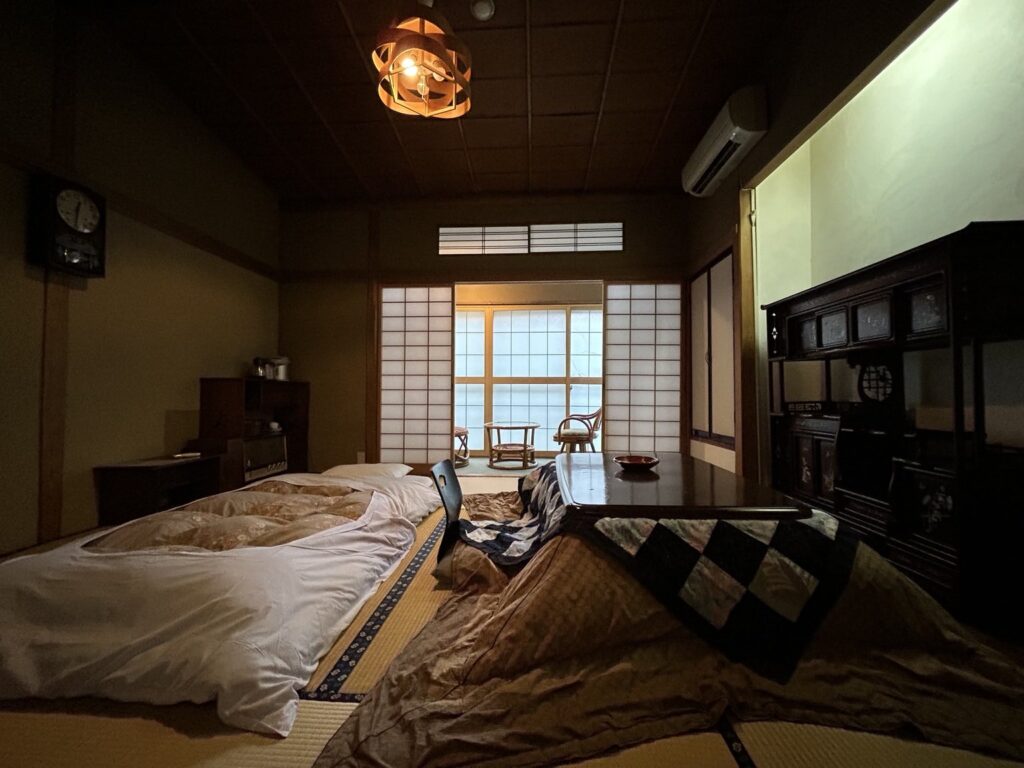
2. Japanese Restaurants and Izakaya
Some restaurants offer horigotatsu seating, where you can sit around a low table with a recessed space for your legs.
3. Traditional Japanese Accommodation
Some holiday rentals and countryside guesthouses provide kotatsu for guests.
If you specifically want to experience one, check the accommodation facilities before booking, as not every Japanese-style room has a kotatsu.
Frequently Asked Questions About Kotatsu
Q. What is a kotatsu in Japan?
A. A kotatsu is a Japanese heated table with an electric heater underneath and a thick blanket that keeps the warmth inside.
Q. Is the inside of a kotatsu really warm?
A. Yes! The heater warms the enclosed space underneath the table, making it a cozy place to keep your legs warm.
Q. Is kotatsu an ancient Japanese tradition?
A. Its origins date back several centuries. Early versions used charcoal, while modern kotatsu use electric heaters.
Q. Why do Japanese people eat mandarins under a kotatsu?
A. Eating mikan while relaxing under a kotatsu is a familiar Japanese winter tradition. The combination is strongly associated with a cozy day at home.
Q. Can tourists experience a kotatsu?
A. Yes! Some traditional inns, Japanese-style accommodations, and restaurants offer kotatsu or horigotatsu seating.
Final Thoughts: If You See a Kotatsu, Give It a Try!
The kotatsu is more than just a heated table. It represents a cozy and familiar part of everyday Japanese life.
You may have seen one in Japanese anime, manga, movies, or TV dramas. But experiencing the warmth yourself is something quite different!
If you find a kotatsu during your winter trip to Japan, don’t hesitate to sit down, enjoy some Japanese mandarins, and experience this unique Japanese winter tradition.
Just be warned: Once you get under the kotatsu, you might not want to get out!
More from my site
 Does It Snow in Fukuoka? Winter Weather Guide
 Snow in Sapporo: When It Snows, How Much to Expect, and How to Enjoy It Safely
 Does It Snow in Tokyo? Winter Weather Guide
 What Is Japow? Why Japan Has the Best Powder Snow
 Why Hokkaido Is Japan’s Ultimate Winter Destination
 Snow Getaways from Tokyo: 3 Easy Winter Trips to See Snow in Japan