
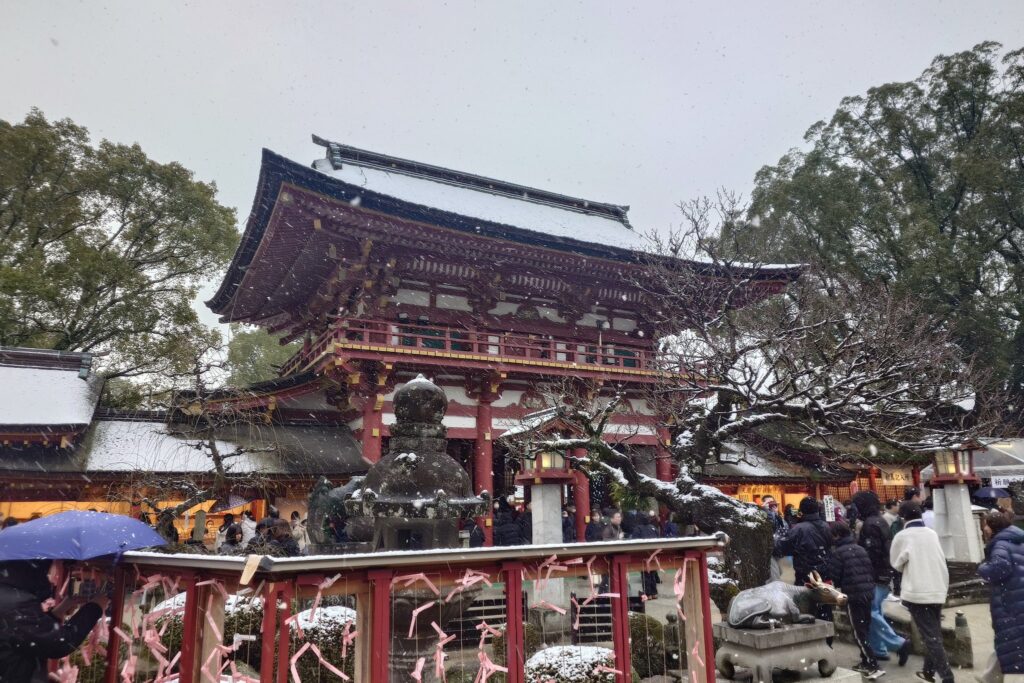
Many travelers think of Kyushu as a warm region of Japan. But what about Fukuoka in winter? Does it ever snow?
The short answer is: Yes, it does snow in Fukuoka. Snowfall is relatively uncommon, and heavy snow is rare. However, light snow can fall during winter, particularly in January and February.
If you’re planning a trip to Fukuoka during winter, here’s what you should know about snowfall, temperatures, transportation, and what to wear.
Does Fukuoka Get Snow?
Yes, it does snow in Fukuoka, although snowfall is usually light.
Fukuoka is located in northern Kyushu, facing the Sea of Japan. Unlike southern Kyushu, this area can be affected by cold winter air from the Asian continent.
- Snow is most likely between December and February
- January and February are the months when snowfall is most likely
- Snow usually does not accumulate for long
- Heavy snowfall is uncommon in central Fukuoka
Even though Fukuoka is in southern Japan, winter weather can be surprisingly cold.
According to the Japan Meteorological Agency, snow is a normal winter weather phenomenon in northern Kyushu. 気象庁+1
How Often Does It Snow in Fukuoka?

Fukuoka experiences snow on several days during an average winter, but this does not mean the city is covered in snow.
According to Japan Meteorological Agency climate data (1991–2020):
- January: Around 1 cm of total snowfall
- February: Around 1 cm of total snowfall
- Snow accumulation of 1 cm or more is uncommon
- The average deepest snow cover is very shallow
In other words, you may see snow falling during your visit, but you should not expect a snowy cityscape.
Snowfall also varies considerably from year to year. Some winters bring several opportunities to see snow, while others have very little. 気象庁データサイト+1
When Does It Snow in Fukuoka?
Snowfall in Fukuoka is most likely during the winter months.
December
Snow is possible, especially toward the end of December.
However, snowfall is generally limited, and many days are simply cold and cloudy.
January
January is one of the coldest months of the year and one of the best times to see snow in Fukuoka.
Cold air from the northwest can bring occasional snowfall.
February
February is another month when snow can fall.
Although temperatures gradually begin to rise toward spring, cold weather and occasional snowfall are still possible.
March
Snow becomes much less likely in March.
Temperatures start increasing, and spring gradually arrives in Fukuoka.
How Cold Is Fukuoka in Winter?
Fukuoka has relatively mild winters compared with Hokkaido and northern Japan.
However, temperatures can still feel quite cold, especially in the morning and evening.
Here are the average temperatures based on Japan Meteorological Agency climate normals (1991–2020).
| Month | Average High | Average Low |
|---|---|---|
| December | 12.6°C | 5.8°C |
| January | 10.2°C | 3.9°C |
| February | 11.6°C | 4.4°C |
| March | 15.0°C | 7.2°C |
Source: Japan Meteorological Agency. tables of Climatological Normals (1991–2020)+1
January is generally the coldest month.
Compared with Tokyo, Fukuoka has a slightly milder winter, although cold winds can make it feel colder than the thermometer suggests.
Why Does It Snow in Fukuoka?
Fukuoka is located in northern Kyushu, facing the Sea of Japan.
During winter, a weather pattern known as the winter pressure pattern (high pressure in the west and low pressure in the east) brings cold air from the Asian continent toward Japan.
As this cold air passes over the Sea of Japan, it picks up moisture and can produce clouds and snow.
This is why Fukuoka sometimes experiences snowfall even though it is located in Kyushu.
The Japan Meteorological Agency explains that Fukuoka’s winter weather has characteristics similar to areas along the Sea of Japan. 気象庁+1
Does Snow Cause Transportation Problems in Fukuoka?
Usually, light snowfall does not cause major problems in central Fukuoka.
However, heavier snowfall or icy conditions can affect transportation.
Trains and Public Transportation
- Some train services may experience delays.
- Services may be temporarily suspended during severe weather.
- Buses may run behind schedule due to road conditions.
Roads and Walking Conditions
- Roads and sidewalks can become slippery.
- Bridges and elevated roads may freeze.
- Driving conditions can become dangerous during icy weather.
If snow is forecast, check transportation updates before leaving your hotel.
For travelers renting a car, winter tires and local road conditions are particularly important.
What Should Travelers Wear in Fukuoka During Winter?
You do not need the same level of winter clothing as you would in Hokkaido, but warm clothing is still essential.
Recommended items include:
- A warm winter coat or down jacket
- Sweaters or thermal innerwear
- Long pants
- Comfortable walking shoes
- A scarf and gloves for particularly cold days
Waterproof shoes can also be useful if rain or snow is expected.
Since sightseeing in Fukuoka often involves walking outdoors, comfortable and warm footwear will make your trip more enjoyable.
Can You See Snow in Fukuoka?
Yes, but you should not plan your entire trip around seeing snow in the city.
Snowfall is unpredictable, and central Fukuoka does not usually experience deep snow.
If seeing snowy scenery is an important part of your Japan trip, consider visiting mountainous areas in Kyushu instead.
These areas have a better chance of experiencing snow during winter.
However, always check local weather conditions before traveling.
Is Winter a Good Time to Visit Fukuoka?
Absolutely!
Even though Fukuoka can be cold in winter, it remains an enjoyable destination.
Winter is also a great season to enjoy some of Fukuoka’s famous local foods.
- Hakata Ramen: Enjoy a warm bowl of tonkotsu ramen.
- Motsunabe: A popular hot pot dish made with beef or pork offal.
- Mizutaki: A traditional Fukuoka chicken hot pot.
- Yatai: Experience Fukuoka’s famous outdoor food stalls.
You can enjoy plenty of indoor attractions, shopping, and local food even on cold or rainy days.
Final Thoughts: What to Expect from Snow in Fukuoka
Here are the key things to remember when visiting Fukuoka in winter:
- Snow does fall in Fukuoka, but it is relatively uncommon.
- January and February are the most likely months for snowfall.
- Heavy snow and long-lasting accumulation are rare in central Fukuoka.
- Winter temperatures are generally mild compared with northern Japan.
- Snow or ice can occasionally affect transportation and road conditions.
If you’re visiting Fukuoka in winter, don’t expect a snowy city. However, you may be lucky enough to see a little snow during your stay.
Fukuoka offers plenty of reasons to visit in winter, especially if you enjoy Japanese food and city sightseeing.oes happen, you’ll witness a side of the city that even many locals rarely see.
More from my site
 Does It Snow in Tokyo? Winter Weather Guide
 Snow in Sapporo: When It Snows, How Much to Expect, and How to Enjoy It Safely
 Why Hokkaido Is Japan’s Ultimate Winter Destination
 Snow Getaways from Tokyo: 3 Easy Winter Trips to See Snow in Japan
 Snowy Splendor and Historic Charm: Takada Castle and its Enchanting Park in Joetsu City, Niigata
 Best Kamakura Experiences in Japan You Shouldn’t Miss