
Introduction
Chopsticks are available globally today, often found in local Asian supermarkets or online stores around the world. However, purchasing a pair of authentic Hashi (Japanese chopsticks) while traveling in Japan remains a uniquely rewarding experience.
Far from being a generic utensil, Japanese chopsticks are deeply tied to the country’s culinary history, ergonomics, and regional craftsmanship. Here is why a pair of Japanese chopsticks is the ultimate, meaningful souvenir to bring home.
1. The Art of Precision: How Japanese Chopsticks Differ Across Asia
While China, Korea, and Japan all share a rich chopstick culture, the design of the utensils varies significantly based on historical dining habits and local cuisine.
Compared to other Asian styles, Japanese chopsticks have several defining features:
| Feature | Japan (Hashi) | China (Kuàizi) | Korea (Jeotgarak) |
| Shape | Short with sharply tapered, pointed tips | Long with thick, blunt ends | Medium length, flat, and rectangular |
| Material | Primarily lacquered wood or bamboo | Wood, bamboo, or plastic | Stainless steel or silver |
| Dining Context | Individual portions; designed for lifting delicate fish bones. | Communal dining; long length helps reach shared dishes. | Traditional barbecue and clearing heavy metal bowls. |
The finely pointed tip of the Japanese hashi is a direct reflection of Japan’s staple diet. Historically centered around rice and fish, Japanese food requires a tool capable of delicate movements—such as picking tiny bones out of a cooked fish or picking up single grains of sticky rice. For travelers, this tapered design offers unparalleled grip and precision, making them exceptionally user-friendly for beginners and experts alike.

2. Masterpieces of Traditional Craftsmanship
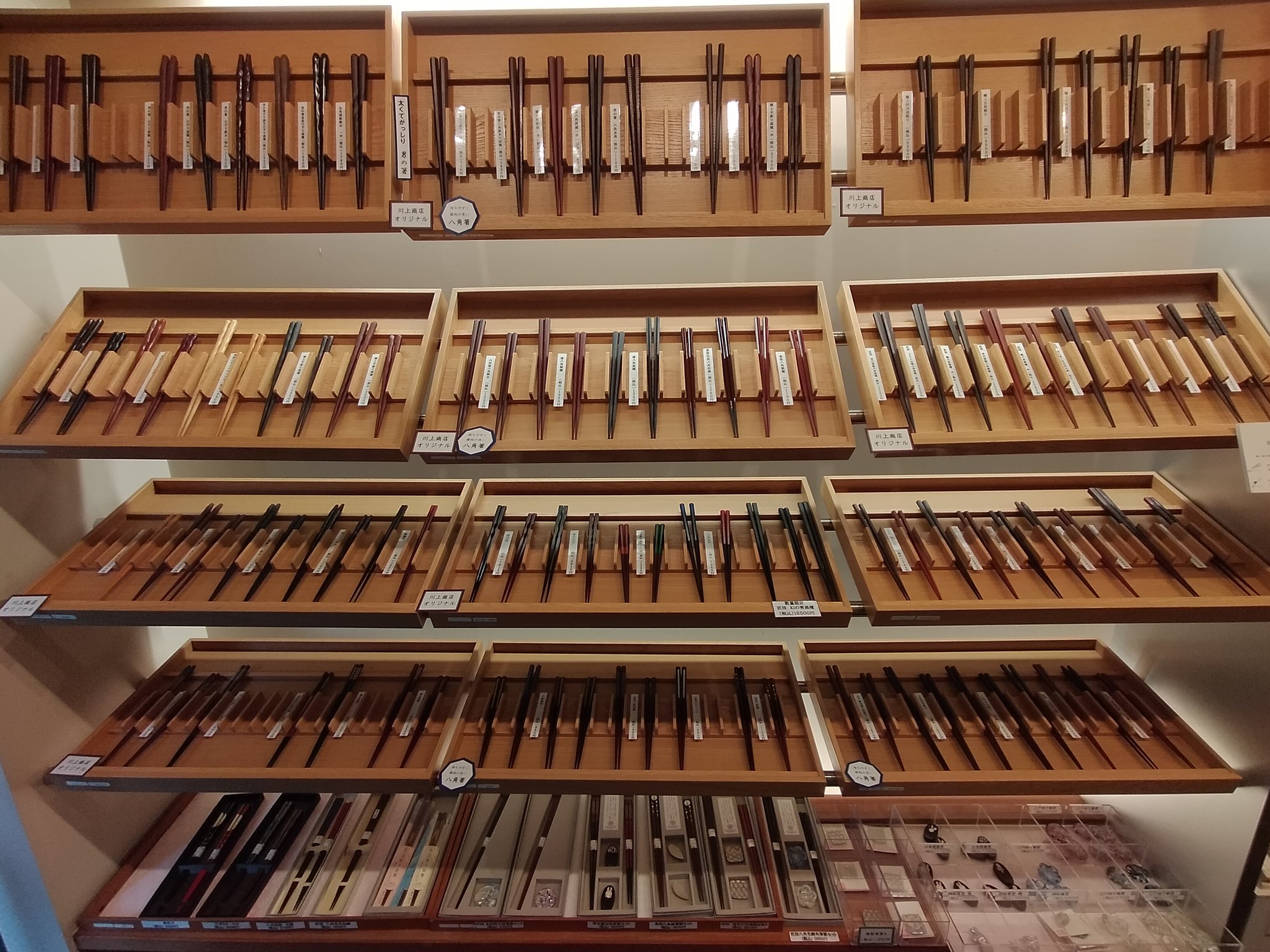
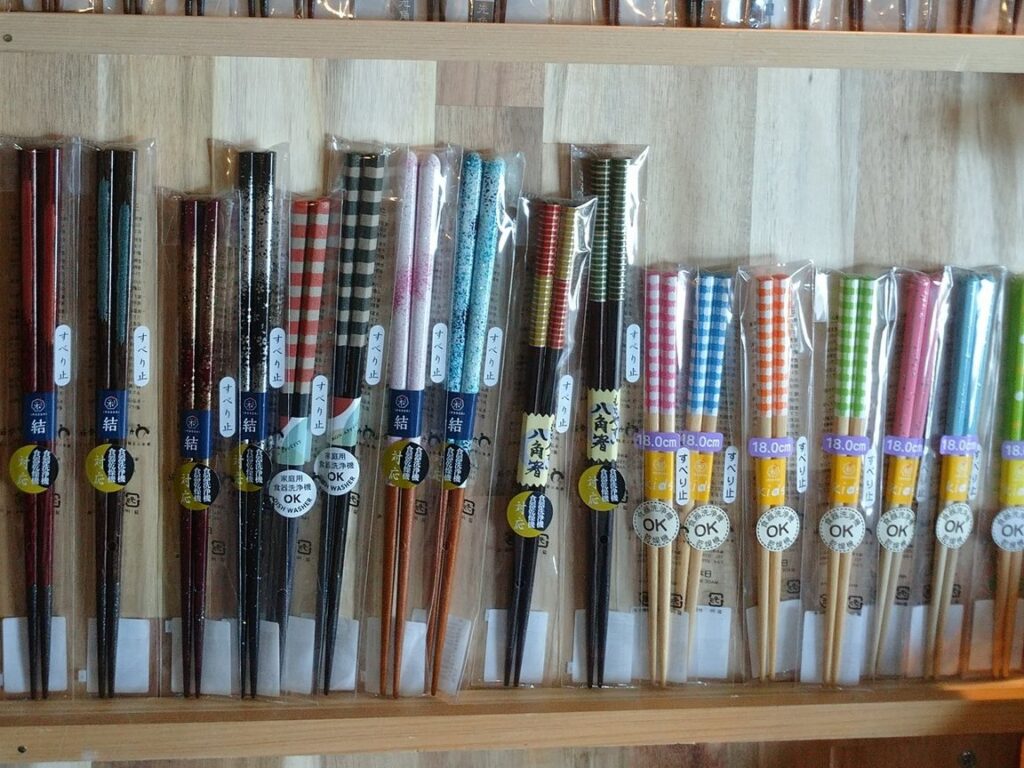
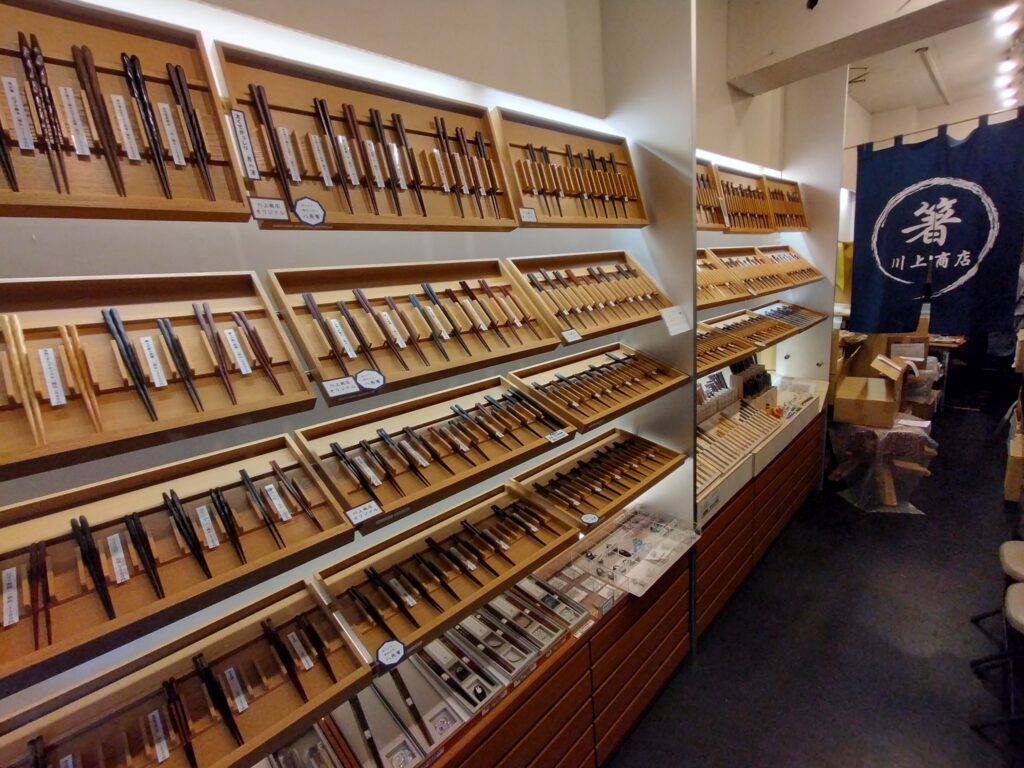
When you buy quality chopsticks in Japan, you are investing in centuries-old regional craftsmanship. Many specialty shops across Tokyo, Kyoto, and regional hubs showcase chopsticks made via traditional techniques:
- Wakasa Lacquerware (Wakasa Nuri): Hailing from Fukui Prefecture, these chopsticks feature intricate designs made by applying multiple layers of natural lacquer (urushi), often embedding seashells, mother-of-pearl, or gold leaf to mimic the ocean floor.
- Edo Karaki: Crafted in Tokyo from dense, high-quality hardwoods like ebony or rosewood, these emphasize the natural elegance, weight, and extreme durability of the wood grain.
These artisanal pieces are finished with food-safe natural lacquers that protect the wood, making them durable enough to last for years—or even generations—if cared for properly.
3. The Practical, Eco-Friendly, and Personal Gift
Beyond cultural significance, chopsticks check every box for the ideal travel souvenir:
- Space-Saving: They weigh virtually nothing and slip easily into the tightest corners of a packed suitcase.
- Highly Functional: Unlike a decorative trinket that gathers dust on a shelf, chopsticks can be used daily back home, bringing a piece of your Japanese journey to every meal.
- Customization: Many specialty chopstick boutiques in Japan offer on-the-spot name engraving (nale-ire), allowing you to etch your name or a friend’s name in English or Japanese katakana characters.
In Japanese culture, gifting a pair of chopsticks represents creating a “bridge” (hashi shares a homophone with the Japanese word for bridge) connecting people, making a matching pair (Meoto-bashi) a deeply thoughtful gift for couples or loved ones back home.
Conclusion
While you can buy cheap mass-produced utensils anywhere in the world, finding a personal pair of hashi in Japan allows you to take home a tangible piece of Japanese hospitality (omotenashi) and culinary design.
Aichi Airport Alcoholic beverage Anime Anime pilgrimage April Architecture August Autumn Building Capital Area Cherry blossom Convenience store February Flower January Japanese food kanto Kinki Kyoto March May Nagoya Nature Nightlife Night view Osaka Photogenic Pink Sakura Shopping Shrine Souvenir Spring Station Summer Superb view Temple Tips Tokai Tokyo Traffic train White Winter

More from my site
 Pokemon Center Mega Tokyo: Reopening Guide & Location
 Inside Onitsuka Tiger’s World Largest Store in Shinjuku & Nagoya Flagship
 The Ultimate Guide to Buying Cosmetics in Japan (2026 Edition)
 Discover Washi: The Ultimate Guide to Japan’s Best Souvenir
 Gourmet Supermarkets in Tokyo: The Ultimate Guide for Foodie Travelers
 Temporary Closure of Pokémon Center Mega Tokyo & Pikachu Sweets