
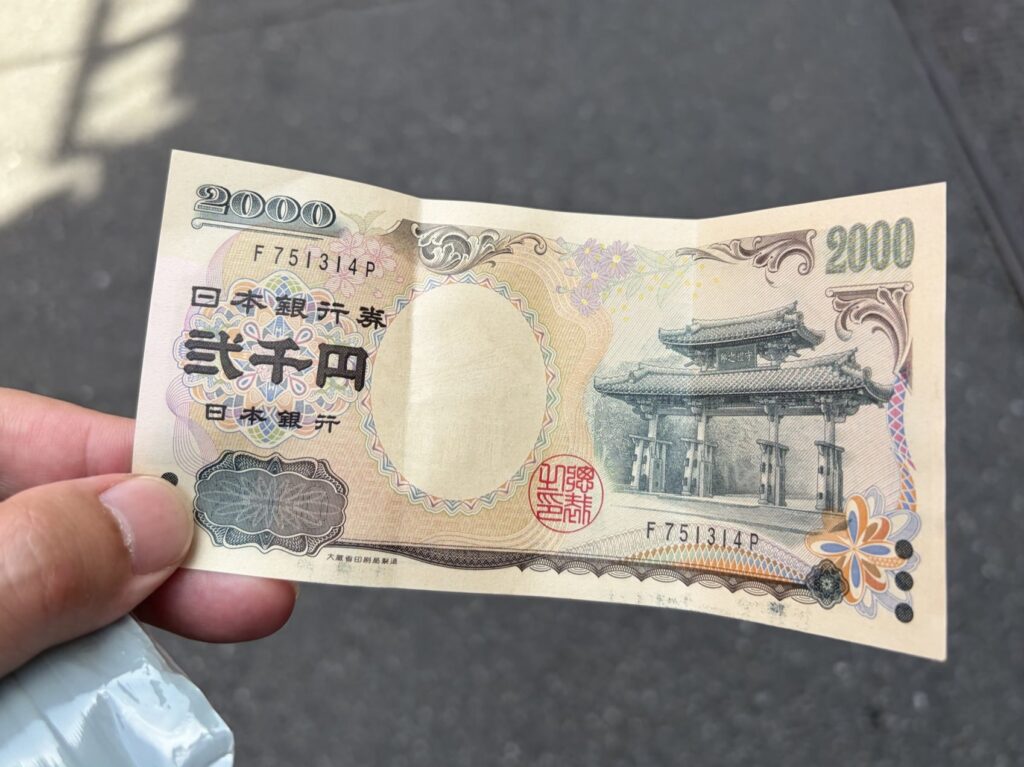
When traveling around Japan, you will quickly get used to the standard cash: the 1,000, 5,000, and 10,000 yen notes. But there is a “phantom” bill that most locals in Tokyo or Osaka haven’t seen in years.
Introducing the 2,000 yen note ($\yen2,000$).
While rare on the mainland, this elusive bill is alive, well, and kicking in Okinawa. Here is the story behind Japan’s rarest cash, why it’s a staple of the tropical south, and what to do if you get one.
What is the 2,000 Yen Note & Why is it So Rare?
The 2,000 yen note was issued in the year 2000 to commemorate two major events: the turn of the millennium and the 26th G8 Summit held in Okinawa.
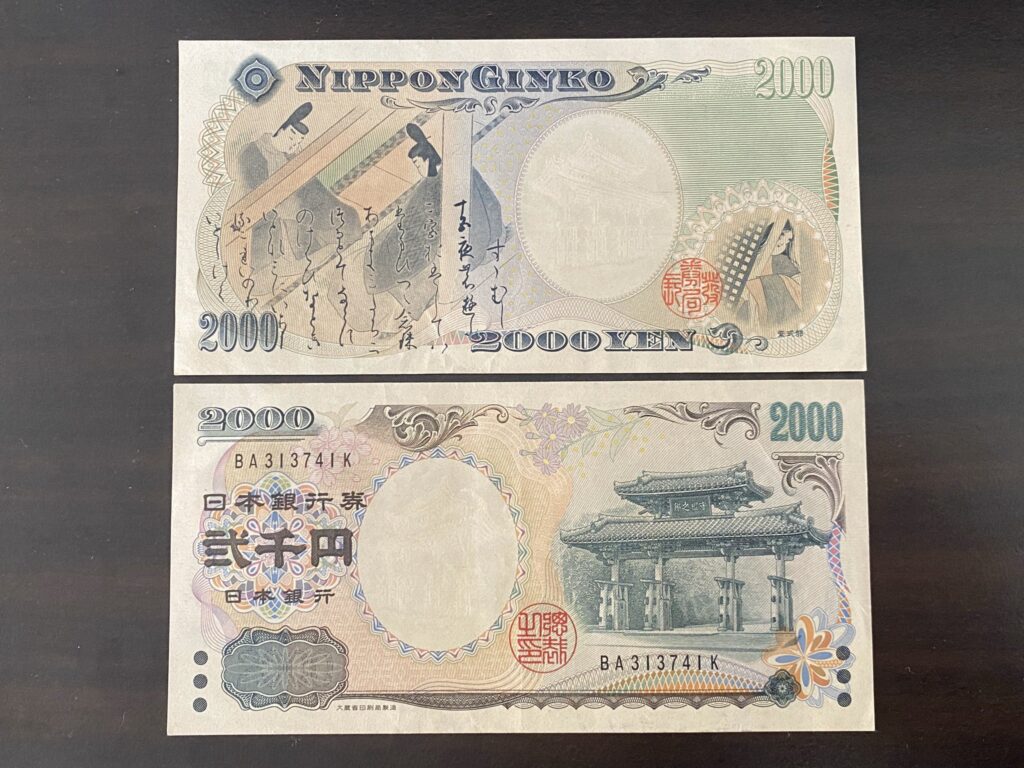
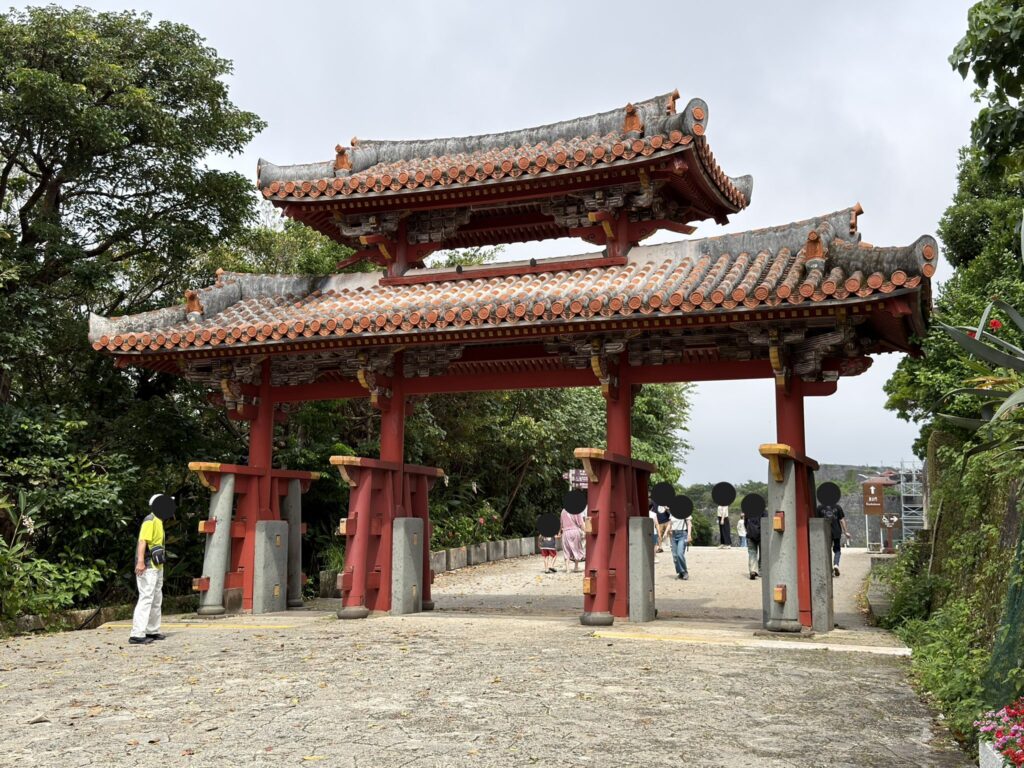
Unlike other Japanese banknotes which feature portraits of historical figures, the front of the 2,000 yen note features Shureimon, a beautiful, iconic stone gate at Shuri Castle in Naha, Okinawa. The back depicts a scene from the classic Japanese literary work, The Tale of Genji.
So, why did it disappear from mainland Japan?
- The “Convenience” Paradox: ATMs, vending machines, and ticket booths across Japan were already built to accept 1,000, 5,000, and 10,000 yen notes. Upgrading millions of machines nationwide to accept a new 2,000 yen denomination was costly, so many businesses simply didn’t bother.
- Habit: Because the machines didn’t accept them, people didn’t want to carry them, causing banks to stop actively circulating them on the mainland.
Why is the 2,000 Yen Note Everywhere in Okinawa?
If you step foot in Okinawa, however, the story completely flips. You will easily find 2,000 yen bills in your change from local convenience stores or dispensed from Okinawan ATMs.
There are two major reasons for this Okinawan love affair:
- Local Pride: The bill proudly features Shureimon, a symbol of Okinawan culture and the ancient Ryukyu Kingdom. Local citizens and businesses embraced the note as a piece of their identity.
- Economic Boost: Okinawan banks and local governments actively promoted the use of the bill to stimulate the local economy and keep Okinawa in the national spotlight. ATMs in Okinawa were specifically configured to dispense 2,000 yen notes, ensuring they stayed in active circulation.
Can You Actually Use It Outside of Okinawa?
Yes, absolutely. The 2,000 yen note is legal tender across the entire country of Japan.
However, using it on the mainland comes with a few caveats:
- Vending Machines & Train Ticket Machines: Most older or standard vending machines on the mainland will reject it. Modern convenience store registers and manned ticket counters will accept it without any issue.
- Surprised Clerks: If you try to pay with a 2,000 yen note in Tokyo, a young cashier might pause for a second or call a manager—not because it’s fake, but simply because they might have never seen one in real life!
Got One? You’re Lucky! (What to Do Next)
If you receive a 2,000 yen note during your travels in Okinawa, consider it a lucky charm and a unique souvenir.
💡 Traveler’s Tip: Don’t spend it right away! Keep it crisp and flat in your wallet. Because it features a UNESCO World Heritage site gate on the front and classic artwork on the back, it makes for a fantastic, lightweight, and culturally rich souvenir to bring home from your Japanese adventure.
Aichi Airport Alcoholic beverage Anime Anime pilgrimage April Architecture August Autumn Building Capital Area Cherry blossom Convenience store February Flower January Japanese food kanto Kinki Kyoto March May Nagoya Nature Nightlife Night view Osaka Photogenic Pink Sakura Shopping Shrine Souvenir Spring Station Summer Superb view Temple Tips Tokai Tokyo Traffic train White Winter

More from my site
 Orion T-Shirts in Okinawa: Why Every Tourist Wants One
 Okinawa in a Can: The Magic of Orion Beer and Its Iconic Goods
 Chiikawa in Okinawa: Locations & Exclusive Goods at Shisa’s Souvenir Shop
 Banana Record Japan: A Guide to Used Vinyl & CDs
 Chiikawa Bakery Osaka: The Ultimate Guide for Visitors
 Pokemon Center Mega Tokyo: Reopening Guide & Location