
For many travelers, Japanese shrines are the ultimate embodiment of “Zen.” But beyond the spiritual serenity, they offer some of the most stunning visual compositions in the world. From endless vermilion gates to shrines overlooking the Pacific Ocean, these spots are a dream for photographers and soul-seekers alike.
Here are the most photogenic shrines in Japan that will make your Instagram feed look like a professional travel editorial.
1. Fushimi Inari Taisha (Kyoto)
The Iconic Tunnel of a Thousand Gates
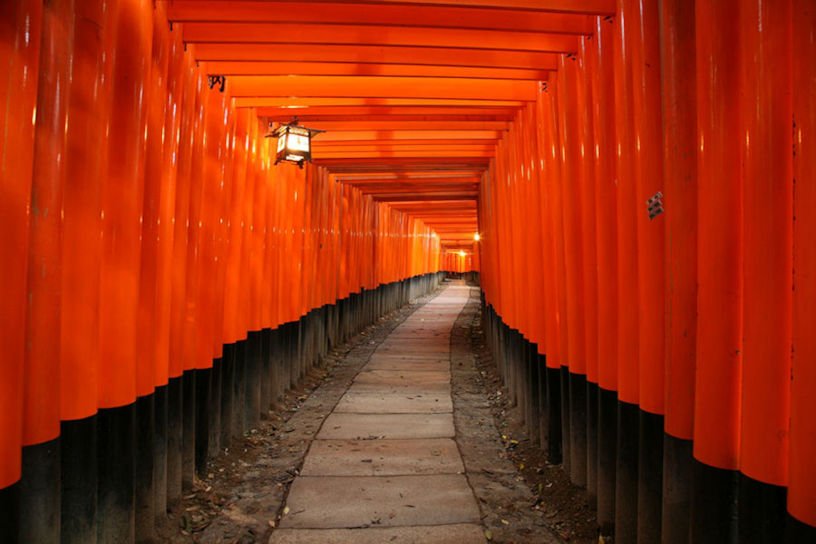
This is arguably the most famous shrine in Japan. The “Senbon Torii” (thousands of torii gates) create a mesmerizing orange tunnel that snakes up the mountainside.
- Photo Tip: Don’t stop at the entrance where it’s most crowded. Hike up about 15–20 minutes to the higher sections; you’ll find gaps in the crowds and more atmospheric lighting.
- Best Time: Early morning (before 7:30 AM) to avoid the “tourist rush.”
2. Motonosumi Shrine (Yamaguchi)
Where the Ocean Meets the Crimson Dragon
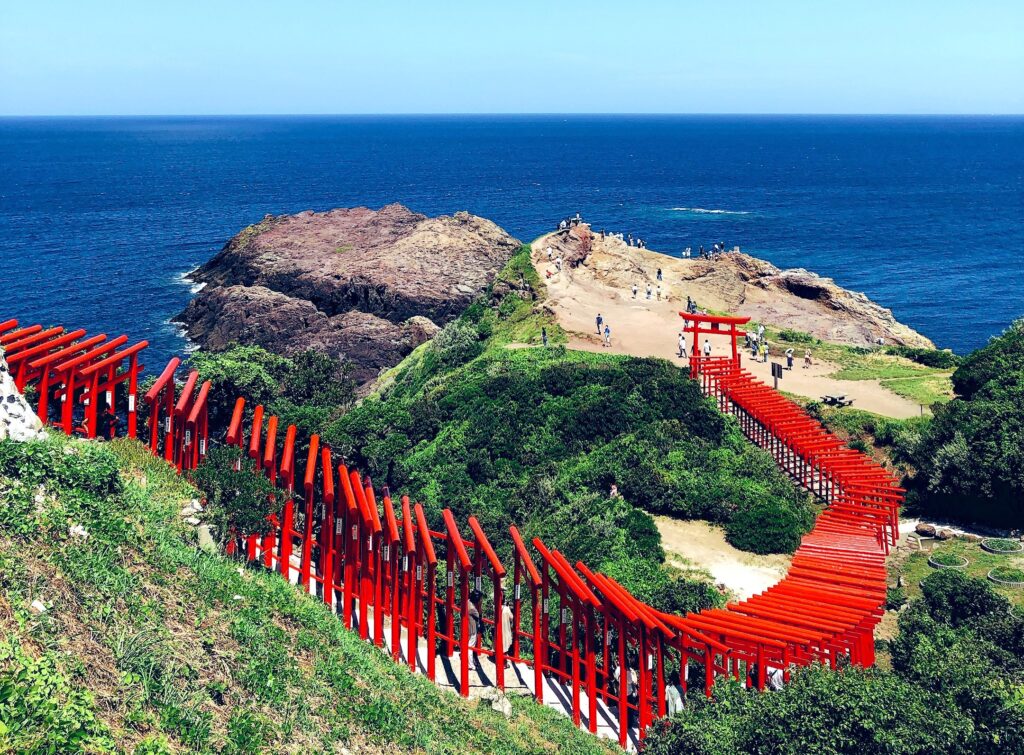
Selected by CNN as one of “Japan’s 31 Most Beautiful Places,” this shrine features 123 red gates stretching across a cliff overlooking the deep blue Sea of Japan.
- Photo Tip: Use a wide-angle lens to capture the contrast between the green grass, the red gates, and the splashing white waves against the blue ocean.
- Unique Feature: The offertory box (Saizen-bako) is located at the top of a tall torii gate. If you successfully toss your coin in, it’s said your wish will come true!
3. Arakura Fuji Sengen Shrine (Yamanashi)
The “Triple Threat” of Japanese Scenery
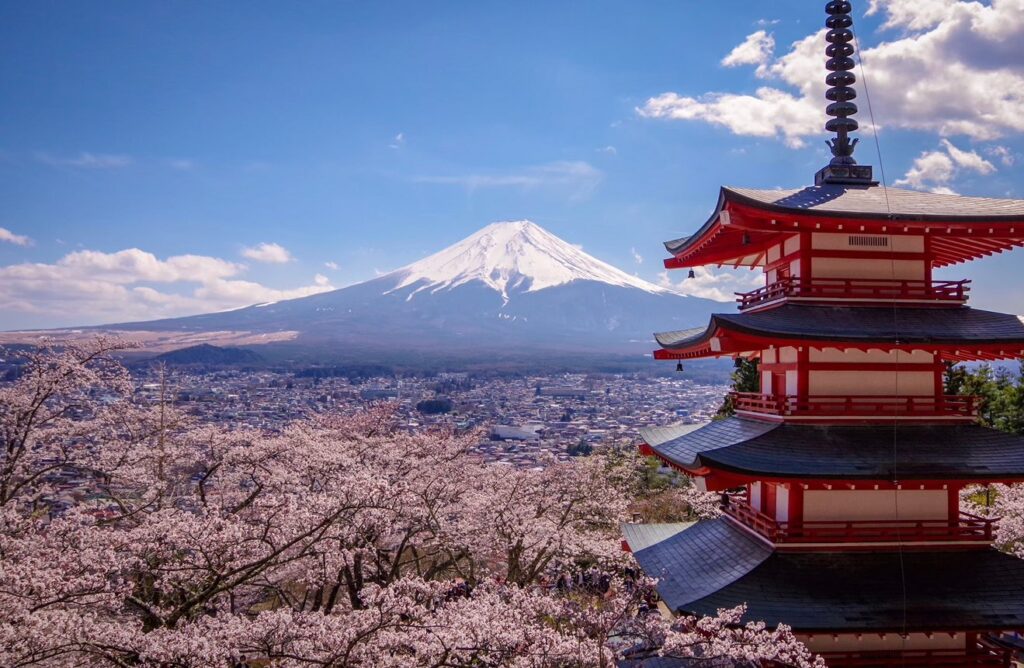
If you want the “quintessential Japan” photo—Mt. Fuji, a five-story pagoda, and cherry blossoms—this is the place.
- Photo Tip: Climb the 398 steps to the observation deck. In spring (April), the pink blossoms frame the pagoda perfectly. In autumn, the fiery red maple leaves provide a dramatic alternative.
- Note: This spot is very popular, so expect a short wait at the observation deck during peak seasons.
4. Nezu Shrine (Tokyo)
A Kyoto Vibe in the Heart of the City
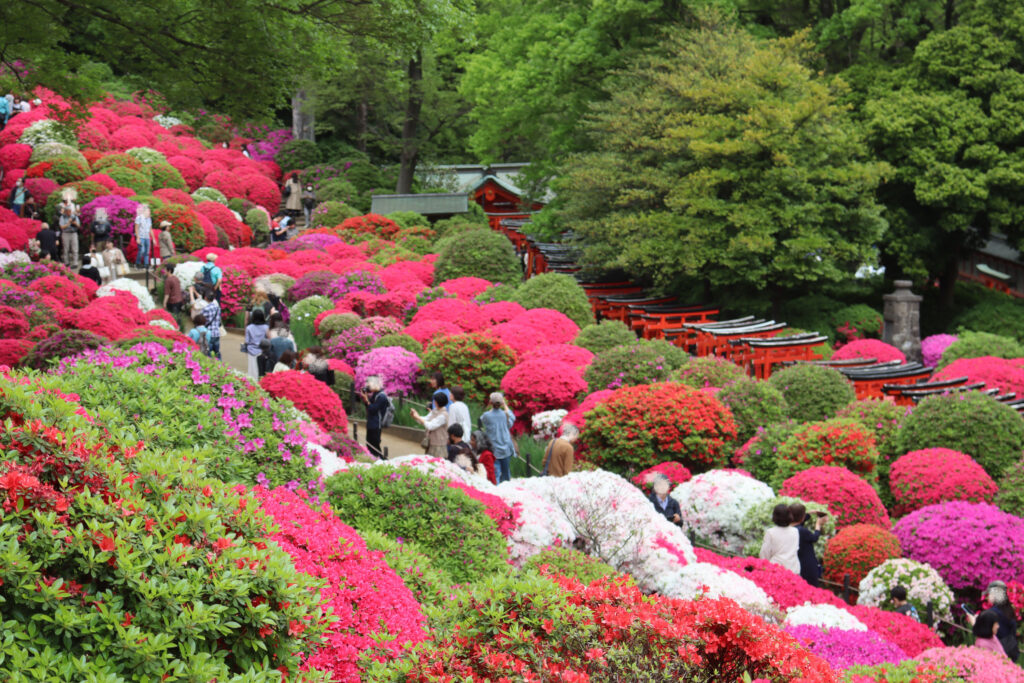
You don’t have to go to Kyoto to see torii tunnels. Nezu Shrine is one of Japan’s oldest and most beautiful, featuring a hillside of azalea flowers and a charming miniature path of red gates.
- Photo Tip: Visit in late April for the Bunkyo Azalea Festival. The sight of thousands of blooming shrubs in purple, pink, and white surrounding the gates is breathtaking.
5. Kawai Shrine (Kyoto)
The Sanctuary of Beauty
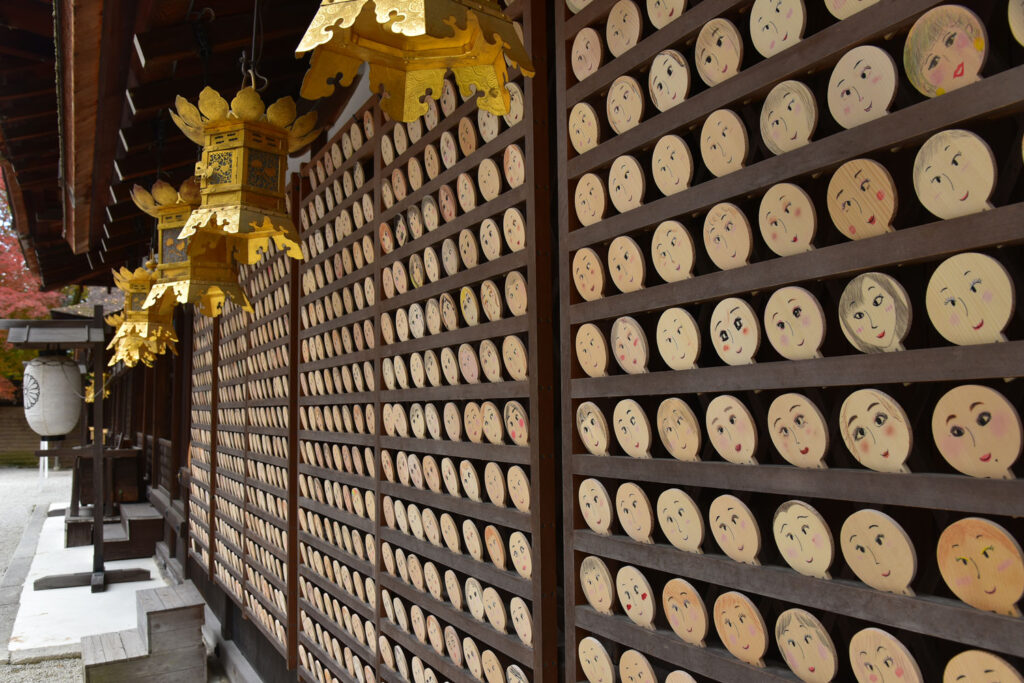
Located within the forest of the World Heritage site Shimogamo Shrine, this “shrine of beauty” is famous for its Kagami-Ema (mirror-shaped votive tablets).
- Photo Tip: The tablets are shaped like hand mirrors with faces drawn on them. Visitors use their own makeup to “beautify” the faces. A row of these colorful, artistic mirrors makes for a unique, close-up cultural shot.
📸 Pro-Tips for Shrine Photography
To ensure you get the best shots while staying respectful of the culture, keep these points in mind:
| Feature | Advice |
| Respect the Sacred | Always bow at the entrance gate and perform the purification (washing hands) before taking photos. |
| Tripod Bans | Many popular shrines (especially in Kyoto) prohibit tripods to keep the paths clear. Check the signs! |
| The “Omamori” | Don’t forget to photograph the colorful Omamori (charms) and Ema (wooden plaques). They add great texture and color to your travel album. |
| Lighting | The “Golden Hour” (just before sunset) makes the vermilion (orange-red) paint of the shrines glow intensely. |
A Note on Etiquette: Shrines are active places of worship. While photography is usually welcomed, please avoid taking photos of people praying or of the inner sanctum where the deity is enshrined unless specifically permitted.
Aichi Alcoholic beverage Anime Anime pilgrimage April Architecture August Autumn Building Capital Area Cherry blossom Convenience store February Flower History January Japanese food kanto Kinki Kyoto March May Nagoya Nature Nightlife Night view Osaka Photogenic Pink Sakura Shopping Shrine Souvenir Spring Station Summer Superb view Temple Tips Tokai Tokyo Traffic train White Winter

More from my site
 Namba Yasaka Shrine Guide: Osaka’s Powerful Lion Shrine of Good Fortune
 5 Best Alternatives to Kyoto Without the Crowds
 Ine Funaya Guide: How to Visit Kyoto’s Scenic Boat Village
 Is Tokyo Skytree Safe? What You Need to Know Before Visiting
 Tokyo Plum Blossoms Guide: Yushima Tenjin in Early Spring
 Kyoto in Snow: 7 Rare and Beautiful Winter Views