
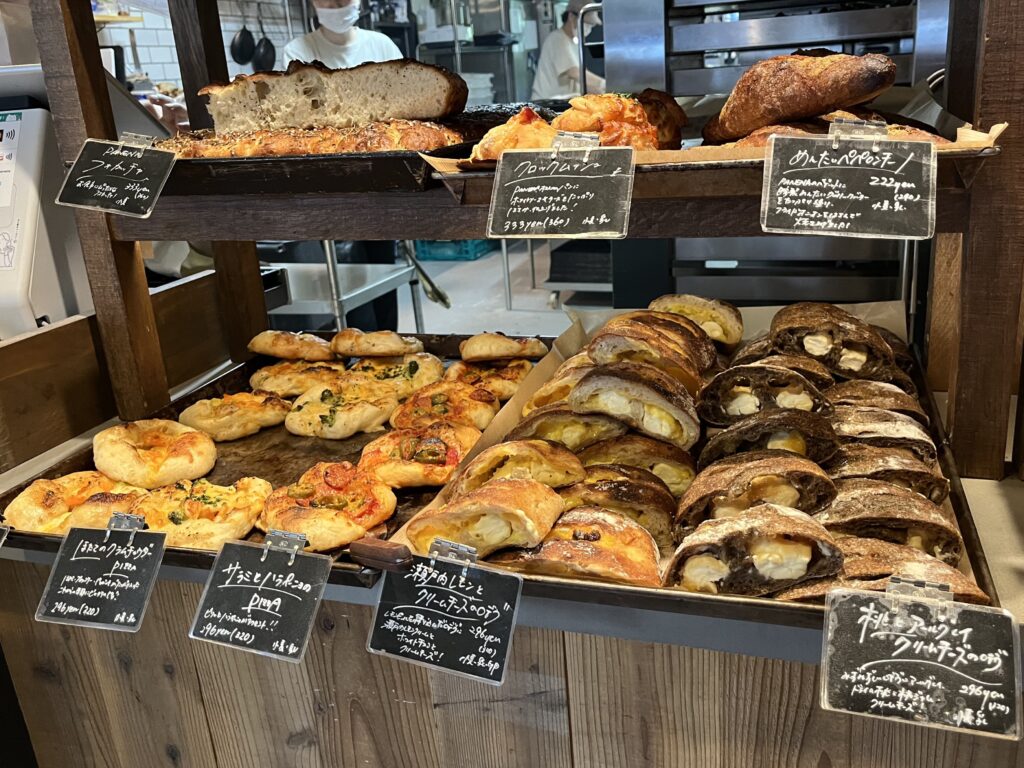
If you think France or Italy have the monopoly on incredible baked goods, think again. Japan has quietly developed one of the most vibrant, innovative, and downright delicious bakery cultures in the world.
From soft, pillowy textures to sweet and savory flavor combinations you won’t find anywhere else, stepping into a Japanese bakery (Bakery or Pan-ya) is a sensory delight. Here is everything you need to know to navigate and enjoy a Japanese bakery like a local.
1. The Unique World of Japanese “Pan” Culture
The Japanese word for bread is Pan (パン), which actually comes from the Portuguese word for bread, introduced to Japan in the 16th century.
While Western bakeries often focus on crusty, rustic sourdoughs or baguettes, Japanese baking masterfully adapts these traditions to local tastes. The hallmark of Japanese bread is “Fuwa-Fuwa” (ふわふわ)—an incredibly soft, fluffy, and cloud-like texture, often achieved using a special milk-and-flour starter technique called Yudane or Tangzhong.
2. Must-Try Japanese Breads (What to Buy)
Japanese bakeries are a unique fusion of sweet and savory. You will generally find these three main categories:
🍞 Sweet Breads (Kashi-pan)
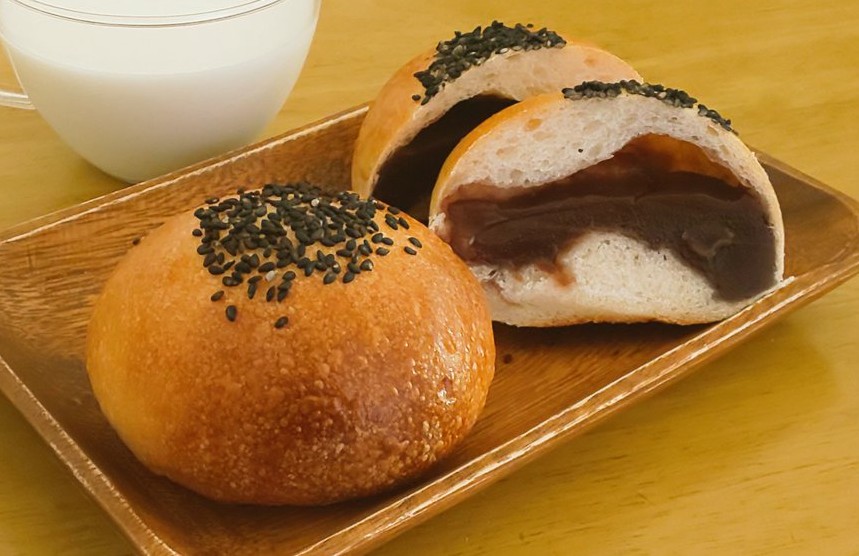
- Anpan (あんパン): The OG of Japanese bread. A soft roll filled with sweet red bean paste.
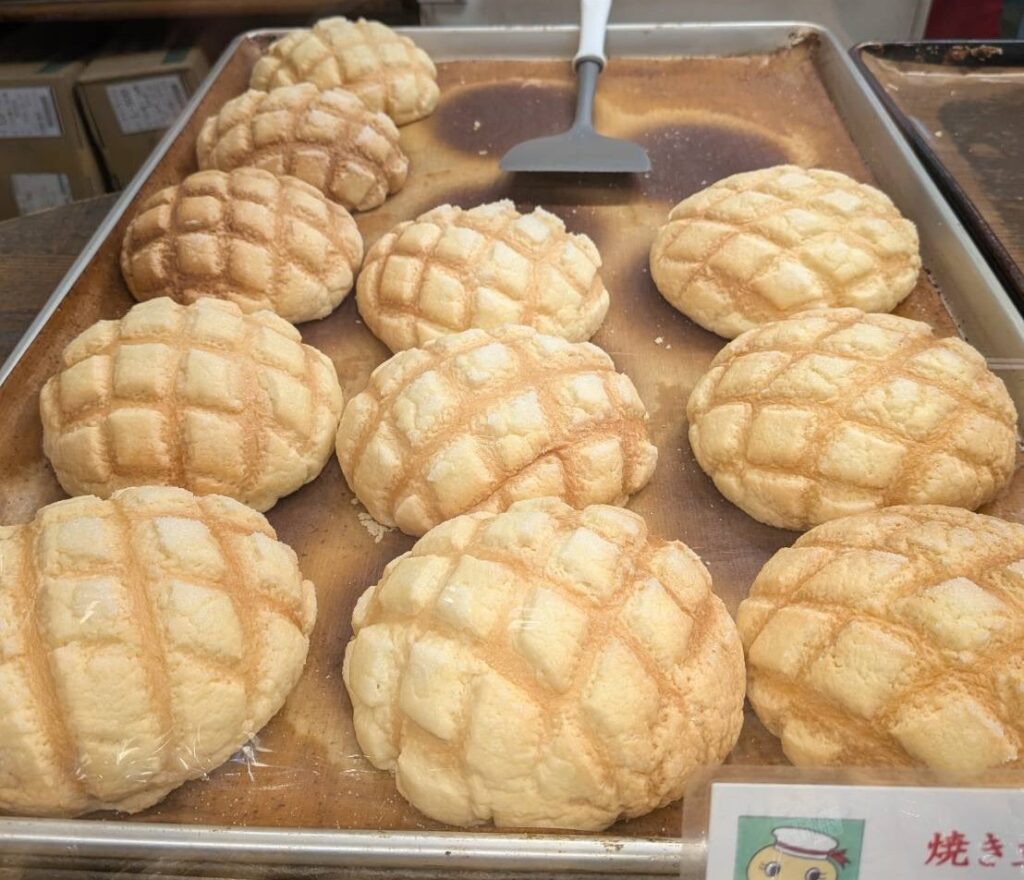
- Melonpan (メロンパン): Don’t worry, it doesn’t usually taste like melon! It’s a sweet bun covered in a crisp, cookie-dough crust that resembles the texture of a cantaloupe.
- Cream-pan (クリームパン): A fluffy bun filled with rich, smooth, and often handmade custard cream.

惣 Savory Breads (Sozai-pan)
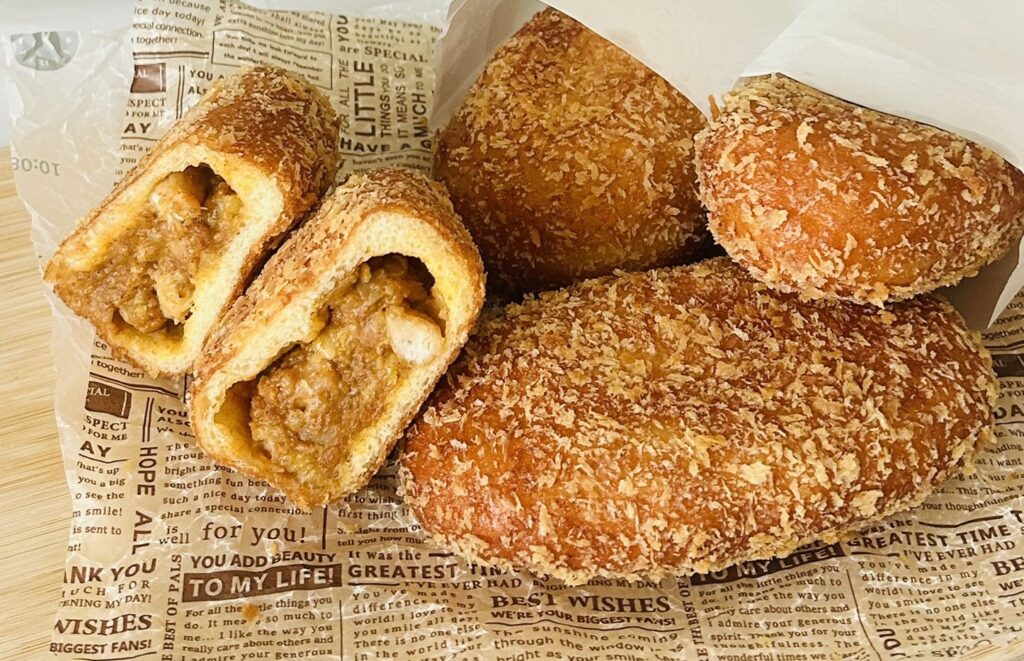
- Curry Pan (カレーパン): A crowd favorite. Spiced Japanese curry wrapped in dough, coated in Panko (breadrumbs), and deep-fried to crispy perfection.
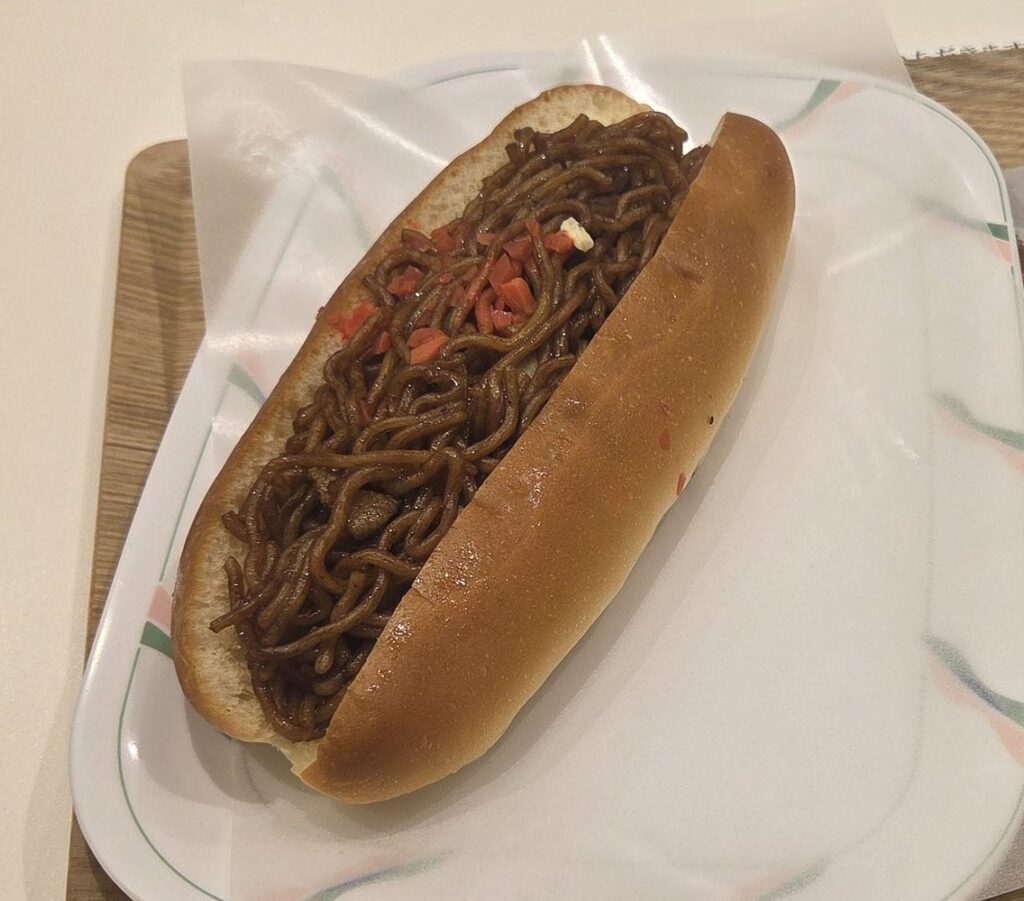
- Yakisoba Pan (焼きそばパン): Carbs on carbs! A hot dog bun stuffed with stir-fried Yakisoba noodles, red ginger, and savory sauce.
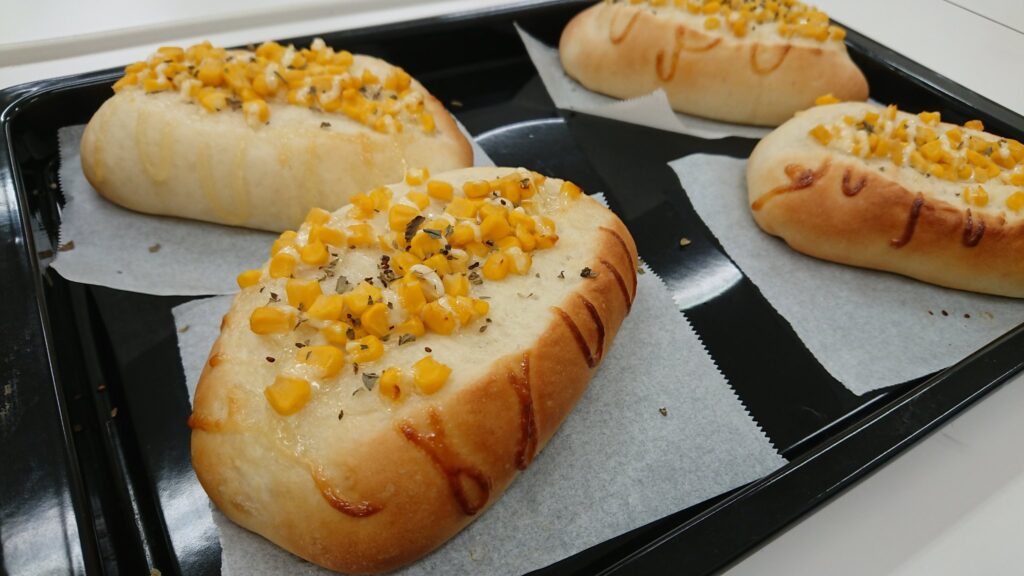
- Sausage/Corn Mayo Pan (コーンマヨパン): Sweet corn mixed with Japanese mayo (Kewpie) baked on top of soft dough—surprisingly addictive!
🥪 The Icon: Shokupan (食パン)
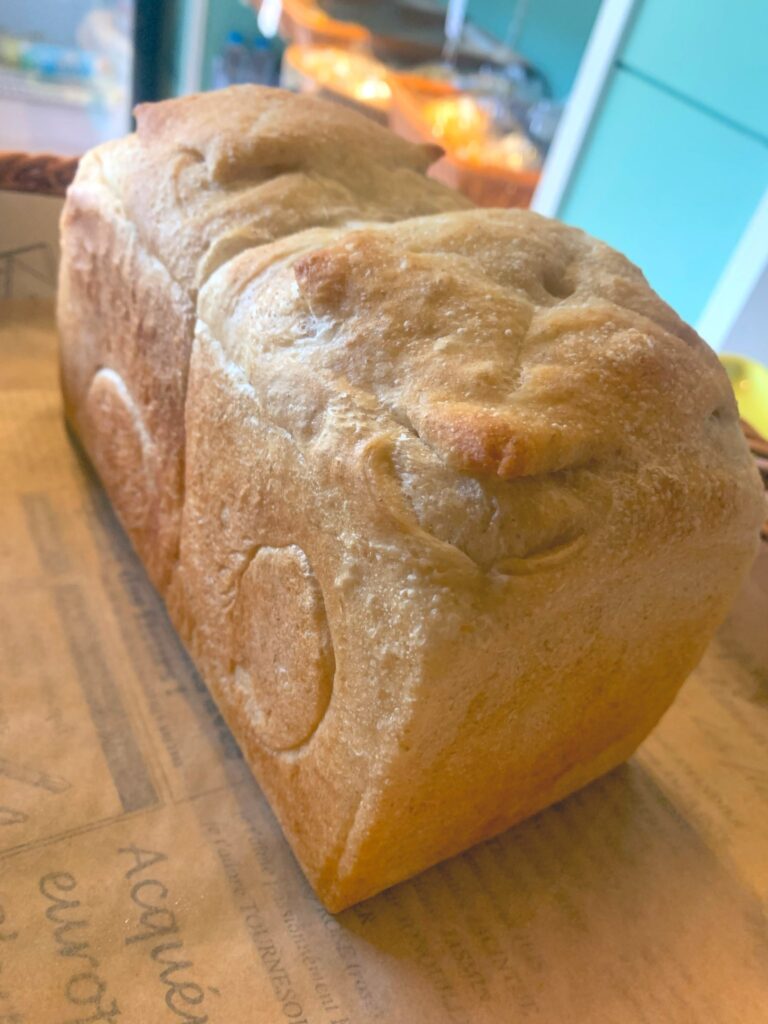
The ultimate everyday white bread. It is sold in thick slices (usually 4 to 6 slices per loaf) and is so soft and milky that it melts in your mouth.
3. How to Shop: The “Tray and Tongs” System
Shopping at a Japanese bakery is an interactive, self-service experience. Unlike in many Western bakeries where you order at the counter, in Japan, you do the gathering yourself.
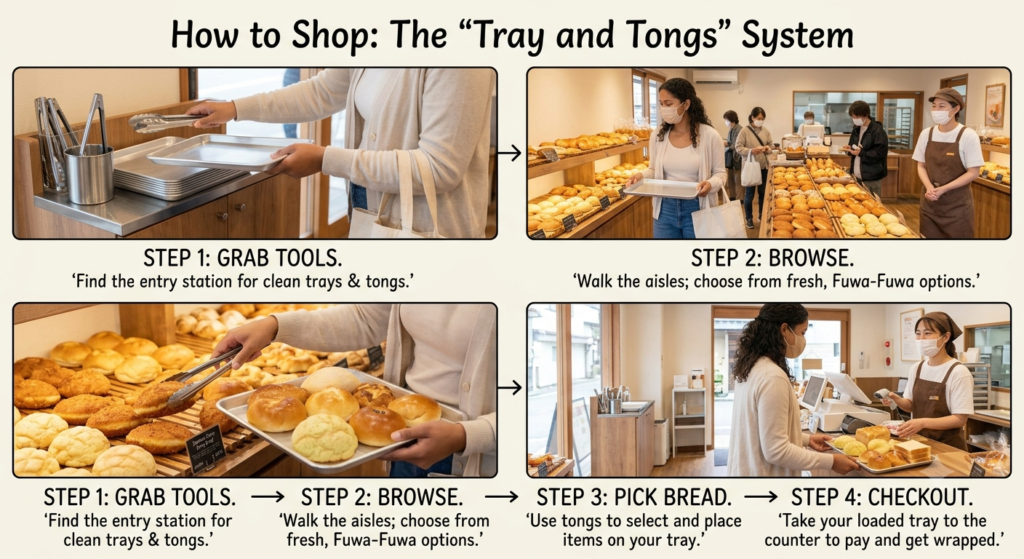
Step-by-Step Guide:
- Grab your tools: As soon as you enter, look for the designated station holding clean plastic or wooden trays (トレー) and tongs (トング).
- Browse and Pick: Walk around the displays. When you see a bread you want, use the tongs to gently pick it up and place it on your tray.
- Checkout: Take your loaded tray to the cashier. The staff will beautifully wrap each individual bread in plastic or paper so they don’t stick together in your bag.
💡 Pro-Tip: Some premium or delicate items (like sandwiches or fresh cream pastries) might be kept in a refrigerated case. You can grab these directly with your hands, as they are already packaged.
4. Useful Japanese Phrases for Travelers
| English | Japanese (Romaji) | When to use |
| Is this freshly baked? | Yakitate desu ka? (焼きたてですか?) | Asking about warm bread |
| Which one is the most popular? | Osusume wa dore desu ka? (おすすめはどれですか?) | When you can’t decide |
| To go, please. | Mochikaeri de. (持ち帰りで。) | Taking it to eat at the park |
| Thank you. | Arigatou gozaimasu. (ありがとうございます。) | At the register |
Wrap-up
Japanese bakeries are affordable, high-quality, and deeply comforting. Whether you are grabing a quick breakfast or looking for a quirky afternoon snack, exploring a local Pan-ya is an essential Japanese food experience. Don’t be afraid to try something that looks unusual—you might just find your new favorite snack!
More from my site
 Nagoya Morning Service: Why Coffee Comes with Free Breakfast
 Nagoya’s Cutest New Icon: “Piyorin Village” Opens at Nagoya Station!
 How to Use Food Courts in Japan: A Step-by-Step Guide
 Japanese Gyoza Explained: Why They’re Crispy & Where to Eat Them
 Why Seafood Tastes Better in Japan: The Ocean, the Tools, and the People
 Strawberry Picking in Japan 2026: A Complete Guide for First-Time Visitors