
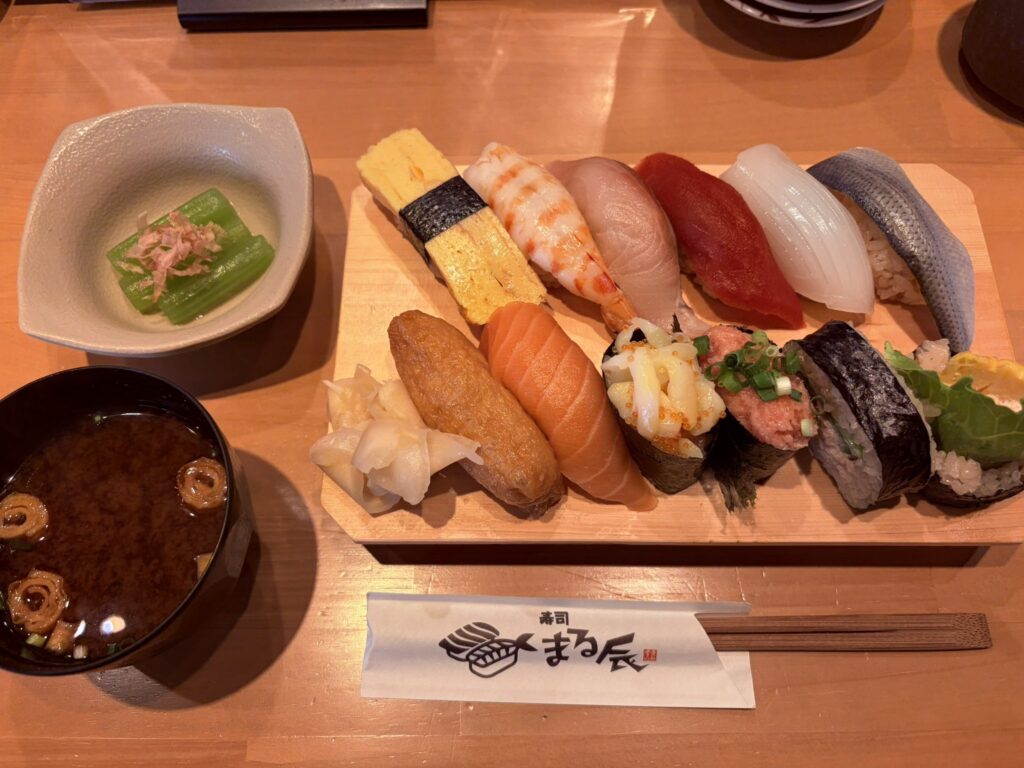
When travelers visit Japan, many say the same thing:
“The seafood tastes unbelievably fresh and clean.”
This is not a coincidence.
Japanese seafood is exceptional because of a rare combination of natural ocean currents, skilled professionals, and advanced tools and techniques.
Let’s break it down.
1. Unique Ocean Currents That Create Perfect Fishing Grounds 🌊
Japan is located where two major ocean currents meet, creating one of the richest marine environments in the world.
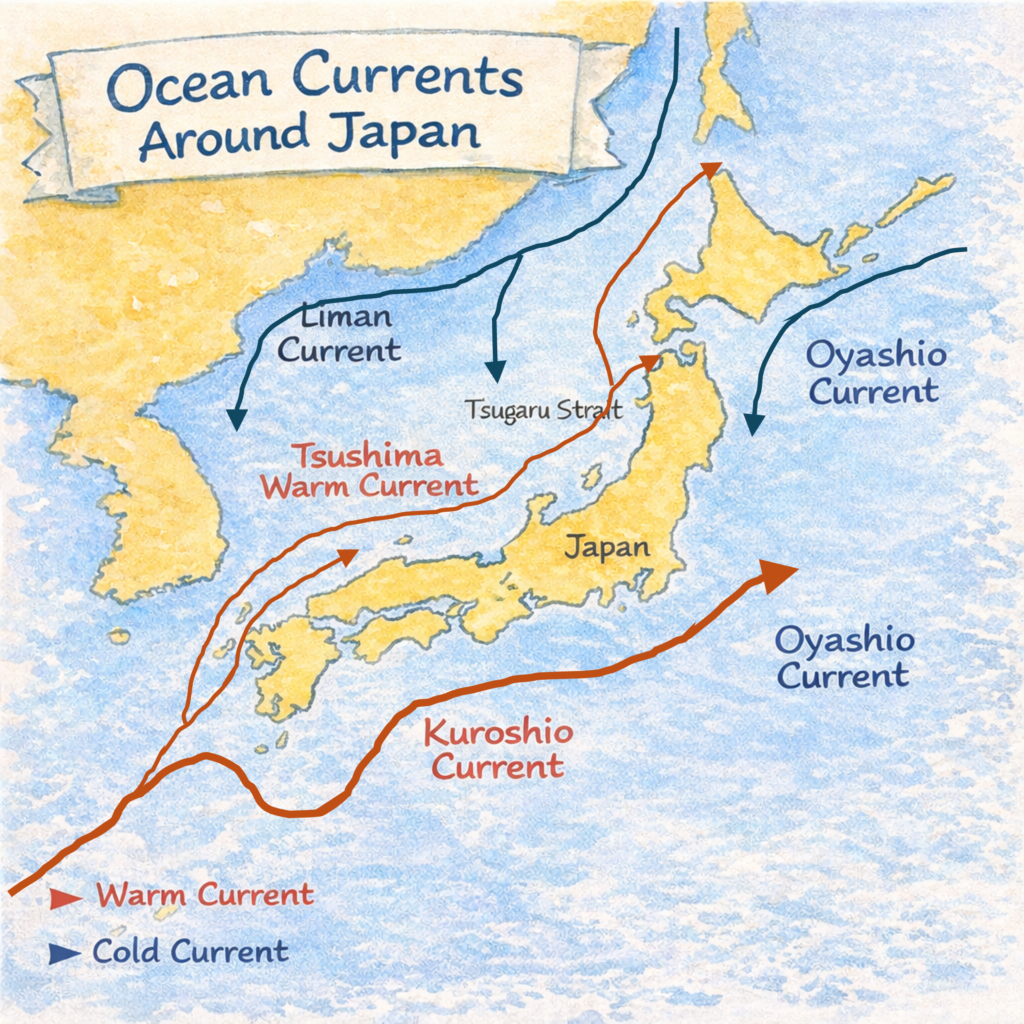
🔹 Warm Current (Kuroshio Current)
- Flows north from the tropics
- Brings warm water and nutrients
- Creates fatty, flavorful fish like tuna and yellowtail
🔹 Cold Current (Oyashio Current)
- Flows south from the Arctic region
- Rich in plankton
- Produces lean, clean-tasting fish like salmon and saury
👉 When these two currents collide near Japan, plankton thrives — and fish grow stronger, tastier, and healthier.
Very few countries in the world enjoy this natural advantage.
2. A Country That Respects “Seasonality” of Fish 🐟
Japan stretches long from north to south, meaning:
- Different fish are in season in different regions
- Seafood changes throughout the year
- Chefs select fish based on peak flavor timing
This concept of eating fish at its best season (shun) is deeply rooted in Japanese culture and is a major reason seafood tastes so good.
3. It’s Not Only Chefs — Specialized Tools Matter 🔪
Japanese seafood quality is not achieved by skill alone.
The tools and techniques used immediately after catching the fish are critical.
🔪 Ikejime Technique (Instant Brain Spiking)
- Fish are humanely killed immediately
- Prevents stress and lactic acid buildup
- Preserves clean flavor and firm texture
❄ Advanced Cooling & Storage
- Rapid chilling on fishing boats
- Precise temperature control from port to restaurant
- Minimizes oxidation and fishy odors
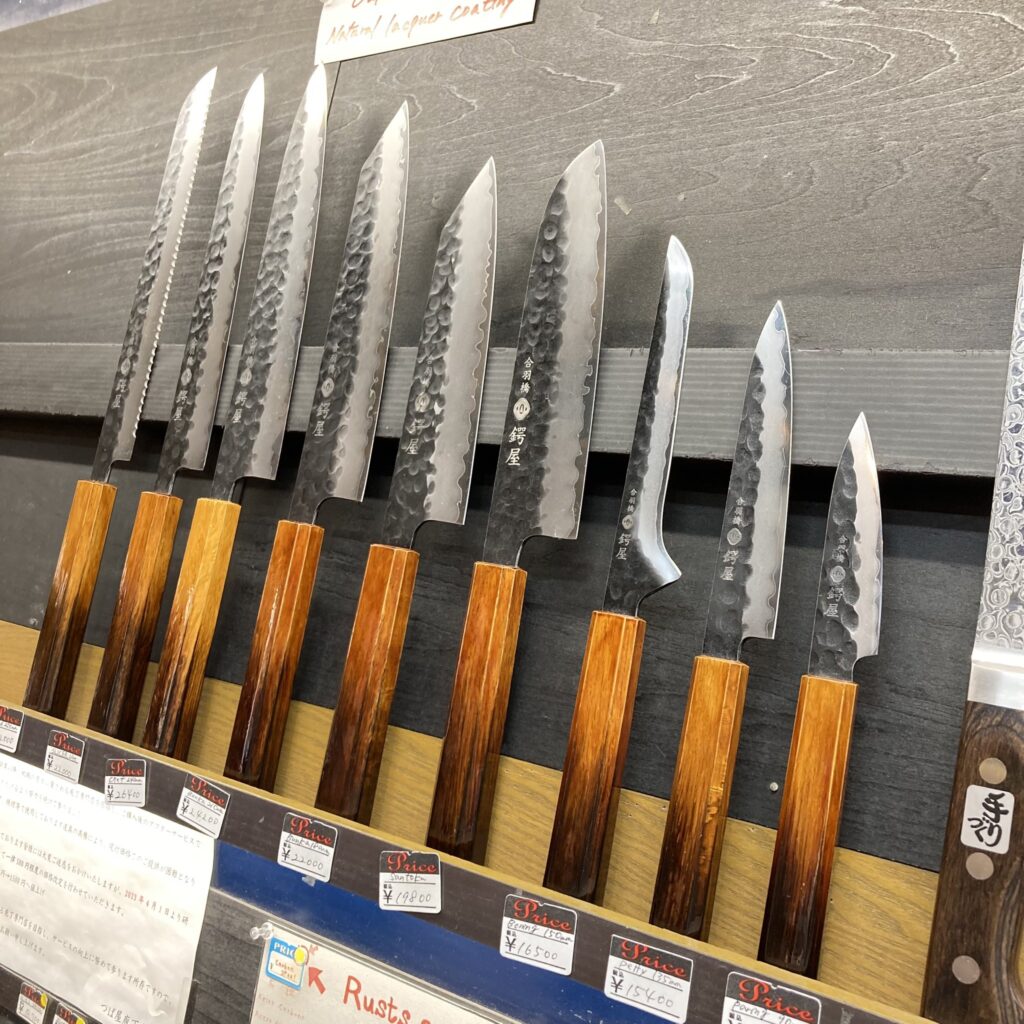
🔍 Precision Knives & Equipment
- Knives designed for specific fish and cuts
- Different tools for filleting, skin removal, and portioning
- Enhances texture and visual beauty
👉 These tools help fish stay fresher for longer — without freezing, which is essential for sushi and sashimi.
4. From Fishermen to Chefs: A Team Effort 🤝
Japanese seafood excellence is a relay system:
- Fishermen handle fish carefully at sea
- Markets inspect and grade quality
- Chefs prepare fish according to species, fat content, and condition
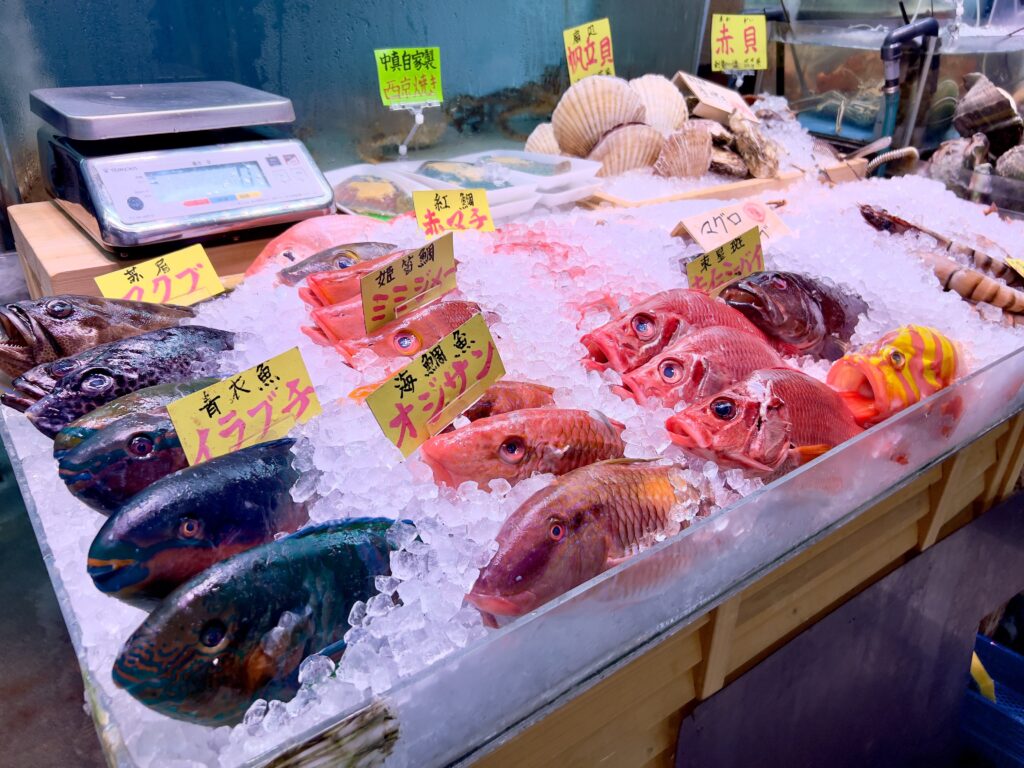
At places like Toyosu Market, seafood is evaluated daily by professionals who understand subtle differences in texture, smell, and appearance.
This system ensures only the best fish reaches your plate.
5. A Culture That Values “Natural Flavor” 🇯🇵
Japanese cuisine aims to highlight the fish itself, not hide it with heavy sauces.
- Light seasoning
- Minimal cooking
- Respect for texture and aroma
Because of this philosophy, quality must be perfect — there is nowhere to hide mistakes.
Final Thoughts
Japanese seafood is exceptional because:
✔ Powerful ocean currents create ideal fishing grounds
✔ Seasonality is deeply respected
✔ Advanced tools protect freshness
✔ Skilled professionals work as a team
✔ Culture values natural taste above all
This is why a simple piece of sashimi in Japan can feel like a once-in-a-lifetime experience.
👉 In Japan, seafood isn’t just food — it’s craftsmanship shaped by the ocean.
Aichi Airport Alcoholic beverage Anime Anime pilgrimage April Architecture August Autumn Building Capital Area Cherry blossom Convenience store February Flower January Japanese food kanto Kinki Kyoto March May Nagoya Nature Nightlife Night view Osaka Photogenic Pink Sakura Shopping Shrine Souvenir Spring Station Summer Superb view Temple Tips Tokai Tokyo Traffic train White Winter

More from my site
 Japan’s Seasonal Seafood Calendar: Best Times to Enjoy Eating Fish
 Do you know only Japanese people? All tuna parts
 How to Enjoy Conveyor Belt Sushi in Japan: A Guide for First-Time Visitors
 Why is Wasabi used for Sushi?
 Depachika Guide: Everything You Need to Know About Japan’s Basement Food Halls
 What is That Black Paper in Japanese Food? The Ultimate Guide to Nori