
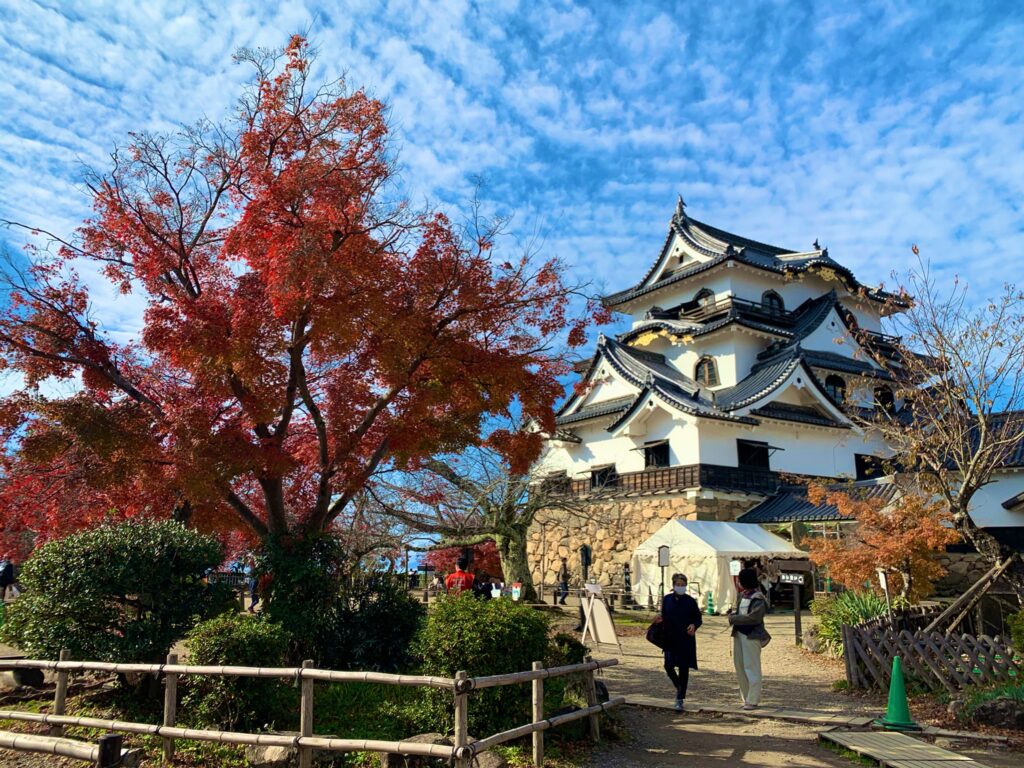
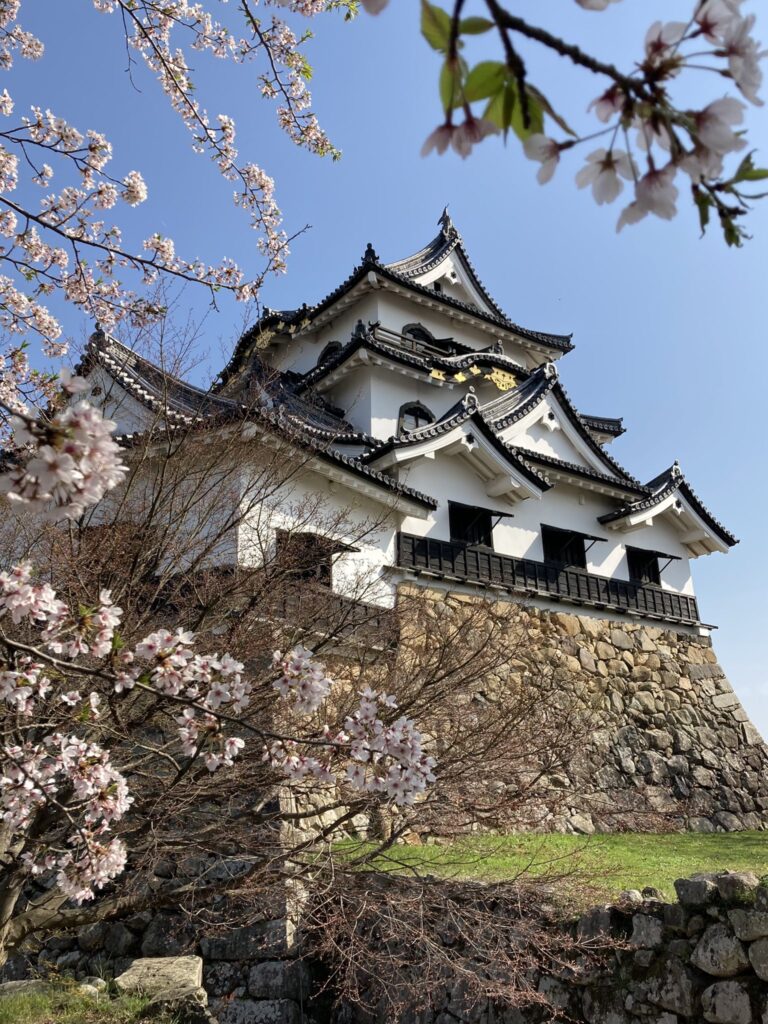
Looking for a real samurai castle experience in Japan without the massive crowds? While many castles across Japan are modern concrete reconstructions, Hikone Castle (彦根城) in Shiga Prefecture is the real deal.
Completed in 1622, this fortress survived centuries of fire, war, and modern urban development. Today, it stands as one of Japan’s most historically significant castles—and an easy day trip from Kyoto, Osaka, and Nagoya.
What Makes Hikone Castle Special?
1. One of Only 5 National Treasure Castles
Japan has hundreds of castle sites, but only 12 retaining their original main keeps (Tenshu). Among these 12, a mere five hold National Treasure status: Himeji, Matsumoto, Inuyama, Matsue, and Hikone.
When you climb the original wooden stairs inside Hikone Castle, you are walking on the exact floorboards used by 17th-century samurai and the powerful Ii clan who ruled the domain.
2. Candidate for UNESCO World Heritage Site
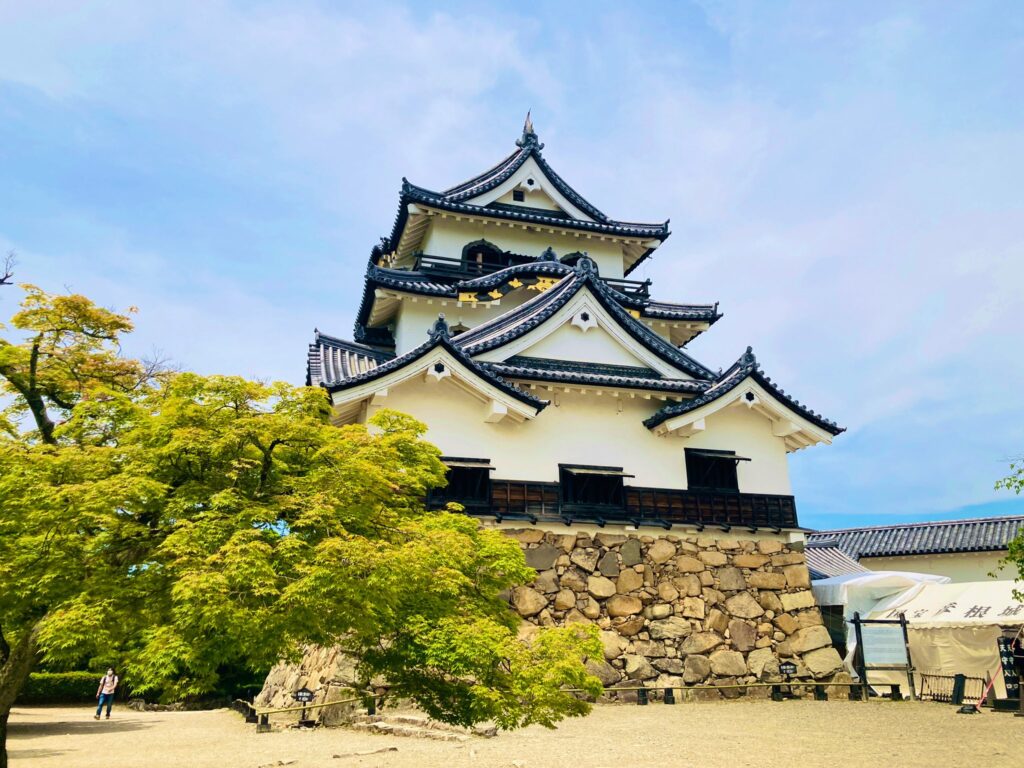
Hikone Castle is currently on Japan’s World Heritage Tentative List. It represents a quintessential complete feudal castle complex, preserving not just the keep, but also its moats, stone walls, balance turrets, and surrounding gardens.
Top Highlights at Hikone Castle
The Main Keep (Tenshu)
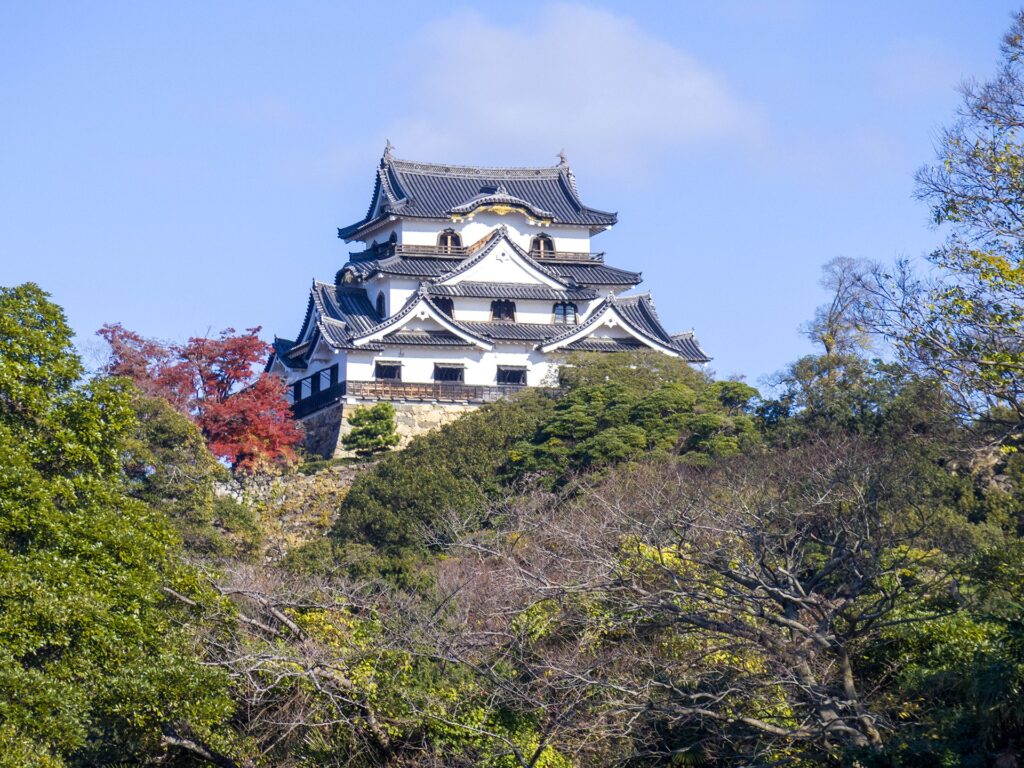
The three-story main keep features a blend of different roof arch styles (Karafufu and Chidorigafufu). Inside, you will encounter steep, almost ladder-like wooden staircases designed to hinder invading enemies. The top floor offers breathtaking views of Lake Biwa (Japan’s largest lake) and the city of Hikone.
Tenbin Yagura (Balance Scale Turret)
Constructed like a set of balance scales, this bridge-and-gate defense system is unique in Japan. In times of siege, the wooden bridge connecting the castle walls could be destroyed to block incoming forces.
Genkyuen Garden
Located at the foot of the castle, Genkyuen is a traditional Japanese strolling garden (Kaiyushiki-teien) built in 1677. Designed to evoke the classic scenery of ancient China, the garden features ponds, bridges, and tea houses, with the castle hill providing a dramatic backdrop.
Meet Hikonyan!
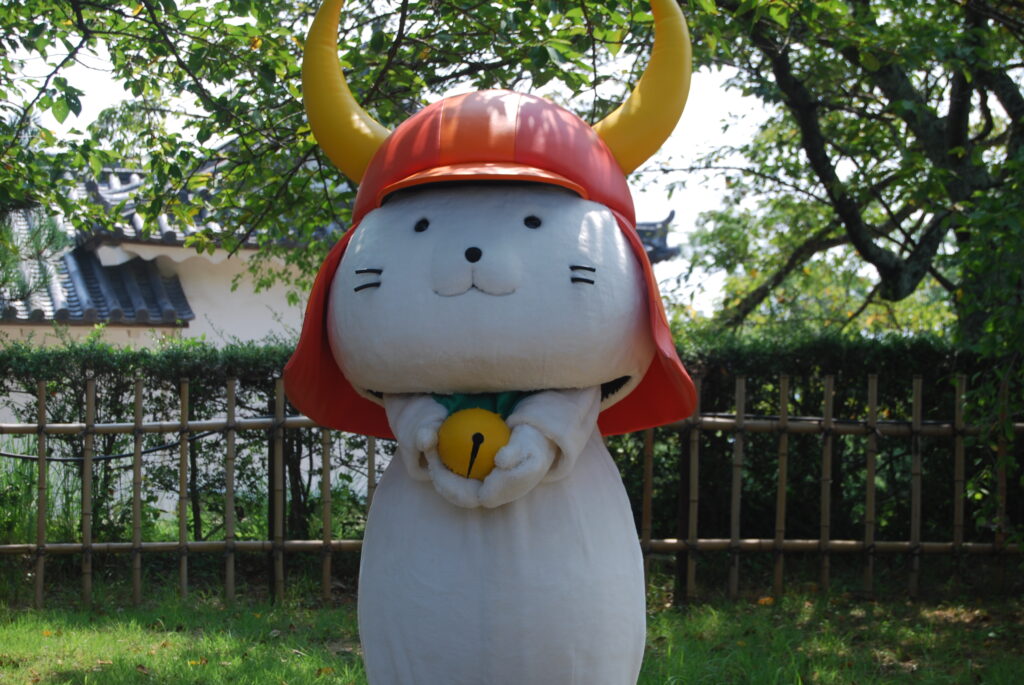
Hikone is famous for Hikonyan, a white cat wearing a traditional samurai helmet with red horns. Recognized across Japan as one of the pioneers of mascot culture (Yuru-chara), Hikonyan makes daily appearances at the castle to greet visitors.
Access: How to Get to Hikone Castle
Hikone is strategically located along the historic Nakasendo trail, making it easily accessible via the JR network using a JR Pass or IC card (ICOCA/Suica).
| Origin | Route | Travel Time |
| Kyoto Station | JR Special Rapid Train (Tokaido/Biwako Line) direct to Hikone Station | ~45–50 min |
| Osaka Station | JR Special Rapid Train (Tokaido/Biwako Line) direct to Hikone Station | ~80 min |
| Nagoya Station | Tokaido Shinkansen to Maibara Station, transfer to JR Line to Hikone Station | ~35–40 min |
Walk from Station: Hikone Castle is a straight 10- to 15-minute walk down the main avenue from JR Hikone Station.
Visitor Tips for Travelers
- Best Time to Visit: Spring (early April) for cherry blossoms along the inner moats, or autumn (late November) for night illumination at Genkyuen Garden.
- Footwear Notice: You must take off your shoes inside the Main Keep. Wear easy-to-remove shoes and socks.
- Combine Your Trip: Combine Hikone Castle with a visit to Nearby Omi-Hachiman for canal tours, or sample local Omi Beef, one of Japan’s top three Wagyu brands alongside Kobe and Matsusaka.
Aichi Airport Alcoholic beverage Anime Anime pilgrimage April Architecture August Autumn Building Capital Area Cherry blossom Convenience store February Flower January Japanese food kanto Kinki Kyoto March May Nagoya Nature Nightlife Night view Osaka Photogenic Pink Sakura Shopping Shrine Souvenir Spring Station Summer Superb view Temple Tips Tokai Tokyo Traffic train White Winter

More from my site
 Ine Funaya Guide: How to Visit Kyoto’s Scenic Boat Village
 Takayama & Shirakawa-go Day Tour from Nagoya: The Ultimate Year-Round Guide
 Tokyo National Museum: What to See and Why It’s Worth Visiting
 5 Best Alternatives to Kyoto Without the Crowds
 Nigatsu-do at Todai-ji: Nara’s Hidden Sunset Spot and 1,250-Year History
 Complete Guide to SHIBUYA SKY Tokyo: Tickets, Rules & Best Time